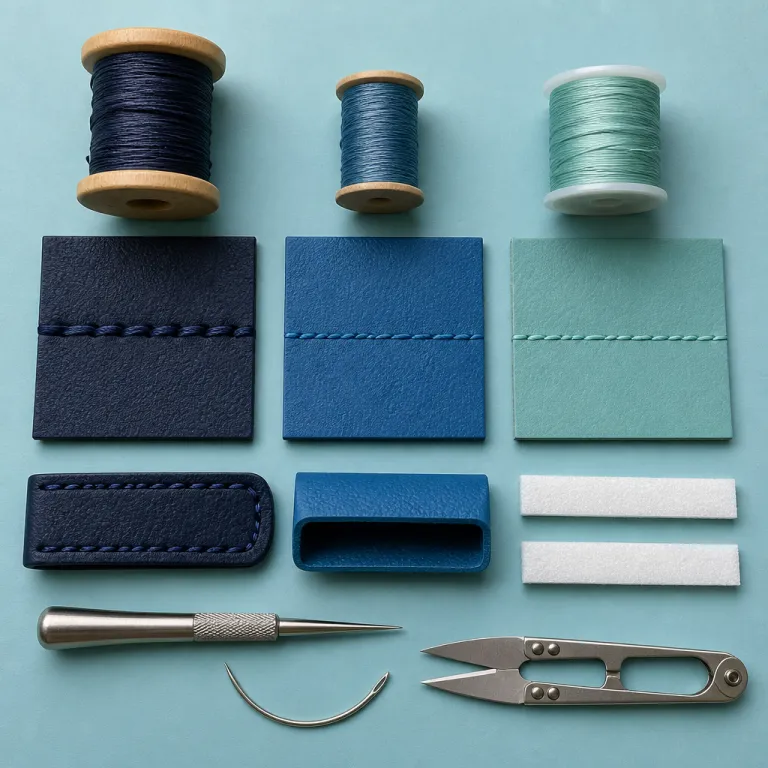
Why leather stitching thread material matters more than the logo
Run a fingertip along the edge of your briefcase and feel the stitching. That quiet line of leather stitching, the almost invisible stitching thread buried beside the edge paint, will decide whether your bag ages with dignity or frays at the handle first. Most owners obsess over grain and hardware, yet the leather stitching thread material is what quietly arbitrates the bag’s lifetime.
Every thread in a seam is a structural component, not a decorative afterthought. When a maison chooses a specific sewing thread, whether a traditional waxed thread in linen or a modern bonded nylon thread, it is making a deliberate engineering decision about strength, elasticity and repairability. The right thread leather combination lets the leather stretch and recover while the seam stays tight, instead of cutting into the hide like a wire.
Think of your bag as a system where leather, lining, adhesives and stitching must age together. A strong leather with a weak stitching thread will fail at the seam, while an overly heavy duty nylon thread can saw through a softer leather canvas over time. The most refined leather craft balances thread thickness, stitch count and leather temper so that wear distributes evenly rather than concentrating at one fragile point.
For a luxury owner, this is not about chasing the lowest price or a flashy sale price. It is about understanding why a workshop might specify a flat waxed linen thread for hand stitching on handles, yet switch to polyester thread for internal pockets that see less stress. Once you start reading seams this way, the regular price on the tag becomes a reflection of thoughtful engineering rather than just branding.
Waxed linen thread: the traditional hand stitching benchmark
Waxed linen thread is the reference point for classic saddlery and fine hand sewing. Traditional saddlers favour a flat waxed linen stitching thread because the fibres swell gently inside the hole, locking the seam into the leather without cutting it. When you see a slightly raised, almost corded line of hand stitching in a warm brown or deep black, you are often looking at waxed thread doing exactly what it was designed to do.
In a saddle stitch, two needles pass a single thread through each hole from opposite sides, creating a structure that will not unravel even if one side breaks. Hand stitched seams like this have been shown in comparative workshop tests and small-scale pull trials to last significantly longer than regular machine stitching, because each pass of the hand sewing needles is individually tensioned and sits deeper in the leather. That depth matters, as hand stitching is protected from abrasion while machine lockstitch often rides on the surface like a ridge waiting to be scuffed.
Waxed linen behaves beautifully in leather sewing because the wax lubricates the fibres through the hole, then hardens to resist moisture. On a refined leather canvas tote or a compact briefcase, a carefully chosen linen thread size combined with eight stitches per inch can create a seam that looks almost carved into the edge. For a deeper dive into how stitch density affects both strength and aesthetics, the analysis in this piece on the quiet math of hand sewn leather is worth your time.
The weakness of linen is ultraviolet exposure and neglect, not the material itself. On a bag that lives in a car window, the strongest waxed thread can dry, lose flexibility and eventually crack before the leather fails, especially if the owner never conditions the seams. When you assess the price regular on a hand stitched piece, you are paying for a material that rewards care with character, but it will not forgive being baked and ignored.
Bonded nylon and polyester thread: modern workhorses in luxury bags
Most contemporary luxury workshops rely heavily on bonded nylon thread for machine leather sewing. Bonded nylon is a nylon thread whose filaments are fused together, then coated so it glides cleanly through leather, canvas and lining without fraying. This type of stitching thread offers consistent diameter, strong tensile strength and excellent resistance to ultraviolet light, which is why it dominates industrial production.
On a structured briefcase or travel bag, a well chosen heavy duty bonded nylon in black or brown can quietly outlast the leather itself. It is especially effective where leather craft meets performance demands, such as handles anchored through leather canvas reinforcements or shoulder straps that see constant flexing. The trade off is that nylon softens and can melt under high heat, so a careless repair with the wrong tools or a too hot edge iron can damage the thread even when the leather looks untouched.
Polyester thread sits slightly below bonded nylon in most makers’ internal list of preferred materials. A good quality polyester sewing thread is strong and colourfast, but it lacks the subtle texture and hand feel of linen and can be marginally less resilient than nylon in extreme flex tests. For internal pockets, zips and lighter panels where the load is modest, polyester thread offers a rational way to save select resources without compromising the visible lines of leather stitching that define the bag’s character.
When you compare a regular price tag with a lower sale price on apparently similar bags, ask where the workshop chose polyester instead of bonded nylon or linen. A maison that reserves bonded nylon for stress points and uses polyester thread only where appropriate is making a thoughtful engineering choice, not simply trying to save on cost. For a sense of how such decisions play out in real products, the detailed breakdown in this exploration of wallets made in the USA shows how thread selection quietly shapes longevity.
Reading seams like a connoisseur: thickness, stitch count and colour
Once you start looking closely, every seam on a bag becomes data. Thread thickness, stitch count per centimetre and colour choices all reveal how seriously a maker treats leather craft beyond marketing language. A refined owner can read these details as clearly as a watch collector reads a movement.
On a heavy handle or strap, a thicker, strong stitching thread in bonded nylon or waxed linen makes sense, especially when paired with a slightly lower stitch count to avoid perforating the leather. Along the top edge of a soft leather canvas tote, a finer polyester thread with more stitches per centimetre can create a delicate, almost tailored line that flatters the silhouette. The key is balance, because a thread that is too heavy for the leather will behave like a saw, while a thread that is too fine will snap under load.
Colour is not just an aesthetic decision either. A black thread on black leather hides minor irregularities in hand stitching, while a contrasting brown thread on a pale hide exposes every wobble in the line. When you see perfectly regular spacing and consistent tension in such contrast stitching, you are looking at a workshop that invests in training, sharp tools and patient hand sewing rather than rushing to hit a target price.
Even the humble spool on a workbench tells a story about priorities. A bench lined with large spools of bonded nylon in multiple shades of brown and black suggests a commitment to matching thread leather combinations precisely, instead of forcing one generic colour across a whole range to save a fraction of the regular price. If you care about how your bag will look after a decade of use, these quiet choices matter more than any seasonal logo treatment.
Practical inspection: how to judge stitching quality before you buy
In the boutique, you have more information in your hands than any spec sheet will ever give you. Start with the handles and strap attachments, because these are the heavy duty zones where leather stitching either proves its worth or fails early. Gently flex the leather while watching the stitching thread; a strong seam will move with the leather without gaps or whitening along the holes.
Next, perform a discreet pull test by placing a thumb on either side of a seam and applying moderate pressure. You are not trying to break anything, only to see whether the thread regular pattern stays even or whether stitches open up irregularly, which can signal rushed machine sewing or dull needles. Pay attention to backstitches at stress points, as a clean, compact backstitch in matching thread shows care, while a messy cluster of loops suggests the workshop was saving seconds rather than building longevity.
Look closely at the edge where leather meets leather canvas or lining, especially on bags that promise to save you weight without sacrificing durability. Hand stitching will usually sit slightly recessed, with waxed thread or bonded nylon nestled into a groove cut by the artisan’s tools, while regular machine stitching often rides higher and feels more exposed to abrasion. If you see fuzzing or broken fibres on a supposedly new nylon thread, walk away; that seam is already telling you how it will age.
For quick reference before a purchase, keep a short mental checklist:
- Run a finger along key seams and feel for smooth, even tension without sharp ridges.
- Check handles, strap anchors and zipper ends for reinforced stitching that sits slightly recessed.
- Look for clean, compact backstitches rather than tangled loops or loose thread tails.
- Inspect contrast stitching to see whether spacing and angles stay consistent around curves.
- Scan the whole bag for any frayed, fuzzy or already darkened threads, especially near corners.
Finally, step back and consider how all these details relate to the price on the tag. A bag with impeccable hand sewing, carefully chosen leather stitching thread material and thoughtful reinforcement at every heavy point may never appear at a dramatic sale price, because there is little fat to trim without harming the product. For a nuanced example of how such restraint plays out aesthetically, the analysis of understated patina and edge work in this piece on the quiet allure of a Crazy Horse purse shows how good stitching quietly supports the whole design.
Owning for the long term: caring for thread as much as leather
Once the bag is yours, your habits will decide whether the stitching ages gracefully. Cleaning and conditioning routines that focus only on leather while ignoring stitching thread leave even the strongest bonded nylon or waxed linen vulnerable at the edges. A few targeted minutes on seams can add years to the life of both thread and leather.
When you apply conditioner, work a small amount along the seams with a soft cloth or brush, letting it reach the thread without saturating it. Waxed thread in particular benefits from occasional gentle warming between fingers to reactivate surface wax, which helps it glide rather than cut when the leather flexes. Avoid aggressive heat sources, because both nylon thread and polyester thread can soften or deform long before the leather shows distress.
Storage matters as much as cleaning. A bag left in direct sunlight on a shelf will see its linen stitching fade and dry long before the hide itself fails, especially along exposed edges and handles. Rotating use, keeping weight reasonable for the design and addressing any loose stitch early with a competent repair shop will always save you more than any short term attempt to save select costs by delaying maintenance.
For owners who commission bespoke work or repairs, do not hesitate to ask for a clear list of materials, including the exact leather stitching thread material used in each zone. A workshop that is transparent about whether it uses waxed linen, bonded nylon or polyester in specific areas, and that can explain why, is usually a workshop that treats your bag as a long term project rather than a quick transaction. Over time, that quiet clarity is worth far more than any temporary discount on the regular price.
FAQ
Is waxed linen thread always better than nylon for luxury bags ?
Waxed linen thread is superb for traditional hand stitching, especially on handles and exposed seams where its texture and grip shine. Bonded nylon thread, however, offers superior ultraviolet resistance and consistency, which can be crucial for bags that see intense travel or sun. The best luxury pieces often combine both, using waxed linen where touch and repairability matter, and bonded nylon where pure strength and weather resistance are priorities.
How can I tell whether my bag is hand stitched or machine stitched ?
Hand stitching with a saddle stitch usually shows a subtle slant to each stitch on both sides of the seam, with no visible lock or bobbin thread. Machine stitching often reveals a lockstitch pattern, where the underside looks different from the top and backstitches at the ends can appear slightly bulkier. You can also feel that hand stitched seams sit a little deeper in the leather, while machine seams tend to ride closer to the surface.
Does thread colour affect durability or only aesthetics ?
Colour itself does not change the inherent strength of a stitching thread, but darker dyes can sometimes offer marginally better ultraviolet stability than very light tones. The more important factor is whether the colour choice forces the maker to compromise on thread quality just to match a fashion palette. In high end work, you should expect both the right colour and a technically appropriate thread for each part of the bag.
When should I worry about repairing or restitching a seam ?
You should act as soon as you see even a single broken stitch in a high stress area such as handles, strap anchors or zipper ends. Leaving a gap allows neighbouring stitches to take extra load, which accelerates failure and can eventually tear the leather around the holes. A timely, professional restitch using compatible leather stitching thread material is far less invasive and less expensive than waiting until the seam fails dramatically.
Is it worth paying more for hand stitched details on a daily work bag ?
For areas that see constant stress and handling, such as top handles and key strap attachments, paying more for hand stitched seams can be a rational investment. The saddle stitch used in hand sewing does not unravel if one side breaks, and the deeper seating of the thread protects it from abrasion. On purely decorative or low stress zones, a well executed machine stitch in quality bonded nylon or polyester thread is usually sufficient.