Why leather grade is the first non negotiable quality test
A refined wardrobe starts with a leather belt that feels quietly assured. When you handle real leather in a belt, the surface shows subtle grain variations rather than a flat, plastic like sheen that signals fake leather from a distance. Run a fingertip slowly along the belt surface and you will feel how quality leather resists slightly, then yields with a soft warmth that only natural hide can offer.
Look for full grain leather on the belt tag, because full grain is the top layer of the hide where the grain is tightest and the leather will age with the best patina over time. This is where leather quality becomes obvious; a full grain leather belt will show tiny scars and pores, while heavily corrected grain leather or bonded leather belts look too perfect and often crack at the holes after a single hard season of wear. Bend the belt full length gently into a curve of about 10 centimetres radius and watch whether the surface lightens slightly without forming sharp creases, which is one of the most reliable leather belt quality signs you can perform in store.
A belt made from genuine leather in the marketing sense may hide a split core or bonded leather layers that compromise long term belt quality. Hold the edge near your ear and flex it; real leather belts make a muted fibrous sound, while fake leather belts with plastic coatings often squeak sharply and feel springy rather than dense. If you want excellent leather for business and casual belts alike, prioritise a single piece of full grain leather at least 3 to 3.5 millimetres thick, because that thickness gives structure without bulk and lets the leather mould to your waist instead of collapsing around the buckle.
The smell, bend and water tests that separate real from fake
Your nose is a better judge of leather quality than most swing tags. Real leather has a rounded, slightly sweet smell that lingers, while fake leather often smells sharply chemical or oddly sweet in a way that clings to your fingers after you handle the belt. When a so called genuine leather belt smells overwhelmingly of solvents, you are likely holding coated split or bonded leather rather than a quality belt cut from full grain hide.
The bend test reveals how the grain and fibre structure behave under stress, and it is one of the most practical leather belt quality signs you can use discreetly. Fold the belt full length into a gentle arc and look closely at the grain leather surface near the holes, because real leather will show soft tonal changes while fake leather coatings may crack into tiny rectangles. If the belt surface wrinkles in sharp parallel lines that do not relax after a few seconds, the leather quality is probably compromised by heavy finishing or a synthetic top layer.
Water is another quiet truth teller for leather belts, so place a single small drop on the underside where it will not show. Quality leather absorbs the water slowly, darkening the surface in a soft halo, while fake leather lets the droplet sit like a bead on glass before it rolls away. A belt real enough to pass this water test will also handle daily wear in humid climates more gracefully, because natural leather fibres manage moisture instead of trapping it against your shirt.
For owners who appreciate how great leather actually gets made, understanding these tests connects directly to the craft you see in a heritage atelier. When you read about traditional tanning and finishing in a detailed workshop feature or a heritage maison profile, you start to recognise how each decision in the tannery shows up later in the way your leather belt behaves. That knowledge makes it easier to reject fake leather shortcuts and focus on the calm confidence of a quality leather belt that will age with you.
Quick checklist for testing a leather belt in store
- Smell: natural, slightly earthy aroma that fades gently, not a harsh chemical or sugary scent that lingers on your hands.
- Bend: slow tonal change and soft creasing when curved, without surface cracking or stiff, plasticky wrinkles.
- Touch: warm, slightly textured grain that feels dense and fibrous at the edge rather than spongy or rubbery.
- Water: a tiny drop on the back should absorb gradually and darken the leather, not sit on top like a bead.
- Edge and back: visible fibres and a consistent leather cross section, not fabric backing or a foamy core.
Modern coated synthetics and high quality faux leather can imitate some of these cues, especially grain pattern and colour, so no single test is infallible. Using several of these simple checks together, and comparing a suspected fake leather belt with a belt you know is real, gives a far more reliable read on overall belt quality.
Buckle construction, hardware metals and how a belt will age
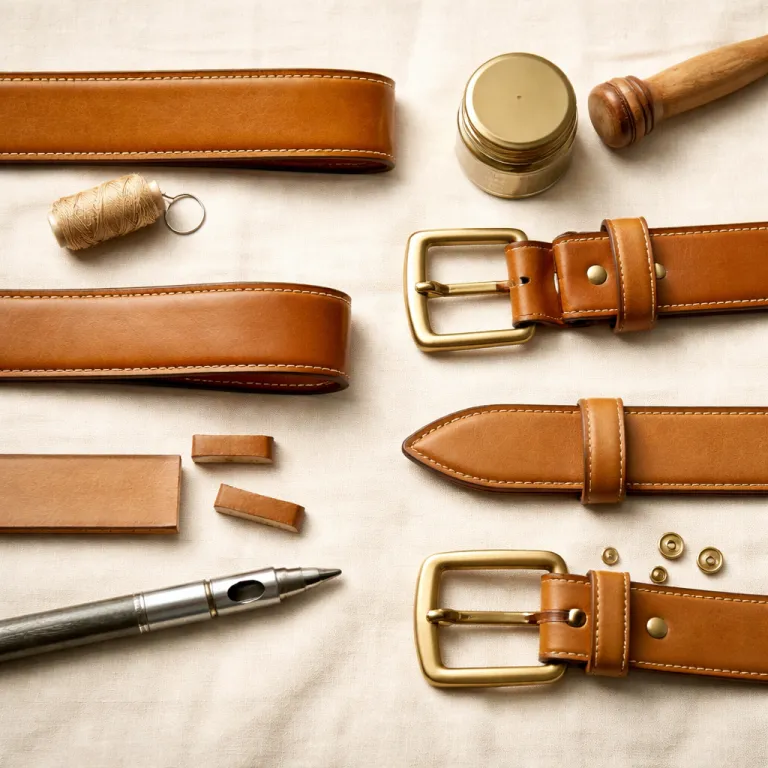
The buckle is where engineering meets elegance, and it tells you more about belt quality than any logo. Start by checking whether the buckle is attached with permanent rivets, removable screws or Chicago screws, because this choice decides if your leather belt can be repaired when the hardware eventually wears. A quality belt for serious wardrobes usually pairs full grain leather with a solid buckle that feels dense in the hand rather than hollow.
Stainless steel buckles resist corrosion from sweat and water far better than cheap plated alloys, and stainless steel hardware also keeps its clean surface finish when it rubs against desk edges or car seat belts over time. If you prefer brass, look for solid brass rather than brass plated zinc, because the real metal will develop a soft patina that complements natural leather instead of flaking to reveal a grey core. Run a finger along the back of the buckle and the belt attachment; good quality construction feels smooth with no sharp burrs that might cut stitching or mark your shirts.
Chicago screws offer the most flexible option for luxury leather belts, since you can swap a scratched buckle without sacrificing a perfect leather strap that has moulded to your waist. Screws should sit flush with the leather surface and turn with firm resistance, while loose screws are a red flag for poor belt quality and rushed assembly. When you rotate between formal and casual belts in different size ranges, this modular approach lets one exceptional leather belt strap serve multiple buckles and outfits, which is a refined practicality that only becomes apparent after years of wear.
Thoughtful buckle choices extend beyond belts and into other accessories that signal connoisseurship. The same eye for proportion and hardware finishing that you apply to a quality belt should guide you when choosing a refined leather fob keyring for discerning owners, because both pieces live at the intersection of touch, sound and daily ritual. Over time, the way stainless steel or brass hardware settles against grain leather becomes part of your personal aesthetic, not just a functional detail.
At a glance: matching hardware and thickness to use
| Use case | Recommended thickness | Suggested hardware |
|---|---|---|
| Formal tailoring | ≈ 3 mm full grain | Polished stainless steel or fine solid brass buckle |
| Smart casual chinos | 3–3.5 mm grain leather | Stainless steel, brushed brass or discreet plated steel |
| Denim and workwear | 3.5–4 mm natural leather | Chunkier solid brass or robust stainless steel hardware |
Edges, stitching and the quiet language of workshop standards
Run your thumb along the edge of a leather belt and you are reading the workshop’s standards in braille. A raw cut edge on full grain leather can be beautiful when it is carefully sanded and burnished, but a rough, fibrous edge on bonded leather or heavily corrected grain leather is a clear warning sign. Painted edges on quality leather belts should show a smooth, even band with no bubbles or cracks where the paint meets the leather surface.
Burnished edges, where the craftsman compresses the grain with heat and friction, often signal a belt full of quiet skill, because this technique takes time and cannot hide poor leather quality. When you see layered edges separating on a so called genuine leather belt, you are usually looking at split or bonded leather that has been wrapped and glued rather than a single piece of real leather. Over time, those layers open up, letting water and dirt creep between them, while a solid strip of natural leather simply polishes and darkens at the edges.
Stitching tells its own story about belt quality, especially around the buckle and keeper where stress is highest. A single needle lockstitch is standard on many leather belts, while saddle stitching, where two needles pass through each hole in opposite directions, creates seams that are highly resistant to unravelling even if one thread breaks. This hand stitched construction is widely regarded by traditional leatherworkers and industry groups such as the Leather Working Group as a benchmark for durable small leather goods, because their technical criteria emphasise consistent performance and robust construction rather than purely cosmetic finishing.
Thread choice matters as much as stitch pattern, so look for polyester or linen threads that sit slightly proud of the leather surface without cutting into it. If the thread feels sharp against your fingertip or sits in a deep groove, the leather will likely fail before the stitching, which is the wrong hierarchy for a perfect leather belt. Over years of use, well judged stitching lets the leather stretch and relax subtly around the holes without tearing, preserving both function and the clean line of the belt.
Thickness, tanning and choosing the right belt for your life
Thickness is the unsung hero of leather belt quality signs, because it governs how the belt carries weight and how it will age. A dress belt around 3 millimetres thick in full grain leather offers enough structure to stay flat under a suit jacket, while a casual belt for denim can comfortably reach 4 millimetres without feeling bulky. When a belt feels suspiciously light for its apparent size, you are often holding split or bonded leather wrapped around a filler core rather than a single dense strip of natural leather.
Vegetable tanned leather, often used for high end quality leather belts, starts a little stiff but softens with wear, developing a rich patina that maps your daily routine. Chrome tanned leather can be excellent in quality, yet very thin chrome tanned belts tend to sag between the buckle and the first belt hole over time, especially in larger size ranges, because the tanning chemistry produces a more supple, elastic structure. If you want a belt real enough to handle both boardroom and weekend wear, aim for vegetable tanned or combination tanned full grain leather at a thickness that matches your trousers and lifestyle.
Casual belts in natural leather pair beautifully with raw denim and heavier chinos, where the grain leather surface can pick up character without looking distressed. For tailored suits, a slimmer leather belt with a refined buckle and discreet stitching keeps the focus on the line of the jacket rather than the accessory. In both cases, the same tests apply; real leather should pass the smell, bend and water checks, while fake leather or over finished corrected grain will reveal itself quickly under close inspection.
Consider also how recognised industry standards approach responsible leather production. Certifications from organisations such as the Leather Working Group or national tanning associations focus on traceability, tanning methods and material performance, and the same disciplined approach to hides, hardware and finishing will serve you well when building a wardrobe of belts, bags and small leather goods that simply work.
FAQ about leather belt quality signs
How can I quickly tell if a leather belt is real or fake ?
Start with the smell, because real leather has a warm, slightly earthy scent, while fake leather often smells synthetic or overly sweet. Then perform a gentle bend test; real leather shows soft tonal changes without sharp cracks, whereas fake leather coatings may fracture or wrinkle harshly. Finally, inspect the edge and the back of the belt for a fibrous structure rather than a fabric or plastic core.
Is full grain leather always better than genuine leather for belts ?
Full grain leather is generally superior for belts because it uses the strongest top layer of the hide, which resists stretching and develops a refined patina. The term genuine leather is broad and can include lower grade splits or heavily corrected grain that may crack or delaminate sooner. For a belt you plan to wear for years, full grain or high quality top grain is usually the safer investment.
What belt thickness should I choose for formal and casual wear ?
For formal wear with tailoring, a belt around 3 millimetres thick keeps a sleek profile under a suit jacket. Casual belts for denim or heavier chinos can be 3.5 to 4 millimetres thick, which offers more presence and durability without feeling cumbersome. The key is matching thickness to the weight of your trousers and the scale of your footwear.
Why does buckle hardware matter for leather belt longevity ?
Hardware quality affects both comfort and durability, because cheap plated alloys can corrode, flake and stain the leather around the buckle. Solid brass or stainless steel buckles resist sweat and water better, keeping their finish and protecting the leather attachment points. Removable or Chicago screw fittings also allow you to replace a damaged buckle without discarding an otherwise excellent strap.
How should a high quality leather belt age over time ?
A well made belt should soften and mould to your waist while keeping a clean line without sagging between the buckle and the first hole. The colour may deepen slightly, and the grain should show a gentle sheen where it rubs against belt loops, rather than peeling or cracking. Stitching should remain tight, edges should stay smooth, and any patina should feel intentional rather than like premature wear.