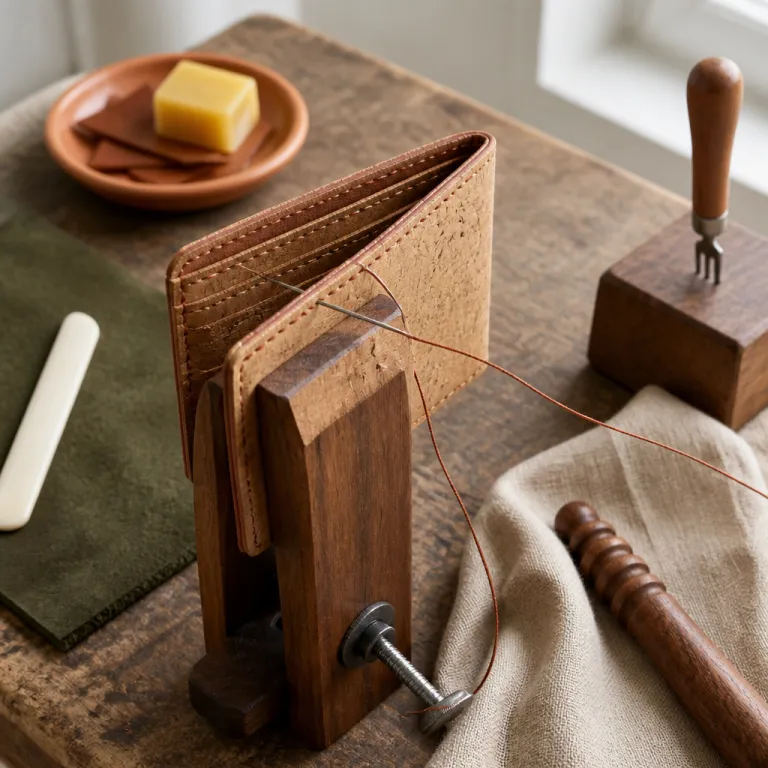
Cork wallets for luxury leather goods owners
TL;DR buyer’s checklist: Choose cork wallets made from certified Mediterranean cork; check stitching, edge paint, and RFID test claims; compare regular price vs sale price alongside durability and repair options; confirm vegan and eco credentials with named reports or standards; and rotate your cork and leather pieces to extend their life.
From leather icon to cork wallet statement piece
A seasoned collector eventually asks whether every new wallet must be leather. A refined cork wallet made from natural cork offers a different kind of status, one rooted in sustainability and quiet innovation, while still respecting the expectations of a luxury leather goods owner. This shift does not replace your classic brown bifold wallet, but it adds a minimalist counterpoint that feels modern and deliberately eco friendly.
High grade natural cork is harvested from cork oak bark without cutting the tree, and this process can be repeated regularly over the tree’s lifetime with minimal impact on the ecosystem. When transformed into a slim cork panel, the material gains a supple hand feel that sits between soft calfskin and coated canvas, which makes a slim cork wallet surprisingly pleasant in daily use. The best cork wallets are then lined, edge painted, and stitched with the same care as a premium leather wallet, so the tactile experience remains familiar for connoisseurs.
For owners used to tracking the regular price of exotic skins, the unit price of a cork wallet often feels modest, yet the perceived value comes from its story rather than its price alone. You still compare regular price and sale price, of course, but the real luxury lies in knowing that the final selling price reflects a lower environmental burden per wallet than many conventional options. When you evaluate the regular price and sale price across several cork wallets, you start to see card capacity, RFID blocking performance, and eco friendly sourcing as part of the same equation as craftsmanship.
Vegan alternatives with heritage level craftsmanship
Many luxury clients hesitate when they hear the word vegan, because too many vegan wallets have felt like compromises in texture, longevity, or elegance. A well executed cork wallet changes that perception by offering a vegan material that still accepts precise edge finishing, painted sides, and hand stitched details that you expect from a high end card holder. When a cork card compartment is cut and skived like leather, the result is a wallet that feels tailored rather than mass produced.
For women who carry a structured bag, a slim cork zipper wallet can slide into a small interior pocket without adding weight, while still protecting each card with RFID blocking layers. Men who prefer a bifold wallet can choose a cork wallet with a classic profile, where the interior card holder layout mirrors their regular leather piece, yet the exterior grain of natural cork signals a conscious choice. In both cases, the cork card slots and coin sections can be configured for different currencies, so the wallet works as well in a compact clutch as in a larger travel organiser.
Luxury houses are already experimenting with mushroom based materials and lab grown alternatives, and critical reviews of these innovations show how variable performance can be, as detailed in this analysis of what lab reports say versus marketing claims about mushroom leather. Cork stands apart because its supply chain is mature, its durability is documented, and its tactile qualities are consistent enough for regular production of wallets and bags. For a collector, this means a vegan cork wallet can sit alongside traditional leather pieces without feeling like an experiment that might quickly fail in real use.
Design details that matter to discerning owners
When you evaluate a cork wallet as a luxury owner, you look past the marketing and inspect the details. The alignment of each card holder slot, the precision of the zipper on a zipper wallet, and the way the coin pocket closes all signal whether the maker understands high end expectations. A minimalist exterior can still hide complex internal construction, especially when the brand balances card capacity, coin storage, and RFID blocking layers without creating bulk.
Consider how a bifold wallet in natural cork behaves when fully loaded with cards and notes, because a poorly designed interior will flare at the edges and distort the slim profile. A well engineered slim cork wallet uses staggered card holder placement and carefully calibrated lining thickness, so the wallet remains flat even when every card slot is filled. For women who move between a day bag and an evening clutch, this kind of disciplined construction ensures the same cork wallet can function as a compact accessory without compromising the line of a tailored outfit.
Color and finish also play a role, since natural cork can be left in its warm beige tone or dyed into a deep brown that echoes classic leather, and both versions can be paired with a regular bag in your collection. Some owners prefer a small cork card holder in a lighter shade for quick errands, while keeping a larger zipper wallet in brown cork for travel, which allows them to coordinate with different bags. As experimental materials such as so called dinosaur hide enter the conversation, often framed as a breakthrough or brilliant distraction in luxury handbags, cork remains a grounded choice that focuses on function, tactility, and long term wear rather than spectacle.
Pricing, value, and how to read the numbers
Owners accustomed to exotic skins often benchmark a new cork wallet against the regular price of their existing pieces. The unit price of a cork wallet usually sits well below that of alligator or ostrich, yet the value proposition changes when you factor in eco friendly sourcing, vegan credentials, and the durability of natural cork. Instead of asking only whether the price is high or low, it becomes more relevant to ask what the selling price actually includes in terms of environmental and social impact.
Retailers sometimes present a regular price and a sale price for cork wallets, especially when introducing a new minimalist line or a seasonal color such as dark brown. When you see a sale price on a slim cork card holder or a small cork zipper wallet, it is worth checking whether the construction quality matches that of the full priced models, because a lower price piece should not mean compromised stitching or weaker RFID blocking. A transparent unit price breakdown that explains materials, labor, and logistics can help you compare a regular leather bag with a cork wallet on more than aesthetics alone.
Online boutiques increasingly offer free delivery on vegan wallets, which can make a modest price feel even more accessible, but you should still read the fine print about returns and after sales service. A cork wallet that comes with repair options, replacement zipper parts, or re edging services offers better long term value than a cheaper alternative with no support. For serious collectors, the real luxury is not the initial regular price but the total cost of ownership over many years of regular use.
How cork wallets fit into a responsible luxury strategy
Luxury leather goods owners are paying closer attention to how their collections align with evolving environmental standards. A cork wallet made from natural cork harvested in responsibly managed forests can reduce pressure on animal based supply chains while still delivering the tactile pleasure of a finely crafted wallet. When you pair such a cork wallet with an existing leather bag, you create a hybrid approach that respects both heritage craftsmanship and contemporary sustainability goals.
Policy changes in major markets have already reshaped how brands talk about deforestation, land use, and traceability, and informed clients are reading these shifts carefully. An in depth report on how recent European regulation treats leather in deforestation law shows why some houses are diversifying into vegan materials such as cork, even when leather remains legally acceptable. For the collector, adding a slim cork bifold wallet or a small cork card holder is a practical way to support lower impact materials without abandoning beloved leather bags.
Eco friendly does not have to mean austere, and many cork wallets now feature refined details such as contrast stitching, polished metal zipper pulls, and discreet RFID blocking labels. Women who prefer a minimalist aesthetic can choose a slim cork wallet that carries only essential card holder slots and a single coin pocket, while others may opt for a more structured bifold wallet with multiple compartments. In every case, the key is to ensure that the selling price reflects not only design and branding but also verifiable environmental performance across the entire life cycle of the wallet.
Curating and caring for cork wallets in a high end collection
Integrating a cork wallet into a serious collection requires the same discipline you apply to leather, from storage to rotation. Natural cork benefits from being kept away from sharp edges and prolonged compression, so avoid overstuffing a slim cork card holder or forcing a zipper wallet into an undersized bag. When treated with respect, cork wallets develop a subtle patina rather than dramatic aging, which suits a minimalist aesthetic and pairs well with both casual and formal outfits.
Cleaning is straightforward, since most natural cork surfaces can be wiped gently with a soft damp cloth, and occasional use of a neutral cleaner approved by the maker will keep the wallet looking fresh. Owners should avoid aggressive solvents or waxes designed for leather, because these can clog the pores of natural cork and alter its flexible structure, especially on thinner small cork panels used alongside RFID blocking layers. Regular inspection of stress points such as the fold of a bifold wallet, the base of each card holder slot, and the stitching around the coin pocket will help you address wear before it becomes damage.
Rotation also matters, so consider alternating between a brown cork wallet and a classic leather piece, which allows each wallet to rest and recover its shape. Women who carry multiple bags can assign one slim cork wallet to a lighter summer tote and another to a structured winter bag, ensuring that each wallet experiences a balanced workload. Over time, this thoughtful approach to use and care will confirm that the initial unit price and regular price of your cork wallets were justified by years of reliable, eco friendly service.
Key figures on cork, vegan wallets, and responsible luxury
- Cork oak forests in the Mediterranean region cover roughly 2.2 million hectares, according to joint summaries by the World Wildlife Fund and the Portuguese Cork Association. These organisations report that well managed cork landscapes can store significantly more CO₂ than non harvested stands, based on field measurements of biomass and soil carbon, although exact annual sequestration figures vary by site and methodology.
- Life cycle assessments published in peer reviewed journals, including studies in the Journal of Cleaner Production on cork stoppers and cork composites, consistently find that natural cork production generates substantially lower greenhouse gas emissions per kilogram than bovine leather when the leather inventory includes emissions from cattle farming, tanning, and finishing. Readers should consult the original LCA papers for precise system boundaries and numerical results.
- Market research from firms tracking vegan accessories, such as Grand View Research and Allied Market Research, indicates that the global vegan leather segment, which includes cork wallets and bags, has been growing faster than the overall luxury leather goods market in recent years. Individual reports differ on exact market size and compound annual growth rate, so any specific percentage should be read in the context of the underlying assumptions.
- Consumer surveys in Europe and North America by consultancies including Bain & Company and the Boston Consulting Group on luxury and sustainability report that a substantial share of luxury buyers under 40 are willing to pay a higher price for eco friendly materials such as natural cork, provided that durability and design meet traditional luxury standards. These studies emphasise that stated willingness to pay is highest when brands provide transparent sourcing and repair options.
- Independent laboratory tests on RFID blocking layers integrated into slim cork wallets, carried out by accredited EMC and radiofrequency testing labs for brands such as Corkor and smaller Portuguese manufacturers, show shielding performance comparable to that of leather wallets using similar conductive fabrics. Effective protection is typically reported across common contactless payment frequencies around 13.56 MHz, assuming the blocking layer fully covers the card area.
FAQ about cork wallets for luxury leather good owners
Is a cork wallet durable enough for daily luxury use ?
High quality natural cork laminated and finished for accessories is surprisingly resistant to abrasion, moisture, and flexing, and many owners report that a well made cork wallet holds its shape and surface finish for years of regular use. Durability depends on construction details such as stitching, lining, and edge finishing, so it is important to choose a maker with experience in both leather and vegan wallets. For instance, Portuguese brand Corkor has commissioned independent wear tests on its cork wallets, documenting crease resistance and seam integrity after thousands of open close cycles. When treated with the same care as a fine leather bifold wallet, a cork wallet can comfortably serve as a primary daily piece.
Will a cork wallet stain or mark more easily than leather ?
Natural cork has a slightly textured, sealed surface that resists light splashes and dirt, and most marks can be removed with a soft damp cloth if addressed quickly. Darker brown cork finishes tend to hide minor scuffs better than very pale tones, which may be preferable for a wallet that sees heavy use. As with leather, avoiding contact with oils, inks, and heavily dyed fabrics will keep a cork wallet looking refined for longer.
Can cork wallets provide reliable RFID blocking protection ?
Cork itself does not block radio frequencies, but many slim cork wallets incorporate RFID blocking layers made from metallic or conductive fabrics between the cork and the lining. Independent tests by EMC and radiofrequency labs show that these layers can shield common contactless payment and access cards as effectively as those in leather wallets, provided they fully cover the card holder area. When evaluating a cork wallet, look for clear information about which compartments are protected and whether the design has been lab tested.
How should I store a cork wallet in my collection ?
The best practice is to store a cork wallet in a breathable dust bag, away from direct sunlight and extreme humidity, just as you would with a leather piece. Avoid stacking heavy bags or boxes on top of a slim cork card holder or bifold wallet, because prolonged compression can deform the structure over time. Lightly filling the card holder slots with paper or spare cards can help the wallet maintain its shape during longer periods of rest.
Does choosing a cork wallet meaningfully reduce my environmental impact ?
Switching one item will not transform an entire footprint, but selecting a cork wallet made from responsibly harvested natural cork does reduce reliance on animal based materials and energy intensive tanning processes. When combined with long term use, repair options, and thoughtful purchasing rather than frequent impulse buys, this choice contributes to a more responsible luxury pattern. For many collectors, integrating cork wallets and other vegan alternatives is a practical step toward aligning their collections with their environmental values.
