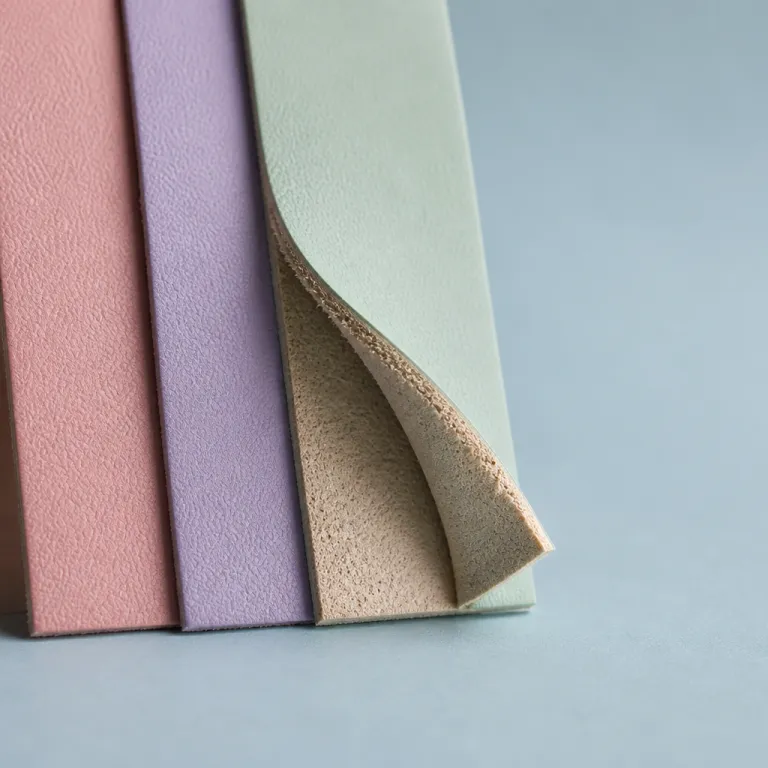
The finishing spectrum and what leather grain really tells you
Look closely at the leather surface of your favourite bags or jackets. The apparent grain pattern, the way light moves across each contour of the hide, and even how a water droplet behaves all speak quietly about leather grain finishing quality. Learning to read that surface is one of the most reliable ways to judge grade, durability, and whether you are truly holding the best leather available.
At one end of the finishing spectrum sits aniline full grain leather, where transparent dyes sink into the leather fibre structure and leave every pore, wrinkle, and scar visible. This is where natural markings on the hide remain honest, and where vegetable tanning or mixed tanning methods can create depth of colour that feels almost three dimensional under your fingertips. Technical guides from long established tanneries such as Horween describe this as the least corrected finish, in contrast to heavily pigmented grain leather, often corrected grain or split leather, where opaque coatings and embossing create a uniform texture that hides the real leather beneath a painted shell.
Between those extremes lie semi aniline and lightly pigmented top grain leathers, which balance protection with authenticity. Semi aniline finishes add a thin protective top coat that softens the look of natural markings while preserving much of the original grain and texture. Leather industry glossaries and training manuals frequently group these alongside lightly finished nubuck and pull up articles, while fully pigmented finishes, by contrast, can turn even bonded leather or low grade leather types into something that initially looks flawless, yet the film of paint and polymer often cracks long before the tanned leather underneath has a chance to age gracefully.
Aniline, semi aniline, and pigmented finishes under real use
Aniline full grain leather is the naked truth of a hide, and it rewards owners who appreciate patina over perfection. Because the surface is only dyed and not sealed, a simple water drop test will usually darken the spot for a few minutes as the leather absorbs moisture, then slowly returns to its original tone. This behaviour signals a breathable, natural grain surface that will develop depth of colour on leather bags, jackets, and small leather products rather than a plastic like sheen.
To perform this test safely, choose a hidden area such as the underside of a strap or the back of a belt loop, then use a clean fingertip or pipette to place a droplet about 3–4 mm wide on the surface. Start a timer and watch for 60–90 seconds: on aniline leather the darkened ring usually appears within 10–20 seconds and fades again over the next few minutes, while on heavily coated leather the droplet often remains sitting on top with little or no darkening at all.
Semi aniline top grain leather introduces a discreet protective layer that slightly slows absorption in the water drop test, yet still allows the hide to drink in conditioners and waxes. Many of the best leather tanneries use semi aniline finishes on vegetable tanned or combination tanned leather when they want to balance durability with a refined, even colour. If you are considering whether you can change such a finish, a detailed guide on how to transform aniline leather with dye shows why understanding the original tanning and finishing is essential before attempting any recolouring work.
Fully pigmented finishes, often found on corrected grain or split leather, behave differently under the same test. The droplet tends to bead on the coated surface, rolling across the leather instead of sinking into the hide, which indicates a thicker film of pigment and resin. This type of finish can be practical for hard used leather bags or jackets, yet it also means the grain you see is often an embossed pattern stamped into tanned leather, not the true full grain structure of a high grade hide.

Pebble grain, corrected grain, and the art of deception
Many collectors love a pronounced pebble grain on leather bags and jackets, yet that texture can be either a natural gift of the hide or a carefully engineered illusion. When a tannery works with full grain or top grain hides of excellent grade, the natural grain pattern tends to vary subtly across the surface, with tighter texture near the backbone and looser grain toward the belly. Under raking light, you will see micro variations in height and direction that no embossing plate can fully replicate.
Corrected grain leather tells a different story, because the original surface of the hide has been sanded away to remove scars and natural markings before a new pattern is pressed in. This process inevitably thins the strongest layer of the hide, reducing durability even when the initial leather grain finishing quality looks immaculate. The resulting corrected grain texture can be beautiful on structured leather bags or small leather products, but it is no longer full grain, and the best leather connoisseurs treat it as a different leather category entirely.
Embossing also plays a role in more character driven finishes, such as the pull up effect seen on certain vegetable tanned or oil rich tanned leather lines. A well executed crazy horse style purse, for example, relies on real leather with a robust grain and a waxy surface that lightens when bent, as explored in the quiet allure of the crazy horse purse for discerning women. In such cases the embossing or tumbling enhances the existing grain texture rather than faking it, allowing the hide to flex and age while still protecting the surface from excessive wear.

Reading tanning, colour, and patina through the finish
The way a hide is tanned shapes how any finish will behave, and serious collectors quickly learn to read vegetable tanning versus chrome tanning through touch and colour. Vegetable tanned full grain leather, especially when vegetable tanned slowly in pits, tends to show warm, earthy tones and a slightly firmer hand that relaxes with use, making it ideal for structured leather bags and belts. Chrome tanned top grain or genuine leather, by contrast, often feels softer from day one and takes bright, saturated colours more easily, which can be appealing for jackets or small leather products that need immediate suppleness.
When a tannery applies an aniline or semi aniline finish to vegetable tanned hides, the result is a surface that records every interaction with the world, from sun exposure to the oils of your hands. Over time, this combination of vegetable tanning and light finishing creates a patina that deepens the original grain texture and highlights natural markings rather than hiding them. Many of the best leather lines from tanneries such as Horween or Conceria Walpier are frequently cited in leather industry glossaries and reference guides as examples of this synergy between tanning and finishing delivering both durability and visual richness.
Heavier pigmented finishes are more common on chrome tanned or mixed tanned leather, where the goal is often colour uniformity and stain resistance rather than dramatic patina. In these cases, the leather grain finishing quality depends on how thinly the pigment is applied and whether the underlying hide is full grain, top grain, or split leather. A thin, flexible coating over high grade tanned leather can still allow some texture and movement, while a thick, plastic like shell over bonded leather or low grade leather types will eventually crack and peel, revealing the compromise beneath.
Practical tests and questions for judging leather grain finishing quality
When you handle a new piece, start with your eyes, then your fingertips, and finally a few discreet tests that respect the leather. First, tilt the bag or jacket under strong light and watch how the grain pattern reacts, because authentic full grain shows irregularity and depth while embossed corrected grain or split leather often looks mechanically repetitive. Next, run a clean finger slowly across the surface and feel whether you are touching the hide itself or a smooth, almost glassy coating that suggests a heavy pigmented finish over lower grade tanned leather.
The water drop test remains one of the simplest tools for assessing leather grain finishing quality at home. Place a tiny droplet on an inconspicuous area of the leather, such as the underside of a strap or the interior edge of a handle, and observe whether it is absorbed, slowly darkening the hide, or whether it beads and rolls away. Absorption within a minute usually indicates aniline or lightly finished full grain or top grain leather, while strong beading suggests a thicker protective film more typical of corrected grain, split leather, or even bonded leather constructions.
Beyond tests, the most revealing question you can ask a brand or artisan is simple. Request the name of the tannery and, if possible, the specific line of real leather used, because serious makers are proud to mention vegetable tanned programs, renowned full grain ranges, or specialised top grain articles by name. As you refine your eye, you will also notice how thoughtful finishing choices pair beautifully with considered design touches, such as a tassel bag charm that elevates every luxury leather bag by drawing attention to the subtle play of texture, colour, and grain across the surrounding surface.
Buyer’s checklist for evaluating leather grain and finish
1. Is the grain pattern irregular and alive, or flat and repetitive?
Look for organic, uneven grain and subtle natural markings, then confirm with touch and a discreet water drop test. Full grain leather usually shows tiny variations in pore size and direction, and the surface feels responsive rather than plasticky. Corrected grain often looks too uniform, with a smoother, more coated texture that resists water on the very top layer of the hide.
2. What is the construction: full grain, top grain, split, or bonded?
Bonded leather is made from shredded leather fibres mixed with binders and pressed into sheets, then coated with pigment and embossing to imitate natural grain. While it can look acceptable when new, its durability is significantly lower than full grain, top grain, or even decent split leather. For luxury leather bags or jackets intended to age gracefully, bonded constructions rarely meet the expectations of discerning collectors.
3. How was the hide tanned, and does that match the intended use?
Vegetable tanning produces firm, structured hides that can be extremely durable when used as full grain or high grade top grain leather. Chrome tanning, however, offers excellent flexibility and tear resistance, especially for jackets and soft leather bags, so durability depends more on the grade of the hide and the finishing than on the tanning method alone. The best leather choices often combine careful selection of the hide with a finish that respects the natural grain rather than burying it under heavy coatings.
4. Are small scars and colour shifts visible on the surface?
Those subtle scars, wrinkles, and shifts in tone are natural markings that indicate the leather surface has not been aggressively corrected or over painted. In full grain or lightly finished top grain leather, these details are signs that you are seeing the real hide rather than an artificial pattern. Many connoisseurs value such character, because it allows the patina to develop in a way that reflects both the animal’s life and the owner’s use.
5. How much care will the finish realistically require?
Aniline finished leather is more absorbent, so it benefits from regular, light conditioning with products formulated for real leather, applied sparingly to avoid darkening. Pigmented or heavily coated grain leather is more resistant to stains and water, but it still needs occasional cleaning and conditioning to keep the finish flexible and prevent cracking. In both cases, gentle care that respects the original leather grain finishing quality will help your pieces age with elegance rather than fatigue.