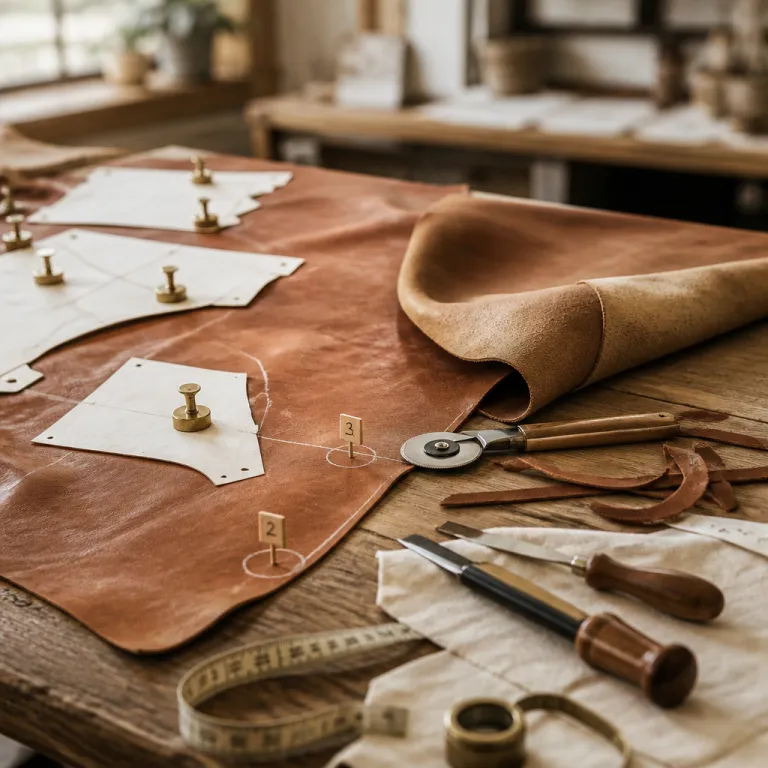
The quiet power of leather cutting clicking craftsmanship
Before your briefcase ever meets a stitch, leather cutting clicking craftsmanship has already decided how it will age. A skilled clicker stands over each hide and reads its story, then uses cutting tools and sometimes a cutting machine to place every pattern piece where the leather will perform best. This is where a luxury product either earns its reputation for high quality or quietly compromises it long before customer reviews ever appear.
Clicking is the traditional term for the moment the manual die or steel rule die makes that crisp sound as it cuts through the leather, and it remains the most human part of an increasingly mechanised industry. Even when a workshop uses a modern cutting machine or an embossing machine for logos, the decision of where to leather cut and how to orient each cut leather panel still rests with a trained eye and hand. Owners in the United States who care about longevity should understand that this stage, not the logo or marketing, is what separates best sellers from merely adequate items.
A seasoned clicker evaluates thickness, density, and stretch direction before a single die cutting stroke is made. They choose whether to use manual die tools, a hydraulic die cutter, or a digital table, always balancing pressure, stroke length, and precision cutting against the natural irregularity of the hide. When you read product reviews or customer reviews that praise structure, clean edges, and easy maintenance, you are often reading indirect reviews of the cutter’s judgment rather than of the sewing itself.
Reading the hide: backbone, belly, and the fate of each panel
Lay a full grain side on the table and you will see why leather cutting cannot be left to software alone. The backbone runs down the centre with high density fibres, the shoulders and butt offer balanced strength, while the belly is looser and more elastic, so each leather cut must respect these zones. A master of leather cutting clicking craftsmanship maps this topography in their head, then decides which part becomes a handle, which becomes a gusset, and which is relegated to small crafts sewing components.
Handles and straps that must resist pressure and daily load are usually cut along the backbone, where the grain is tight and the fibres give natural high quality resistance. If a handle is cut across the backbone or, worse, from the belly, the pressure stroke of everyday use will quickly reveal the mistake as the item stretches, twists, and loses its clean line. When you study a deconstructed briefcase and notice firm handles that keep their shape, you are seeing the result of correct orientation rather than just strong thread, a point explored in depth in this analysis of thirteen details that separate a great briefcase from a merely good one.
Panels for the body of a bag or a refined leather tote are often cut from the butt and upper shoulder, where the balance of firmness and suppleness suits large surfaces. Smaller parts, such as tabs, keepers, and zipper pulls, can safely use double layers from the shoulder or even selected belly areas, especially when reinforced with steel hardware or lining. The best workshops maintain a mental set of rules for which size and shape of pattern may come from each region, and that discipline is as helpful to long term durability as any visible finishing detail.
Yield, waste, and why a good cutter is never cheap
Every hide represents a finite canvas, and leather cutting clicking craftsmanship is partly the art of yield. A skilled clicker can cut leather panels in a way that extracts significantly more usable area from the same hide than an inexperienced operator using the same cutting dies and tools. That efficiency directly affects cost, sustainability, and how much of the best high quality grain ends up on the visible parts of your bag rather than hidden as lining or discarded as waste.
Natural leather carries scars, insect bites, healed scratches, and brand marks that no machine vision system yet evaluates with the nuance of a human hand. The clicker decides whether a small scar can sit discreetly on the underside of a strap, or whether it would compromise a high pressure point such as a handle root that experiences constant pressure stroke during use. When you pay more for a product with clean, even grain across large panels, you are paying for both better raw material and the time a cutter spent rotating patterns, double checking stretch, and sometimes rejecting tempting but flawed areas.
Luxury workshops also think about emotional yield, especially for pieces intended as gifts that should age beautifully over years of use. A well cut wallet or tote for a Mother’s Day in leather gift, for example, places the most characterful but structurally sound grain where the hand naturally rests, so patina develops in a way that feels intentional rather than random, as explored in this guide to leather gifts that improve with use. When customer reviews praise how a bag seems to get better rather than worse at stress points, they are often praising the invisible discipline of the clicker who refused to let a marginal area slip into a critical zone.
Tools, machines, and why judgment still beats automation
Walk into a serious workshop and you will see both venerable hand tools and modern machines serving leather cutting clicking craftsmanship. Traditionalists still use a head knife, clicking knife, and manual die sets for small runs, while larger ateliers rely on a cutting machine or even a programmable die cutter for repeatable shapes. The presence of an embossing machine or a sleek die cutting press does not mean the process is automated in any meaningful sense, because the crucial decisions about where to place each pattern remain human.
Steel rule cutting dies are often arranged in sets, with each size corresponding to a specific panel or strap, and the clicker chooses which die to deploy based on the hide’s layout. On a hydraulic press, they control pressure and stroke length carefully, because too much pressure stroke can crush the grain and too little leaves a ragged leather cut that will fray under use. Even when brands use digital cutting tables that scan the hide, the operator still traces around scars and weak areas, overriding the suggested nesting when their experience tells them that a theoretically efficient layout would compromise long term quality.
Brands that serve demanding owners in the United States increasingly combine human skill with semi automated systems from manufacturers such as Vevor, whose vevor leather cutting machines and leather embossing presses are common in mid scale workshops. These machines can deliver very consistent precision cutting when paired with well maintained tools and properly sharpened cutting dies, but they do not decide which parts of the hide deserve the best panels. As a buyer, you should treat terms like cutting machine, embossing machine, or die cutting as neutral descriptors, and instead look for evidence of training, low defect rates, and honest customer reviews rather than assuming that more machinery automatically means higher quality.
What owners should look for: reading the finished piece
Once you know how much leather cutting clicking craftsmanship shapes a bag, you start to read finished pieces differently. Run your fingers along the handles and straps, then gently flex them to feel whether the cut leather resists twisting, which suggests it was cut along the backbone rather than across a weaker belly section. Examine large panels under raking light to see whether the grain and colour remain consistent, because abrupt changes often signal that the cutter had to work around defects and may have pushed marginal areas into visible zones.
Inside the bag, look at small items such as tabs, keepers, and zipper pulls, which often reveal whether a workshop treats every component with respect or reserves its best effort only for the obvious surfaces. If you notice double layers of leather where stress is highest, clean edges without fuzz, and stitch lines that sit comfortably away from the very edge of the leather cut, you are seeing the downstream effect of accurate pattern placement and precise die cutting. These details matter as much on a refined leather tote for men as they do on a compact crossbody, and this guide to elevating your style with a well cut tote shows how proportion and panel layout influence both aesthetics and durability.
When you read product reviews or customer reviews, pay attention to comments about stretching handles, collapsing gussets, or edges that wave over time, because these are classic symptoms of poor clicking rather than poor sewing. A piece that earns consistently reviewed praise for structure, comfort in hand, and easy maintenance is usually the work of a workshop that treats leather crafting as a system, from hide selection through cutting dies and tools to final finishing. For owners who value quiet luxury, learning to read these signs is one of the most helpful skills you can acquire, because it lets you choose pieces that will justify their price over years rather than seasons.
FAQ
How does clicking affect how long my leather bag will last ?
Clicking determines which parts of the hide carry the highest loads, so it directly affects how handles, gussets, and stress points age. When a cutter or clicker orients straps along the backbone and reserves weaker belly areas for low pressure zones, the bag resists stretching and sagging for far longer. Poor clicking can make even a high quality hide behave badly, while good clicking lets a well chosen but not perfect hide perform above expectations.
Can modern cutting machines fully replace a skilled leather cutter ?
Modern cutting machines, die cutters, and embossing machines are excellent at repeating shapes with precision cutting, but they cannot yet read the subtle variations in fibre density, scars, and stretch that each hide presents. A skilled clicker still decides where to place each pattern, which cutting dies to use, and how much pressure stroke to apply for a clean leather cut. Machines are powerful tools in leather crafting, yet they remain extensions of human judgment rather than replacements for it.
What visible signs show that a bag was cut from the best parts of the hide ?
Look for consistent grain and colour across large panels, firm handles that resist twisting, and edges that stay straight rather than waving over time. These signs suggest that the cutter used backbone and butt areas for major panels and straps, while relegating more elastic belly leather to smaller, less stressed components. When customer reviews mention that a bag keeps its shape after years of use, that is usually evidence of thoughtful clicking rather than just strong thread.
Does a higher price always mean better leather cutting and clicking craftsmanship ?
Price reflects many factors, including brand positioning, marketing, and retail margins, so it does not automatically guarantee superior clicking. Some mid priced workshops invest heavily in training cutters and maintaining sharp tools and cutting dies, which can yield excellent structural performance even without a famous logo. The most reliable indicators are long term owner feedback, detailed product reviews that mention structure and comfort, and your own inspection of how panels, straps, and stress points are laid out.
How can I evaluate leather cutting quality when shopping online ?
When you cannot handle the item, study high resolution photos for grain consistency, strap alignment, and how edges sit under tension, then read customer reviews for comments about stretching, sagging, or early deformation. Look for brands that explain how they use different parts of the hide for specific components, because this transparency usually signals respect for leather cutting clicking craftsmanship. Retailers that offer clear information, responsive support, and fair policies such as free returns also make it easier to assess cutting quality at home and send back pieces that do not meet your expectations.