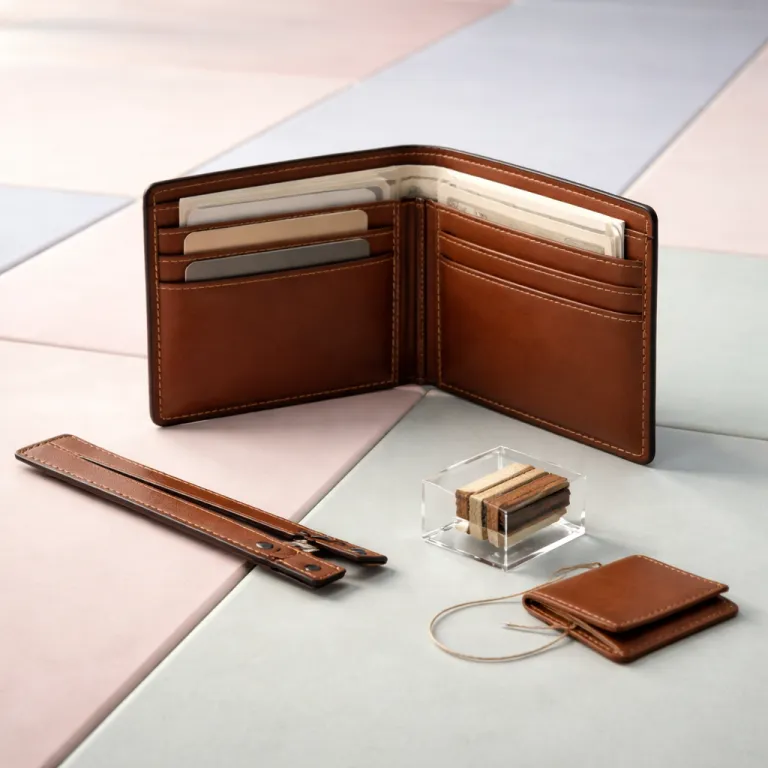
The architecture of a luxury leather wallet
A luxury leather wallet is not an accessory, it is a small piece of architecture that lives in your pocket every single day. When you study luxury leather wallet construction closely, you see how the layers of leather, lining, and thread either cooperate gracefully or fight each other until the wallet fails. The best wallets for men or women feel almost weightless in the hand, yet every edge, fold, and pocket has been engineered to handle thousands of openings and closings.
Start with the leather itself, because full grain leather is the foundation of any serious leather wallet and of all enduring leather goods. Full grain hides from reputable European tanneries keep their natural surface, which allows a mahogany or chestnut bifold wallet to develop a deep patina instead of cracking like cheaper grain leather or corrected grain. When you compare leather wallets side by side, the finest quality leather shows subtle pores, a gentle sheen, and a firmness that softens slowly rather than collapsing into a shapeless wallet black lump in your jacket pocket.
Construction then turns that raw material into structure, and this is where luxury leather wallet construction separates classic wallet designs from disposable fashion pieces. A classic bifold in black or chestnut full grain will usually be cut with the spine along the strongest part of the hide, while a slim men wallet might use slightly thinner grain leather but reinforce the fold with a hidden strip. Makers who care about quality will match the grain direction across all panels, so the men leather exterior, the card holders, and the inner pockets age at the same rhythm and keep the wallet’s silhouette regular and balanced.
The hinge at the fold and the quiet engineering of longevity
The hinge at the fold is the single most critical line in luxury leather wallet construction, because it carries every opening, every overstuffed card, every hurried bend. On a bifold wallet made from full grain leather, the fold should never be a sharp crease; instead, the leather is gently thinned, sometimes split in two layers, and trained over a curved form so the fibers are persuaded rather than forced into shape. When this hinge is cut across the strongest part of the hide and stitched with at least eight stitches per inch using waxed linen or high grade polyester, the wallet can last a decade or more of regular use.
Cheaper wallets often fail here because the maker simply folds a thick slab of grain leather and hammers it flat, which crushes the fibers and leads to cracking near the pocket corners within a few years. In refined leather wallets, the artisan skives the hinge area, sometimes laminates a second piece of quality leather with the grain reversed, and then shapes a gentle roll that lets the bifold open fully without stressing the spine. This is the same logic you see in thoughtful sewing patterns for leather bags, where the fold lines are curved and layered rather than brutally creased, a principle explored in depth in this guide to crafting leather bags with intelligent sewing patterns.
For a slim wallet or compact passport wallet, the hinge engineering becomes even more delicate, because there is less material to absorb stress and the price of failure is higher when you travel. Look for a classic bifold or travel wallet where the spine is either unstitched at the very center to allow natural flex, or stitched with a slightly longer stitch length that respects the leather’s movement. When you read serious reviews from experienced owners rather than marketing copy, you will notice that the best wallets for wallets men consistently mention how the fold feels in hand and how the men wallets open without resistance even when the card slots are fully loaded.
Stitching, card slots, and the daily grind of use
Stitching is where craftsmanship and engineering meet, and in luxury leather wallet construction the thread path tells you almost everything about the maker’s priorities. Premium wallet construction is defined by waxed linen thread and a minimum of eight stitches per inch, because this density balances strength with flexibility and prevents the leather from tearing between holes. On a classic wallet or a modern slim design, you want to see even spacing, tight tension, and backstitches hidden in the layers rather than messy knots at the edge.
Card slots are the true torture test, since every card you slide in or out grinds against the edges and lining, and this is where many leather wallets fail long before the exterior shows wear. High quality leather card slots are skived thin at the top edge, folded, and either lined with a fine calf or reinforced with a textile that can handle friction, while the visible grain leather remains full enough to keep its shape. When you inspect card holders in the best wallets, you will notice that the slots are staggered to avoid a thick step, and the stitching never runs exactly where the card corners press, which prevents premature tearing in daily use.
Hand stitching still represents the gold standard for connoisseurs, because a saddle stitch locks each pass of the thread independently, so a break in one place does not unravel the entire seam. For those who want to understand why this matters across all leather goods, the detailed analysis of the value of hand stitching in luxury leather explains how stitch type influences both strength and aesthetics. Whether you choose a bifold wallet, a compact men wallet, or a dedicated leather card holder, pay attention to how the stitching runs around the card slots, the inner pocket edges, and the spine, because this is where a leather rated as premium either proves its reputation or quietly betrays its compromises.
Edges, linings, and the materials you do not immediately see
The edge of a leather wallet is the quiet tell that separates a fifty euro piece from a five hundred euro investment, because edges reveal how much time the maker was willing to spend on finishing. On a luxury leather wallet construction, the artisan will sand the edges in several passes, apply dye, burnish with heat and friction, then seal with wax or multiple coats of edge paint until the transition from grain leather to interior feels like glass. When you run a finger along a classic bifold or a slim wallet black model and feel a sharp ridge or flaking paint, you are touching a corner that will fray long before the rest of the wallet wears out.
Bill section linings are another underappreciated detail, and here canvas often beats leather for both practicality and longevity in regular use. A tightly woven cotton or linen canvas lining allows banknotes to slide easily, resists stretching, and breathes better than a cheap split leather, which can trap moisture and encourage the full grain exterior to warp over time. There is one exception where a leather lining earns its place, and that is in a very slim men wallet or minimalist passport wallet where the maker uses ultra thin full grain or top grain leather to keep the profile low while maintaining a coherent feel across all interior surfaces.
Color choices also interact with construction, because a mahogany or chestnut interior will hide patina and ink marks differently from a stark black lining. When you evaluate price and quality together, look at how consistently the dye penetrates the edges, whether the pocket interiors are finished or left raw, and how the card holders are lined or unlined. A wallet that has been highly rated by experienced owners usually combines a robust canvas bill compartment, carefully skived leather card slots, and edges that show no separation between layers even after years of being slipped into and out of a jacket pocket.
RFID shielding, formats, and choosing the right wallet for your habits
RFID shielding has become a standard talking point in luxury leather wallet construction, yet not all implementations respect the leather or the user. Effective RFID protection relies on a conductive layer, often a metalized fabric, placed between the leather and the lining, and when done well it adds almost no thickness to a classic wallet or a slim bifold. When done poorly, it creates a stiff, plasticky feel that undermines the natural drape of full grain leather and can even cause the spine of the wallet to crack prematurely.
For many owners, the more important decision is format, because how you pay and travel should dictate whether you carry a bifold wallet, a dedicated card holder, or a compact passport wallet. If you mostly tap cards and rarely carry cash, a slim men wallet with four to six card slots and a central pocket for folded notes will feel lighter in the pocket and encourage disciplined curation of what you carry. Those who still handle multiple currencies or receipts may prefer a classic bifold with a full width bill compartment, a few vertical card holders, and perhaps a secondary wallet black travel piece reserved for boarding passes and documents.
RFID layers can also influence price, so it is worth reading detailed reviews that separate genuine performance from marketing theatre and that explain how different wallets men balance protection with tactile pleasure. Many of the best wallets for men leather enthusiasts now integrate shielding only on one side, leaving the other side of the leather wallet free to flex naturally and age with a rich patina. When you evaluate leather rated specifications, do not let the presence or absence of RFID dominate your decision; instead, treat it as one variable alongside stitch density, edge finishing, card slot design, and the overall harmony of materials that make a piece of leather goods feel quietly exceptional in daily use.
FAQ
How can I quickly judge the quality of a leather wallet in store ?
Start by feeling the leather, because true full grain leather has a subtle texture and depth that corrected grain leather cannot imitate. Open the wallet fully and look at the hinge, the card slots, and the edges, checking for even stitching, smooth edge finishing, and lining materials that feel robust rather than plasticky. A high quality classic wallet or slim bifold will feel balanced in hand, with no single area noticeably thicker or stiffer than the rest.
Is a hand stitched wallet always better than a machine stitched one ?
Hand stitching with a traditional saddle stitch is mechanically stronger, because each thread pass is locked independently and a break will not unravel the entire seam. However, a well executed machine stitch at eight or more stitches per inch using strong thread can still deliver excellent durability in regular daily use. The overall design of the wallet, the quality of the leather, and the way stress points are reinforced matter just as much as whether the stitching was done by hand or machine.
Should I choose canvas or leather lining for the bill compartment ?
For most people, a tightly woven canvas lining is the best choice, because it allows notes to slide easily, resists stretching, and handles moisture better than many thin leathers. Leather linings make sense in very slim wallets or in designs where a fully leather interior is part of the aesthetic and the maker uses high quality, carefully skived hides. If you often carry many notes or receipts, prioritize a canvas lined bill section with strong stitching at the corners, where stress is highest.
How many card slots are ideal in a luxury wallet ?
For a daily carry, six to eight card slots usually strike the right balance between capacity and slimness. More slots often encourage overstuffing, which stresses the hinge and can distort the leather over time, especially in a slim men wallet. If you need to carry many cards, consider pairing a classic bifold with a separate card holder, so each piece can remain relatively thin and age gracefully.
Does RFID protection affect how a wallet ages ?
RFID protection can affect aging if the shielding layer is thick or rigid, because it may restrict how the leather flexes and lead to creasing or cracking along the spine. High quality RFID implementations use very thin conductive fabrics that move with the leather and have minimal impact on feel or patina. When evaluating a wallet with RFID, flex it gently at the fold and along the card slots; if any area feels unusually stiff or crinkly, the shielding may compromise long term comfort and durability.