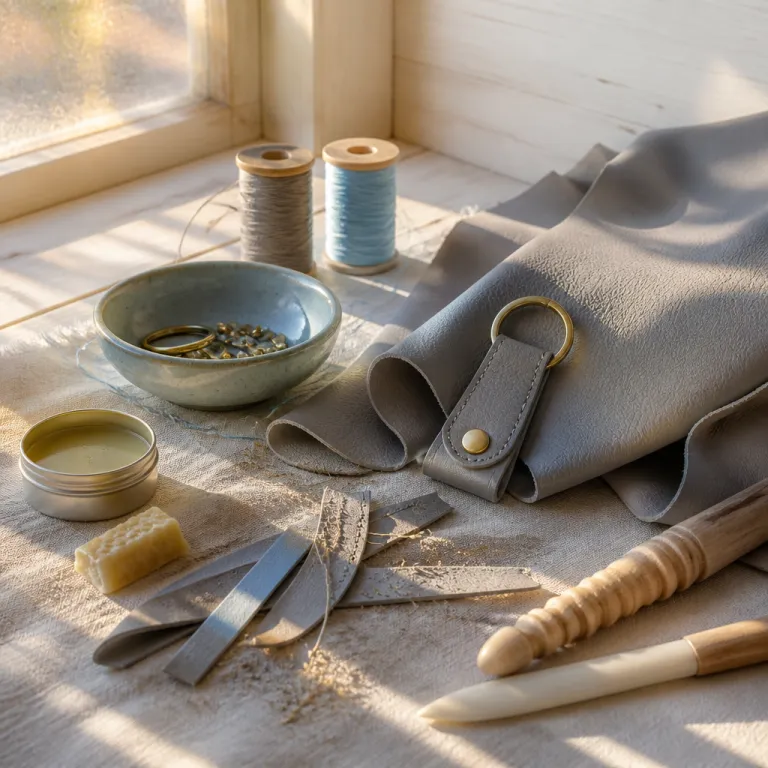
Luxury leather key ring holders: a quiet mark of status
A luxury leather key ring holder is one of the smallest objects you carry, yet it often reveals more about your standards than a briefcase or tote. This guide explains how materials, hardware, construction and care turn a simple leather keychain into a discreet status symbol, with concrete examples, indicative price ranges and practical buying criteria.
Why a leather key ring holder is a quiet mark of status
A well made leather key ring holder can say more about you than many larger accessories. When a leather key ring slips from your bag or pocket, the way the holder balances the metal key ring, the car key fob and the other keys quietly signals your standards. A refined key holder or compact key case in premium leather often becomes the most handled object in your daily routine.
Owners of high end bags understand that a mismatched keychain or bulky key chain can undermine the harmony of their ensemble. Choosing a leather keychain or a structured keychain holder in full grain or grain leather aligns the smallest key fob with the same aesthetic discipline as a briefcase or travel bag. This is why the best leather keychains are treated as miniature leather goods rather than casual accessories or free promotional items.
From a value perspective, the cost of a handmade leather key holder is justified by the same criteria you apply to a wallet or card case. You assess the regular price or any sale price in relation to the quality of the case leather, the precision of the stitching and the durability of the hardware that secures the ring and the keys. In the current market, well made leather key ring holders from respected maisons typically range from around USD 120–250, with ultra luxury pieces from houses such as Hermès or Louis Vuitton often exceeding USD 300. When a leather key ring holder is executed correctly, it protects the interior of your bag, organises your car key and house keys, and ages with a patina that reflects your habits.
Hardware integration on a leather key ring holder
On a luxury leather key ring holder, hardware is never an afterthought. The junction between the leather key strap, the metal key ring and the keychain holder body must be engineered so that the keys move freely yet never stress the grain leather unnecessarily. A well designed key holder uses hardware that is proportioned to the thickness of the full grain leather and the expected weight of multiple keys.
For owners who carry a car key fob alongside several house keys, the geometry of the key case becomes critical. A compact case leather shell with a central keychain leather spine can distribute the weight of the keys evenly, preventing the keychain from twisting and straining the stitching. This is where a premium leather key chain, especially one inspired by a leather wristlet keychain, can offer a more ergonomic way to carry keys without damaging the lining of a bag.
Attention to hardware finish also influences perceived value and the long term return on investment beyond any temporary sale price. A regular price that reflects solid brass or stainless steel hardware, rather than plated alloys, ensures that the ring, snap hooks and key fob attachments will not corrode and stain the leather key. Many high end makers specify hardware tested to common corrosion and abrasion benchmarks such as ISO 9227 (salt spray) and ISO 1518 (scratch resistance), which helps the finish withstand years of contact with keys and bag linings. When you read reviews, focus on comments about the feel of the key ring, the smoothness of the snaps and how the keychain holder behaves after months of daily use.
Balancing protection and access for car keys and fobs
Modern car keys and electronic key fobs have changed the way a leather key ring holder must be designed. The traditional flat key case with six hooks is often too narrow for a contemporary car key, so makers now sculpt the case leather into a three dimensional form that accommodates the fob without distorting the leather. This evolution requires more precise cutting of full grain hides and more robust stitching around the keychain leather anchor points.
When evaluating a key holder for a car key, examine how the keychain holder positions the fob relative to the other keys. Ideally, the leather keychain should suspend the car key slightly lower than the metal keys, so the plastic shell does not grind against sharp edges during movement. Some of the best handmade leather designs use a secondary key ring inside the case, allowing you to detach the car key quickly while keeping the rest of the keys secured.
This dual ring configuration often justifies a higher regular price or a modest premium over the typical market range. You may see a cost that appears elevated compared with a simple key chain, yet the protection it offers to a high value car key can prevent far more expensive replacements. As one customer review of a full grain leather key fob case notes, “After a year of daily commuting, the fob still looks new and the lining of my bag is completely unmarked.” For deeper insight into how a leather key fob can become a quiet statement of craftsmanship, consider how the maker reinforces stress points where the fob, ring and leather key meet under daily tension.
Choosing full grain leather and finish for daily use
The choice of full grain or top grain leather for a leather key ring holder directly affects how it will age. Full grain leather retains the natural surface of the hide, so every contact with keys, a bag interior or a car console gradually builds a unique patina. Grain leather that has been corrected and heavily finished may resist scratches at first, but it often lacks the depth of character that luxury owners expect from premium leather goods.
For a key holder or key case that lives inside a structured bag, a slightly firmer case leather with a subtle finish can protect delicate linings from metal keys. In contrast, a leather keychain that hangs from the outside of a tote or travel bag benefits from softer handmade leather that drapes gracefully while the key ring and keychain holder hardware carry the load. In both cases, the thickness of the keychain leather must be calibrated so that the ring and fob attachments do not cut into the material over time.
Pricing often reflects these material decisions more accurately than marketing language about the best leather key. When comparing a regular price with a sale price or reference point, look for clear descriptions of full grain sourcing, tanning method and finishing, rather than vague claims about premium leather. Many respected European tanneries, such as Horween in the United States, Tanneries Haas in France or Conceria Walpier in Italy, publish data from standardised tests like ISO 5402 flex resistance and ISO 11640 colourfastness, which indicate how well the surface will cope with repeated friction from keys. For a deeper technical perspective on how finishing can hide or reveal quality beneath the surface grain, leathercraft manuals and tannery case studies can be especially instructive.
Handmade construction details that justify the price
On a handmade leather key ring holder, the smallest construction details often justify the investment. Saddle stitching along the spine of the key case, executed with waxed linen thread, resists the constant pulling motion of keys far better than machine lockstitch. When a maker shapes the case leather around the key ring hardware while the leather is still slightly humid, the resulting form hugs the ring and prevents gaps that could catch on bag linings.
Artisans who specialise in leather keychains frequently bevel and burnish every edge of the keychain leather by hand. This slow process compacts the grain leather fibres, so the edges of the key holder feel smooth when you slide it into a pocket or alongside other items in a bag. It also reduces the risk of fraying where the keychain holder meets the metal ring, especially on designs that carry heavier car keys and a substantial key fob.
From a value standpoint, the regular price benchmark for such handmade leather work will naturally sit above mass produced options, yet the cost per year of use often proves lower. A carefully constructed leather key ring holder from an independent atelier might start around USD 80–120, while pieces from heritage brands that emphasise hand finishing can reach USD 200–400. When a piece is well made, you are less tempted by every seasonal sale price or promotional offer for a new key chain or leather keychain. Owners who track their collections carefully often note that a single well executed leather key ring holder can outlast several bags, becoming a constant companion across different phases of their lifestyle.
Practical ownership: care, use and gifting strategy
Living with a luxury leather key ring holder involves small rituals that preserve both function and beauty. Wiping the leather key surfaces weekly with a soft cloth removes grit from keys and hardware that could abrade the grain leather over time. Keeping the key holder in a dedicated pocket of your bag, away from cosmetics or sharp objects, protects both the case leather and the bag lining.
For many collectors, a coordinated set of leather keychains and key cases becomes a thoughtful gift strategy. A compact keychain holder in premium leather, matched to the colour of a favourite bag or car interior, feels more personal than a generic keychain or free promotional key chain. Because the price for such pieces often sits below larger leather goods, they offer an accessible entry point into a maison’s craftsmanship while still justifying a regular price that reflects handmade quality.
When evaluating a potential gift, pay attention to reviews that mention how the key ring behaves in daily use, how the key fob attachment holds up and whether the key holder fits modern car keys comfortably. Transparent information about shipping options, including whether any free shipping thresholds apply, helps you compare the regular price and any sale price fairly. In the end, the best leather key ring holder is the one that integrates seamlessly into the recipient’s habits, protecting their keys, their bag and their time with quiet efficiency.
Key figures on luxury leather key ring holders
- Industry reports on personal luxury goods consistently show that small leather items such as key holders, key cases and card wallets represent a significant share of sales, underlining how these compact pieces support brand visibility and loyalty.
- Market research on premium accessories indicates steady growth in demand for full grain and other high quality leathers, driven by consumers seeking longer lasting alternatives to synthetic keychains and mass produced fobs.
- Surveys of luxury buyers regularly find that a majority of customers read online reviews before purchasing small leather goods, which directly influences perceived fair value and willingness to pay regular price instead of waiting for a discount.
- Independent leather testing commonly includes abrasion, flex and colourfastness assessments, showing that well finished grain leather can endure repeated contact with metal keys when paired with correctly integrated keychain holder hardware.
FAQ about luxury leather key ring holders
How should I choose the right size of leather key ring holder for my keys ?
Measure the length and thickness of your largest car key or key fob, then compare it with the internal dimensions of the key case to ensure there is at least 5 millimetres of clearance on all sides. This prevents the case leather from stretching excessively and keeps the key ring moving freely. If you carry many keys, prioritise a slightly wider key holder with a robust keychain holder spine.
Is full grain leather always better for a key holder than other leathers ?
Full grain leather offers superior durability and a richer patina, which suits a leather key ring holder that will be handled many times each day. However, some owners prefer lightly corrected grain leather for a more uniform appearance, especially when matching a specific bag. The key is to ensure that the leather, whether full grain or corrected, is thick enough to resist pressure from the key ring and keys.
How can I prevent my leather keychain from scratching the inside of my bag ?
Choose a key case design that fully encloses the keys, with the metal key ring and key fob attachments positioned away from exposed edges. Keeping the key holder in a dedicated pocket or pouch inside the bag also reduces contact with delicate linings. Regularly checking the keychain leather for sharp hardware edges or loose screws helps you address issues before they mark the bag.
What maintenance does a handmade leather key holder require ?
A handmade leather key holder benefits from gentle cleaning with a soft, slightly damp cloth, followed by occasional conditioning with a neutral leather cream. Avoid over conditioning, as excess product can soften the grain leather too much and weaken areas around the keychain holder hardware. Always let the leather key ring holder dry naturally away from direct heat if it becomes wet.
Is a higher price in USD always a sign of better quality for leather keychains ?
A higher price in USD often reflects better materials and handmade construction, but it is not a guarantee on its own. Examine details such as full grain sourcing, stitching quality, hardware composition and how the key case is structured around the key ring and keys. Comparing these factors with transparent reviews and the regular price versus any sale price will give you a more accurate sense of value.
Conclusion: choosing a leather key ring holder with confidence
A luxury leather key ring holder is more than a place to clip your keys; it is a compact expression of your taste and priorities. By paying attention to leather quality, hardware integration, construction methods, independent testing data and real world reviews, you can select a piece that quietly elevates your daily routine while offering long term protection for your keys and your bags.
