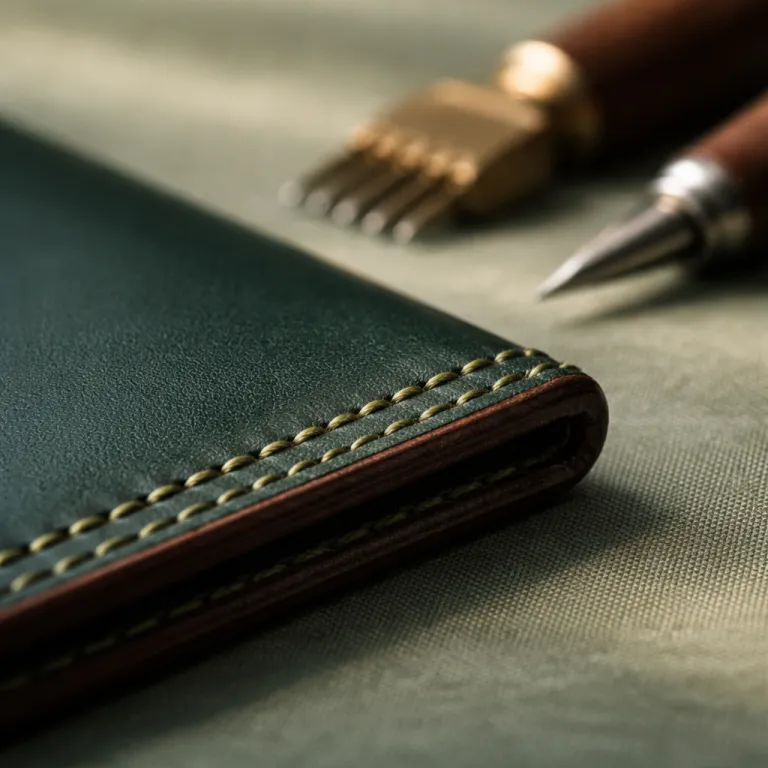
Why the stitch matters more than the logo
The quiet secret behind long‑lasting, hand‑sewn leather goods is how each stitch behaves under stress. When an artisan uses a single waxed thread and two needles for saddle stitching by hand, every crossing of needle and thread forms a tiny locked unit that can fail independently without opening the whole seam. On a cherished leather wallet or a larger piece of fine leatherwork, that difference in how the stitches fail over time is what keeps edges tight while the grain softens beautifully.
With machine stitching, the sewing machine forms a lock stitch where the upper and lower threads interlace inside each stitching hole, which is efficient but creates a zipper effect when one thread breaks and several pieces of the seam can unravel at once. Hand stitching with a traditional saddle stitch uses one continuous thread passing in opposite directions through the same holes, so if a single stitch breaks, the surrounding stitches still hold and the structural strength remains largely intact. This is why a hand‑stitched piece of quality leather will often age gracefully for decades while a similar machine‑stitched item of comparable hide quality can fail abruptly at a stressed corner.
Collectors who compare machine‑stitched and hand‑stitched seams side by side quickly feel the difference with a fingertip along the line of stitches. A well‑executed saddle‑stitched line on high‑quality leather goods feels like a low, even ridge, with each stitch snug in its hole and no loose thread fuzz catching the nail. When a seam has been rushed on a sewing machine, the stitching holes can look slightly torn or oval, the stitches may wander off the edge, and the hand feel of the goods becomes less reassuring, especially at stress points where several leather pieces meet.
Inside the saddle stitch and the lock stitch
At the seam level, hand sewing with a saddle stitch is almost architectural, because two needles travel through the same stitching holes from opposite sides and clamp the leather between them. Each time the artisan pulls the thread tight, the friction inside every hole locks that individual stitch, which is why the long‑term strength of hand‑stitched leather is often measured as significantly higher than comparable machine‑stitched seams in independent leathercraft tests and technical manuals. By contrast, machine stitching relies on a looped lock stitch where the failure of one section of needle thread can allow several adjacent stitches to loosen in a chain reaction.
When you examine a luxury leather wallet or a structured belting‑leather strap, look closely at how the stitches sit in the grain and along the edge. A true saddle‑stitched line shows perfectly balanced tension, with the thread slightly recessed into the leather sewing channel so that abrasion hits the leather first, not the thread, which extends the life of the seam over time. In a lock‑stitched seam from a sewing machine, the thread often rides higher on the surface, and repeated friction at corners or buckle holes will wear through the exposed fibres more quickly.
For a deeper understanding of how artisans engineer strength into straps and handles, it is worth reading about the craftsmanship behind belting leather construction in specialist saddlery and luxury‑goods references. There you will see how multiple leather pieces are laminated, skived, and then united by carefully planned stitching holes that respect the fibre direction of the hide. When saddle stitching is used on such quality leather, each stitch becomes a structural bridge, and the resulting leather goods will resist stretching, twisting, and daily handling far better than similar pieces joined only by fast machine stitching.
The wax, the thread, and the ritual of tension
Before the first stitch is made, a serious artisan spends time preparing the thread, because the way it is waxed and tensioned largely determines how durable hand‑sewn leather goods will be. Traditional hand sewing for luxury leather goods often uses linen or polyester thread that is drawn repeatedly across a block of beeswax, then warmed by hand to penetrate the fibres and create a smooth, protective coating. This waxed thread glides through the stitching holes with less friction, resists moisture, and locks more securely when the saddle stitching is tightened.
In contrast, machine stitching usually relies on prefinished spools designed to run cleanly through a sewing machine at speed, which is practical but rarely receives the same individual attention to waxing and tension. When an artisan performs hand stitching, each pass of the hand through the leather allows micro‑adjustments of tension, so the stitches can be tightened slightly more at stress points such as strap attachments, gusset corners, or belt holes. That level of control is impossible when sewing leather at thousands of stitches per minute, and it is one reason why machine‑stitched seams on heavy goods will sometimes show uneven tension or slight puckering along the edge.
The tools used in hand sewing also matter, especially the pricking irons that set the rhythm and angle of every future stitch. High‑quality pricking irons create clean, slanted stitching holes that guide the needles consistently, which keeps the line of stitches visually harmonious and mechanically strong over time. In comparative trials reported by long‑established French and English leather ateliers and trade schools, switching from generic chisels to precision pricking irons reduced stitch‑to‑stitch tension variation and visible seam distortion, a modest numerical improvement that translates into calmer, straighter seams on finished pieces. For a deeper dive into why this matters so much in luxury work, many advanced leatherworking guides show how this quiet preparation translates into seams that outlast fashion cycles and daily wear.
Reading stitch density, colour, and failure modes
Stitch density is one of the clearest visual signals of quality, yet it is often misunderstood by even experienced owners of leather goods. On robust saddle leather for travel goods or belts, six to seven stitches per inch can be ideal, because fewer but stronger stitches mean each hole removes less material and the seam retains more strength under load. On finer quality leather for small pieces such as a leather wallet or card holder, eight to ten stitches per inch create a refined look and distribute stress so that no single stitch or hole carries too much tension over time.
There is a point, however, where more stitches stop being better and start weakening the leather and its structure. Extremely dense machine stitching can perforate the edge like a postage stamp, especially when the sewing machine uses a sharp needle that cuts rather than displaces fibres, which makes the line of holes a natural tear path. Hand stitching with a well‑chosen saddle‑stitch spacing respects the grain and allows the leather to flex between holes, which is why carefully hand‑sewn seams often surpass the longevity of visually similar but over‑stitched machine‑sewn lines.
Colour choices also carry technical implications, not just aesthetics. A contrast stitch on pebbled leather can highlight every irregularity in the stitching line, while a tone‑on‑tone thread on smooth calf will quietly mask minor variations but still reveal tension issues under raking light. When inspecting older pieces, look for frayed thread at corners, elongated stitching holes near buckles, and areas where the stitches have sunk too deeply into compressed leather, because these are early signs that the seam will eventually fail even if the rest of the piece still looks well kept.
How to inspect seams in store and in your collection
Evaluating the real‑world durability of hand‑stitched leather starts with your fingertips, not your eyes. Run a thumb slowly along every seam of the leather goods piece, feeling for consistent height in the stitches and checking whether the thread sits slightly recessed rather than proud of the edge. A well‑executed line of hand stitching will feel almost like a continuous ridge, with no sharp needle entry points or loose fibres catching the skin.
Next, tilt the piece under strong, raking light and study the stitching holes one by one, especially where several leather pieces meet at handles, gussets, or strap attachments. Clean, evenly spaced stitching holes that are neither stretched nor torn indicate that the artisan used sharp but appropriate pricking irons and controlled tension during both hand sewing and any supplementary machine stitching. If you see oval holes, darkened edges around the stitches, or areas where the machine‑stitched line wanders close to the edge, assume that the long‑term strength of that seam will be compromised under real use.
Apply the same scrutiny to your existing collection, from structured briefcases to softer totes such as those discussed in the article on the refined allure of an orange tote for modern women. On older goods, some patina around the stitches is normal, and slight darkening of the thread where the hand touches the leather surface can even be desirable. What you must watch for are broken stitches that leave open holes, sections where the thread has vanished entirely, and areas where the seam has begun to separate, because these are signs that professional leather repair or careful hand‑sewn reinforcement will soon be necessary to preserve both function and value.
FAQ
How can I tell if a seam is hand stitched or machine stitched ?
Look at the back of the seam and the angle of the stitches. True hand stitching with a saddle stitch shows a consistent slant on both sides, while machine stitching usually has a different pattern on the underside where the bobbin thread interlocks. Hand‑stitched seams also tend to have slightly deeper, more deliberate stitching holes created by pricking irons rather than the perfectly round punctures from a sewing‑machine needle.
Does hand stitched leather always last longer than machine stitched leather ?
Hand‑sewn leather generally shows higher durability because each saddle stitch is independently locked, so a single broken stitch does not cause rapid unraveling. However, poor hand sewing with bad tension or low‑quality thread can still fail faster than precise machine stitching on quality leather. The best results come from combining excellent materials, correct stitch density, and careful finishing, regardless of the method.
What stitch density should I look for in everyday leather goods ?
For robust items such as belts, travel bags, or saddles, six to seven stitches per inch usually balance strength and flexibility. For smaller pieces like a leather wallet or card holder, eight to ten stitches per inch give a refined look while distributing stress across more holes. Extremely high densities beyond this range can weaken the edge by over‑perforating the leather, especially when done quickly by machine stitching.
When should I repair the stitching on a favourite leather piece ?
You should plan a repair as soon as you notice broken stitches, elongated holes, or sections where the seam has started to gap under gentle pressure. Leaving these issues unattended allows dirt and moisture to enter the holes, which accelerates fibre damage and reduces overall strength. Early intervention with professional leather work or careful hand stitching will usually restore integrity without altering the character of the piece.
Is polyester thread acceptable for high quality leather goods ?
Modern polyester thread can be excellent for luxury leather goods when it is properly waxed and matched to the leather thickness. It offers high tensile strength, good abrasion resistance, and stable colour over time, which supports long‑term durability. Many top artisans now combine traditional saddle‑stitching techniques with carefully chosen polyester threads to achieve seams that are both strong and visually refined.