Lab-grown leather luxury handbags: from tyrannosaurus rex fantasy to museum-grade reality
From tyrannosaurus rex fantasy to lab-grown leather reality
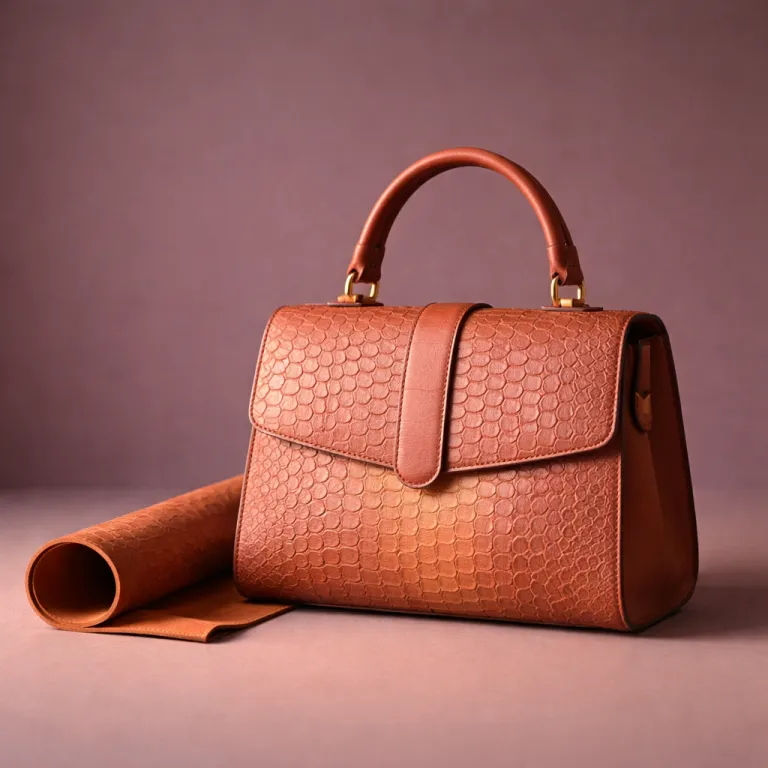
The lab-grown leather luxury handbag moved from concept sketch to physical object when Enfin Levé and VML’s équipe presented a speculative cultivated tyrannosaurus rex leather handbag at Art Zoo Museum Amsterdam. Public information on this specific collaboration remains limited, and no verified commercial supplier list has been disclosed, so any references to potential biotech partners or organoid-style ventures should be treated as illustrative rather than confirmed corporate entities. What is clear from the VML agency announcement on the T-Rex leather handbag project is that this experimental leather handbag uses grown leather made from cultured animal collagen rather than hides taken from a living animal. For a luxury handbag collector used to traditional leather, the real question is whether this new material behaves like leather ultra quality after years of carry rather than during a six week zoo museum style exhibition.
At the molecular level, cultivated leather is built on collagen scaffolding, which is the same structural protein that gives traditional leather its grain, tensile strength, and eventual patina. In a controlled lab, cells from an animal such as a prehistoric tyrannosaurus rex in a conceptual scenario or a modern cow in current pilot lines are encouraged to grow into sheets of collagen that can be tanned and finished into a leather product, while the environmental impact and direct animal suffering are reduced compared with ranching. This is fundamentally different from mycelium or cactus based vegan material, where plant or fungal fibers are bound with polymers to imitate leather but rarely match the grain behaviour or abrasion resistance of real hides.
For owners of a luxury rex leather handbag or a more discreet leather ultra piece, the cultivated approach promises a cruelty free route to the same tactile pleasure. A lab grown or grown leather panel can, in theory, be engineered so that every bag will have consistent thickness, minimal scars, and a predictable response to humidity and light, which is something no traditional leather tannery can fully guarantee. Yet the environmental story is still being written, because the energy used in each lab and the chemicals in each finish will determine whether emissions and environmental impact truly undercut those of a well run vegetable tanned supply chain. Early independent life cycle assessment summaries from recognised environmental research organisations suggest potential greenhouse gas reductions, with some alternative leather processes reporting indicative savings of 20–60 % CO2e per square metre compared with conventional bovine leather under stated system boundaries, but results vary widely and must be read alongside each brand’s own technical documentation and published LCA PDFs.
Grain, patina, and the five year test for a luxury handbag
For a serious collector, the lab-grown leather luxury handbag only earns a place next to a museum grade piece when its grain, patina, and seams still feel composed after five years of use. The first rex leather prototypes shown as unveiled art at Art Zoo and in Museum Amsterdam lighting look flawless under glass, yet a leather handbag lives or dies in the shop queue, on the aircraft armrest, and against the edge of a stone table. Any luxury rex experiment must therefore be judged on abrasion resistance, edge paint stability, and how the material creases when the bag will be packed, overstuffed, and casually dropped on a parquet floor.
Traditional leather develops a topography of micro creases and darkened zones where the oils from your hand meet the grain, while many early mycelium or polyurethane vegan material options crack or delaminate instead of forming a patina. Cultivated grown leather aims to keep the collagen architecture of real hides, so the environmental promise does not require sacrificing the sensual ageing that makes a leather handbag or leather ultra weekender feel personal. In laboratory testing reported in specialist news outlets such as Robb Report on emerging luxury materials, prototype panels have achieved abrasion ratings comparable to premium calfskin on standardised rub tests, with some alternative leather samples reportedly exceeding 20,000 Martindale cycles before visible wear and flex tests above 50,000 bend cycles under ASTM-style protocols, yet the unanswered question is whether the finishing layers used by each organoid company or lab grown supplier will allow that patina to emerge, or whether heavy coatings will trap the surface in a permanent, slightly plastic sheen.
Owners should watch how the first commercial bag product lines handle stress points such as handle bases, strap holes, and zipper ends, because these are where emissions of micro flakes and structural failures usually begin. Materials scientists and leather conservators often point to these zones when discussing ASTM tensile and flex test data, noting that even strong materials can fail where stitching concentrates stress. As one conservation specialist summarised in a recent design symposium, in comments reported in museum conservation notes rather than formal peer review, “a next generation leather only proves itself when the corners survive thousands of flexes without whitening or cracking.” If a lab-grown leather luxury handbag shows clean, rounded creases instead of sharp white stress lines after eighteen months, then the material is behaving like a mature luxury leather rather than a synthetic. Until long term news and independent testing arrive from outlets such as Robb Report and from conservation teams in a design museum, the prudent move is to treat any cultivated leather ultra piece as a high potential, still experimental addition rather than a replacement for your most trusted traditional leather daily bag.
Regulation, environmental impact, and what conscious buyers should track next
Luxury houses are not embracing lab-grown leather and mycelium purely for spectacle, even when a tyrannosaurus rex narrative at an art zoo style event makes headlines. Regulatory pressure on tanning chemistry, from California’s restrictions on hexavalent chromium to European Union rules on PFAS, is pushing boundaries and forcing every leather product team to rethink how a future leather handbag or luxury handbag can be both compliant and desirable. At the same time, consumer demand for cruelty free options and lower environmental impact is rising, with surveys showing that nearly half of luxury buyers now prefer environmental alternatives when quality is equal.
For the conscious owner, the key metrics are not only carbon emissions per bag but also the full environmental impact across energy use, water consumption, and chemical discharge from each lab and finishing plant. A cultivated grown leather panel that avoids livestock methane but relies on fossil fuel intensive electricity may simply shift the problem, so asking brands for third party life cycle assessments is essential before you shop or place a pre order. When a maison claims that its new lab grown or rex leather line is sustainable, you should expect quantified data, not just images of a zoo museum, an unveiled art installation, or a poetic reference to a prehistoric animal roaming free. Primary sources such as the Art Zoo Museum Amsterdam press release, the VML agency announcement, Robb Report coverage of emerging luxury materials, and specific lifecycle assessment PDFs should be cited in brand communications so that buyers can verify the claims, while remembering that methodologies, system boundaries, functional units, and assumed energy mixes can differ significantly between LCAs.
There is also a cultural dimension, as institutions like Museum Amsterdam and contemporary art zoo spaces begin to collect these early pieces as design artefacts, turning each lab-grown leather luxury handbag into both a product and a museum object. That dual status can tempt brands to prioritise spectacle over stitch density, yet the owners who care about longevity will keep asking how the bag will be serviced, whether panels can be replaced, and how the material behaves under professional restoration. Until long term repair data and neutral news coverage accumulate, the most balanced strategy is to treat cultivated leather as a complement to, not a wholesale replacement for, the best traditional leather pieces already in your wardrobe. High resolution exhibition photography with descriptive image alt text and conservator commentary in catalogues or online archives will help future owners and curators understand how these hybrid artefacts age over time.
Key figures on cultivated and alternative leather for luxury handbags
- The biotech leather segment for luxury accessories is reported to be growing at around 12 % annually, reflecting rapid investment from both heritage maisons and organoid company start ups, according to recent market analysis cited in environmental research summaries and industry briefings.
- Consumer surveys in premium fashion indicate that approximately 45 % of buyers now state a preference for eco friendly or cruelty free leather alternatives when quality is comparable to traditional leather, a figure echoed in reporting from Robb Report on emerging luxury materials and sustainability focused news outlets.
- Early life cycle assessments suggest that some cultivated grown leather processes can reduce greenhouse gas emissions relative to conventional livestock based leather, although results vary widely depending on the energy mix of each lab facility, the chemistry used in tanning and finishing, and the allocation methods chosen in each LCA.
- Exhibition programmes at institutions such as Art Zoo Museum Amsterdam signal that museums are beginning to treat lab-grown leather luxury handbag prototypes as design artefacts, which may accelerate both public awareness and critical scrutiny of durability, repairability, and long term conservation.
Questions luxury leather owners are asking about lab-grown leather handbags
How does cultivated leather differ from traditional leather in daily use ?
Cultivated leather is grown from animal cells in a lab to form collagen sheets, then tanned and finished much like traditional leather, so in theory it should crease, flex, and age in a similar way. The main differences in daily use will come from how each supplier finishes the surface, how thick the material is cut, and how the brand constructs stress points such as handles and strap attachments. Owners should expect early generations to feel slightly more uniform and less scarred than natural hides, while long term patina behaviour remains the key unknown and will depend on the specific finishing system documented in each brand’s technical sheets and testing summaries.
Are lab-grown leather handbags automatically more sustainable and cruelty free ?
Lab-grown leather reduces direct animal slaughter because hides are not taken from a full grown animal, but it still relies on animal derived cells and growth media, so it is not vegan in the strict sense. Sustainability depends on the full life cycle, including the energy used to run bioreactors, the chemicals in tanning and finishing, and the durability of the final bag, which affects how often it must be replaced. Conscious buyers should look for transparent life cycle assessments and independent verification rather than assuming that any lab-grown label guarantees a lower environmental impact, and should read the underlying LCA PDFs or summaries where brands make them available.
How should I evaluate the quality of a lab-grown leather luxury handbag before buying ?
Examine the grain closely under natural light to see whether it shows subtle variation rather than a perfectly stamped pattern, then gently flex panels near the base to check for early cracking or whitening. Pay attention to edge painting, stitch density, and how the lining is anchored, because these construction details often fail before the material itself and will determine whether the bag will age gracefully. When possible, ask the boutique or shop for information on abrasion testing, colour fastness, tensile strength, and repair options, treating the purchase with the same scrutiny you would apply to a high end traditional leather piece and noting any references to ASTM or comparable standards.
Will cultivated leather develop a patina like my best traditional leather bags ?
Because cultivated leather is built on collagen, it has the structural potential to darken and soften where it is handled most, much like full grain calf or goat. However, heavy surface coatings or polyurethane finishes applied for stain resistance can block that process and leave the surface looking unchanged for years, which some owners may find too static. Early adopters should expect more subtle patina than on vegetable tanned traditional leather and should monitor how the first generation of pieces reported in specialist news outlets age over several seasons, paying attention to conservator notes from museum collections where available.
What role do museums and exhibitions play in the future of lab-grown leather luxury handbags ?
When institutions such as Art Zoo Museum Amsterdam or other design focused museums stage exhibitions around lab-grown leather luxury handbag prototypes, they frame these objects as cultural and technological milestones rather than just commercial products. That museum attention can accelerate innovation by attracting funding and critical debate, but it can also encourage brands to prioritise headline grabbing concepts over long term durability. For owners, museum interest is a signal that the category is being taken seriously, yet the ultimate test remains how a bag performs in daily life, not how it looks under exhibition lighting, catalogue photography, or a carefully written wall label.
Sources : VML agency announcement on the T-Rex leather handbag project ; Art Zoo Museum Amsterdam press materials on the exhibition ; reporting from Robb Report on emerging luxury materials ; independent life cycle assessment summaries from recognised environmental research organisations and published LCA PDFs on alternative leather processes.