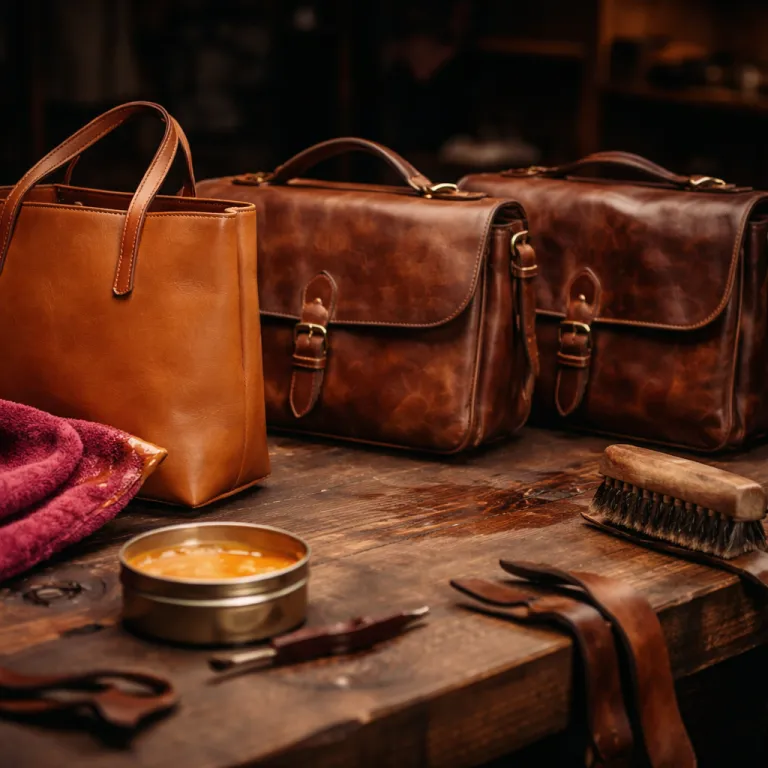
Leather patina: how long before your bag stops looking new
When owners ask how long leather patina takes to appear, they are really asking when their leather goods will stop looking freshly purchased and start feeling personally theirs. During the first three months, full grain leather begins a subtle transformation as the grain relaxes, the surface color shifts, and the first signs of natural character appear where your hands, clothes, and weather meet the material. In this early period, the way your leather is exposed to light, handled, and allowed to dry between uses quietly sets the long term direction of patina development.
On a well made briefcase in quality leather, the grain at handles and flap edges will darken first, because these high contact zones absorb more of your skin’s natural oils and experience more friction during daily wear. The same type of hide in a wallet lives mostly in the dark, so its surface ages more slowly, with the interior color deepening where cards press and the exterior showing only gentle sheen from occasional exposure. If you compare several leather products from the same tannery, you will notice that each item develops its own timing and pattern, proving how unique stories are written by use rather than by the marketing copy on the swing tag.
For most vegetable tanned and aniline finished leather, the most visible change in patina happens between month three and month twelve, when the surface moves from slightly uneven darkening to a coherent, warm tone. During this phase, the speed of aging depends on how often the leather goods are carried, how much sunlight they see, and whether they are allowed to stay dry between exposures to rain or humidity. Tannery guidance from European vegetable tanners, for example, often notes that daily carried bags show a noticeable deepening of tone within 90 days and a clearly matured surface by the end of the first year, especially when owners follow basic care instructions.
From month 0 to 12: where patina development really begins
In the first weeks, freshly tanned leather still carries a certain stiffness, and the grain can appear almost too perfect, especially on high grade full grain hides. As you carry a new briefcase or belt, the process the material goes through is mostly mechanical at this stage, with creases forming where the leather bends and the grain relaxing as fibers align with your habits. During this period, the areas exposed to your hands, cuffs, and the edge of your desk begin to develop early patina in a way that feels almost accidental, yet every mark is a record of time.
By month three, the color of quality leather usually deepens noticeably, especially on vegetable tanned pieces that are more receptive to oils and sunlight. The areas most exposed to light and touch will show a richer tone, while panels that remain covered or pressed against clothing will stay closer to the original color, creating a subtle map of your daily wear patterns. If you own waterproof cowboy boots in grain leather, for example, the vamp and toe that face the elements will age faster than the shaft, a contrast that can be managed with thoughtful care as explained in this guide on choosing the right waterproof cowboy boots for luxury leather enthusiasts.
By the end of the first year, most full grain and vegetable tanned leather goods will have moved decisively past the new phase, with a soft sheen where the surface sees regular contact and a more relaxed drape in straps and handles. Scratches that once appeared stark will have softened as the surrounding leather darkens, and the overall appearance will look more coherent, even if the color remains slightly uneven in low exposure zones. When clients ask how long before a bag looks truly lived in, the answer is that the first twelve months are where the visible story begins, but the narrative is still in its opening chapter.
Year 2 to 5: when leather records your habits in full grain detail
Once you move beyond the first year, the question shifts from how long it takes for patina to appear to how gracefully it will continue to evolve. Between year two and year five, the development on quality leather goods becomes less about dramatic color shifts and more about refinement, as the grain tightens visually and the surface develops a quiet, almost waxy glow. This is the stage where unique signatures emerge, and where two identical leather products carried by different owners will look unmistakably different.
On a full grain briefcase, one side may be consistently exposed to sunlight during your commute, while the other rests against your body, leading to a gentle asymmetry in color that tells you which way you usually carry it. Corners that brush against your desk or the armrest of a car will round off and darken, while panels that remain relatively protected will show a smoother, more uniform tone, illustrating how areas exposed to friction and light develop patina faster. If you place a premium leather mouse mat on your desk, as in this feature on elevating your workspace with a premium leather mouse mat, you will see the same principle, with the central area under your hand gaining a deeper color and sheen than the untouched edges.
During these middle years, the internal oils within the hide migrate slowly, and the surface will develop a more even luster if the leather is allowed to stay dry between uses and is conditioned sparingly rather than smothered. Different types of hides, from vegetable tanned bridle to chrome tanned calf, show different speed characteristics, but all benefit from moderate exposure and regular, restrained care. If you respect the material and avoid suffocating it in airtight storage, the story in this period will be one of increasing depth, not premature fatigue.
Year 5 to 10 and beyond: when good leather looks better than new
By the time a well made piece reaches five years of regular use, the question of how long until patina peaks becomes more philosophical than technical. High quality full grain leather that has been allowed to breathe, stay mostly dry, and receive occasional conditioning will often look better at this stage than it did in its first year, with a rich, low gloss surface and a color that feels almost three dimensional. The natural aging of vegetable tanned hides in particular can show a remarkable depth, with highlights on raised grain and darker valleys in creases and folds.
In contrast, lower quality leather products, heavily corrected grains, or overly finished material may begin to show their limits in this same time frame, with cracking at stress points, flaking finishes, or dull, lifeless surfaces that no amount of oils can revive. This is where the early choices about processing and tanning method reveal themselves, because only quality leather with intact grain can sustain repeated wear, sunlight, and handling without structural failure. When you see a ten year old briefcase whose panels still hold their shape, whose color has deepened rather than peeled, and whose handles have darkened gracefully where the hand grips, you are looking at the payoff of good materials and patient time.
For owners, the practical lesson is clear: if you want patina that ages into something quietly extraordinary, you must start with full grain or high grade grain leather, ideally vegetable tanned or lightly finished, and then treat it with respect rather than anxiety. Avoid airtight plastic storage, which traps moisture and prevents exposed surfaces from breathing, leading to mildew and a flat, unhealthy appearance instead of refined development. Over a decade, the unique story of a well chosen and well used piece will outshine any logo, because the color, the grain, and the way the surface evolves are yours alone.
Guiding patina without ruining it: care, exposure, and the worst mistakes
Owners often try to control how long patina takes by over managing the process, but aging is a collaboration between material, environment, and use. The goal is not to keep leather goods looking untouched, but to guide how the surface changes so that wear reads as character rather than damage. That means balancing exposure to sunlight, moisture, and oils in a way that respects both the type of hide and the finish chosen by the tannery.
For vegetable tanned full grain leather, moderate sunlight can be an ally, gently accelerating color change and helping develop a more even tone, provided the item is allowed to dry naturally and is not left baking behind glass for hours. Natural skin oils from your hands will also contribute to depth, especially on handles and straps, but heavy application of external oils or conditioners can saturate the fibers, soften structure, and darken the color too quickly. Different types of leather respond differently to care routines, so a light, breathable cream is usually safer than thick, waxy products that clog the grain and slow healthy development.
The single worst mistake is long term airtight plastic storage, which traps humidity, prevents exposed surfaces from breathing, and encourages mold that permanently stains the color and weakens the fibers. A better approach is what many artisans call benign neglect: store leather products in breathable dust bags, keep them away from direct heat sources, and allow them to experience regular but not extreme wear. If you want a small, elegant canvas for patina in your travel kit, a custom luggage tag such as those discussed in this piece on the refined allure of a custom leather luggage tag can be a satisfying way to watch how character develops over time without risking a major investment piece.
Choosing leather that will patinate beautifully: materials, finishes, and expectations
Before you even ask how long patina will take to appear, you need to choose leather that is capable of aging well in the first place. Full grain and high quality grain leather, especially when vegetable tanned or lightly pigmented, offers the best canvas for natural development, because the intact surface allows oils, light, and wear to interact directly with the fibers. In contrast, heavily corrected or plastic coated types of hides may resist staining in the short term, but they also resist the very process that creates depth and character over time.
When evaluating leather goods, look closely at the surface under natural light; you should see subtle variation in grain, small pores, and a sense that the color lives within the hide rather than sitting on top like paint. Ask about the processes the material has undergone, including whether it is vegetable tanned, chrome tanned, or a combination, and whether the finish is aniline, semi aniline, or heavily pigmented, because each choice affects both the speed of patina development and the way the color will shift. A lightly finished vegetable tanned full grain briefcase will change relatively quickly, with noticeable darkening in the first year, while a heavily coated corrected grain bag may look almost unchanged even after several years of regular wear.
Ultimately, the unique story you want should guide your selection; if you prefer a more controlled, slower change, choose a slightly more finished leather product, but if you relish visible evolution, embrace full grain, aniline, or vegetable tanned options and accept that small marks are part of the narrative. Over time, as the leather develops and the surface shows a richer, more complex color, you will find that the question of how long patina takes becomes less urgent, replaced by a quieter satisfaction in watching your leather products age alongside you. Patina is the one luxury detail that cannot be faked at the counter, and the only way to own it is to live with your goods long enough for the material, the environment, and your habits to write their shared history.
Key statistics on leather patina timelines and behavior
- Patina on vegetable tanned full grain leather usually shows visible darkening within the first 3 to 6 months of regular use, especially on high contact areas such as handles and corners.
- The most dramatic tonal changes in quality leather typically occur during the first 6 to 12 months, when exposure to sunlight, skin oils, and friction begins to even out early, patchy darkening.
- Photographic comparisons of aged leather goods often show the most distinctive patina signatures in the 5 to 10 year range, when color depth, sheen, and grain relaxation have fully matured.
- Leather stored long term in airtight plastic environments has a significantly higher risk of mold growth and fiber degradation than leather stored in breathable dust bags with moderate ventilation.
- Full grain and vegetable tanned leather generally develops patina faster and with greater visual depth than heavily corrected or plastic coated types of hides, due to the intact, more absorbent grain structure.
How long does it take for leather to develop patina
Most high quality leather begins to show visible patina within the first 3 to 6 months of regular use, especially on areas that see frequent handling and light. The most noticeable transformation usually happens in the first year, when color deepens and the surface gains a soft sheen, but the richest, most complex character often takes several years to emerge. Over a decade, well cared for full grain or vegetable tanned leather can develop a depth of color and individuality that no factory finish can replicate.
Why does some leather patinate faster than other leather
The speed of patina development depends on the type of leather, the tanning method, the finish, and the way the item is used. Full grain and vegetable tanned leather with aniline or light finishes patinate faster because their intact grain absorbs oils and responds more directly to light and friction. Heavily coated or corrected grain leather resists staining and wear, so it often changes more slowly and with less visual depth.
Can I speed up patina without damaging my leather goods
You can encourage patina gently by using your leather goods regularly, allowing moderate exposure to natural light, and avoiding over protection with heavy coatings or constant storage. However, forcing the process with intense sunlight, excessive oils, or artificial aging techniques risks drying, darkening, or weakening the fibers. The most reliable approach is patient, consistent use combined with restrained, appropriate care tailored to the specific leather.
What is the difference between patina and damage on leather
Patina is the gradual, even deepening of color, sheen, and grain definition that comes from normal wear, while damage is localized cracking, peeling, deep staining, or structural failure of the leather. Beautiful patina usually follows the contours of use, with smooth transitions and a healthy, supple feel, whereas damage often appears as abrupt breaks, rough edges, or brittle, dry patches. If the leather remains flexible, the surface looks coherent, and the color changes feel integrated rather than blotchy, you are likely seeing patina rather than harm.
How should I store leather if I want good patina over time
For healthy patina, store leather goods in breathable dust bags or cotton covers, away from direct heat sources and intense, prolonged sunlight. Avoid airtight plastic containers, which trap moisture and can lead to mold, odor, and a flat, unhealthy surface instead of refined patina. Periodically airing pieces and rotating their position helps prevent uneven fading and supports a more balanced, attractive aging process.
