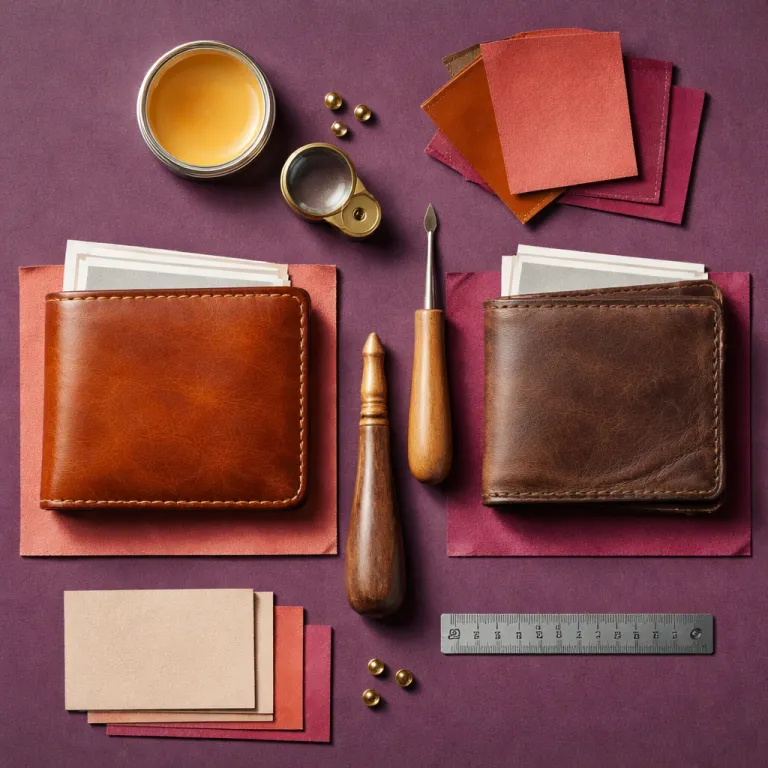
What full grain really means when you choose a daily wallet
When you look for the best full grain leather wallet, you are really choosing how your pocket will age over years of use. True full grain leather keeps the original grain leather surface, so every tiny scar and pore remains visible and slowly darkens into a deep patina. A full grain leather wallet that starts slightly matte and dry will often become your richest looking piece of leather goods after a few seasons of handling.
Full grain means the top layer of the hide is intact, while top grain leather has been sanded to remove imperfections and corrected grain or bonded leather use heavy finishing to hide flaws. A wallet leather panel that looks perfectly uniform and plasticky under bright light is usually not full grain, even when the hangtag claims the best material. When you compare wallets side by side, run a finger across the surface of the leather wallet and watch whether the grain wrinkles subtly under pressure or stays stiff like coated plastic.
Owners of luxury leather wallets often ask whether a slim wallet can really last as long as a thicker bifold wallet. The answer is that quality leather and construction matter far more than bulk, because a minimalist wallet in dense full grain can outlive a heavy pocket wallet made from weak bonded leather. If you want a wallet full of character in ten years, choose visible natural grain, a simple bifold, and a layout that respects how many cards and how much cash you actually carry.
Separating full grain, top grain, corrected grain and bonded leather
To judge the best full grain leather wallet, you first need to separate marketing language from material science. Full grain leather keeps the full thickness of the grain leather surface, while top grain removes the very top to create a smoother but slightly weaker layer. Corrected grain and bonded leather are fundamentally different materials, even when the finished wallets sit in the same glass case and share similar prices.
In a luxury boutique, ask directly whether the leather wallets use full grain, top grain, or a corrected finish, then inspect the edges of the cash pocket and card slots for clues. Full grain usually shows small natural variations at the fold of a bifold wallet, while corrected grain looks flat and overly consistent, especially on black pieces. Bonded leather often reveals itself at the edge of a pocket wallet, where you may see a compressed, almost fibrous cross section rather than a dense, single piece of hide.
Construction details matter as much as the leather type when you compare front pocket designs, classic bifold layouts, and more experimental minimalist wallet formats. A well made leather bifold with clean edge paint and tight stitching will outlast a thicker wallet leather panel that has been heavily corrected and coated. If you are also choosing other accessories, the same logic applies when you select a structured bag or a refined multi compartment purse, and a detailed guide such as how to choose the perfect multi sac purse for your luxury lifestyle can sharpen your eye for quality across categories.
The three construction cues that reveal real quality in a wallet
Once you have confirmed that a piece is truly full grain, the best full grain leather wallet is decided by construction rather than logo. First, count the stitches along the spine of the bifold and around each cash pocket, aiming for at least eight stitches per inch for real quality. Second, look at the thread itself, because a waxed polyester or linen thread resists abrasion far better than soft cotton in high stress card slots.
Third, inspect the edges of the leather wallet where two layers of wallet leather meet, especially around the front pocket and the outer corners. High quality leather wallets have edges that are sanded, sealed, and often hand painted in multiple coats, while cheaper wallets show raw, fuzzy fibers or thick plastic piping. When you handle several wallets, flex the leather bifold gently and listen for any cracking sounds from the edge finish, which signal a coating that will fail long before the full grain itself.
Interior layout also reveals whether a piece is designed for years of use or just for a product photo. A minimalist wallet with six to eight card slots, one cash pocket, and perhaps a discreet rfid shield often wears better than a crowded design with too many slots and metal frames. If you want a deeper dive into how great leather is built from tannery to bench, the article on how great leather actually gets made inside a heritage maison offers useful context for judging every future wallet purchase.
Layout choices: why a lean card holder often outlives a bulky trifold
Many owners assume the best full grain leather wallet must be thick, heavy, and packed with features. In practice, a slim wallet or compact card holder made from dense full grain often survives daily front pocket carry better than an overbuilt trifold. Excess layers of leather, fabric, and plastic add stress points, especially when you sit with the wallet in a back pocket for years.
A simple bifold wallet with a single cash pocket and a curated number of card slots spreads pressure evenly across the grain leather. By contrast, a trifold with metal frames, windows, and extra flaps concentrates strain along narrow folds, which will eventually crack even quality leather. If you prefer to carry your wallet in a jacket or front pocket, a minimalist wallet with horizontal card slots and one hidden compartment usually balances access, discretion, and longevity.
Think about how many cards you truly use in a week, then choose a layout that fits that number with perhaps two spare slots. A pocket wallet with twelve or more card slots invites you to overload it, which stretches the leather wallet and distorts the silhouette of tailored trousers. For travel or days when you need extra capacity, pairing a primary slim wallet with a secondary card holder is often more elegant than forcing everything into one swollen wallet full of forgotten receipts.
Price brackets and what actually changes from 100 to 500
Price alone does not guarantee the best full grain leather wallet, but certain thresholds do correlate with real improvements. Around the lower luxury bracket, you start to see consistent full grain, decent stitch density, and basic rfid shielding in both black and tan leather wallets. At this level, focus on whether the wallet leather feels dense yet supple, and whether the interior card slots are lined with leather rather than thin fabric.
Move into the mid tier and you should expect higher quality leather, more refined edge finishing, and often handmade details such as saddle stitching on stress points. Here, the difference between full grain and top grain becomes more visible, especially as the grain leather begins to take on a soft sheen after a few months. You will also notice more thoughtful layouts, such as front pocket friendly slim wallet designs and compact leather bifold models with carefully placed cash pocket openings.
At the upper tier, the premium is usually paying for handwork, brand heritage, and sometimes exotic finishes rather than a dramatic leap in durability. A truly handmade wallet full of subtle details, such as skived folds and hand burnished edges, can feel like a small piece of bespoke leather goods in your pocket. Before committing, compare several wallets across these brackets and ask yourself whether the extra cost buys better materials, better construction, or simply a logo you will rarely see once the wallet is in your pocket.
A ten year checklist for choosing a wallet that will age with you
When you evaluate the best full grain leather wallet, imagine how it should look after a decade of use. The surface of the full grain should be able to absorb oils from your hands, darken gracefully, and show a fine network of lines rather than peeling or cracking. Any leather wallet that feels overly plasticky or smells strongly of chemicals is unlikely to reward years of daily handling.
Run through a simple checklist in the shop or while scrolling product pages on your phone. Confirm that the description specifies full grain rather than just genuine leather, then zoom in on photos of the grain leather and the edges of the cash pocket. Look for tight stitching, clean edge paint, and a layout that matches your actual number of cards, whether you prefer a front pocket slim wallet, a classic leather bifold, or a compact pocket wallet with a few extra card slots.
Finally, consider how the wallet fits into your broader wardrobe of leather goods, from briefcases to refined backpacks and travel pieces. The same eye that spots a well made minimalist wallet will help you choose other essentials, and guides such as an overview of the finest leather backpacks for women can sharpen your sense of proportion and material quality. When every piece in your rotation is chosen with this ten year horizon, your pockets, bags, and desk all tell a coherent story of quiet, confident taste.
Key statistics on full grain wallets and luxury leather goods
- Market analyses of luxury small leather goods report that premium wallets and card holders have seen steady price growth in recent years, reflecting both higher material costs and sustained demand for quality pieces.
- Industry craft standards often cite a minimum of eight stitches per inch on wallet seams as a benchmark for durable construction, with higher stitch density associated with better resistance to daily flexing and abrasion.
- Reports on consumer behavior in the luxury segment show that many buyers now keep a primary wallet for between five and ten years, which makes the choice of full grain over bonded leather or heavily corrected grain a significant long term decision.
- Analysts tracking leather goods note that compact formats such as slim wallets and minimalist card holders have grown their share of the market, as more professionals shift to front pocket carry and digital payments reduce the need for large cash pockets.
FAQ about choosing the best full grain leather wallet
How can I tell if a wallet is really full grain leather ?
Look closely at the surface of the leather under good light and search for small natural marks, subtle pores, and slight variations rather than a perfectly uniform texture. True full grain leather will show fine wrinkles when you press a thumb into it, and the grain will move slightly instead of staying rigid like a plastic coating. If the label only says genuine leather without specifying full grain or top grain, assume it is a lower grade unless the maker can clearly explain the material.
Is a slim front pocket wallet as durable as a thicker bifold ?
A well made slim wallet in dense full grain can be just as durable as a thicker bifold wallet, and sometimes more so. Durability depends on the quality of the hide, the stitch density, and the edge finishing rather than on bulk alone. A compact front pocket design that avoids excessive layers and metal frames usually experiences less stress and therefore ages more gracefully.
Should I avoid bonded leather and corrected grain for a daily wallet ?
For a wallet you plan to carry every day for many years, bonded leather and heavily corrected grain are poor choices. These materials rely on finishes and adhesives that tend to crack or peel long before the underlying fibers wear out. Full grain or high quality top grain leather, combined with good construction, will almost always provide better long term value.
How many card slots are ideal in a minimalist wallet ?
Most professionals find that six to eight card slots, plus one cash pocket, are enough for daily life. This layout keeps the wallet slim while still accommodating essential cards such as identification, payment cards, and one or two access passes. If you regularly carry more, consider using a secondary card holder for rarely used cards instead of overstuffing your primary wallet.
Does rfid protection matter in a luxury leather wallet ?
RFID shielding can add peace of mind if you frequently travel or spend time in crowded urban environments, but it should not override material and construction quality. A well designed full grain leather wallet with discreet rfid lining in selected panels offers a good balance of security and elegance. If you rarely use contactless cards or often carry your wallet in a bag rather than a pocket, rfid may be a secondary consideration rather than a deciding factor.
