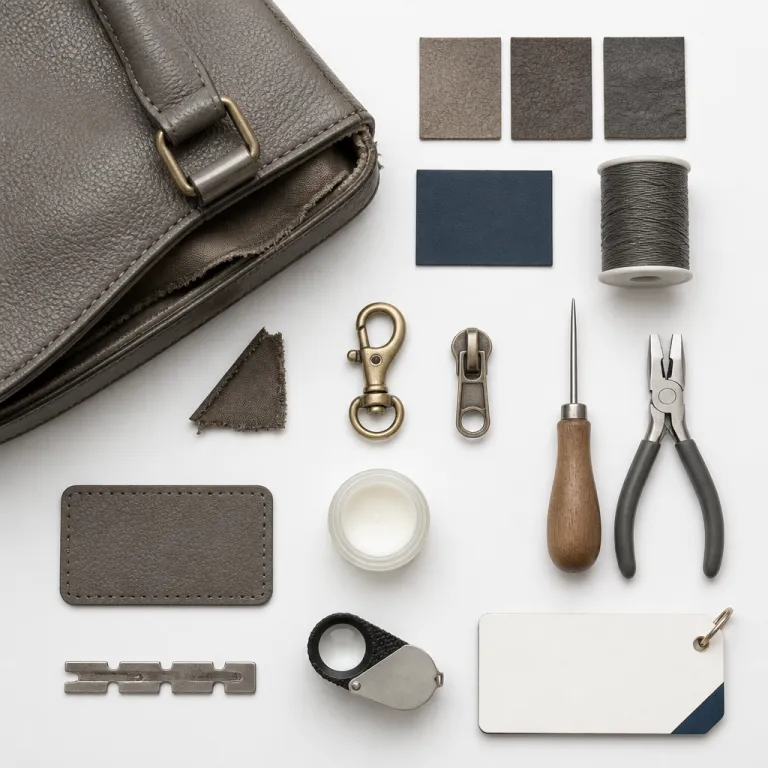
The first glance: how professionals read leather before they touch it
A seasoned restorer begins a professional leather bag repair assessment long before any repair tools appear. They cradle the leather bag lightly, tilt it toward the light, and read the grain, fibre movement, and subtle color shifts as if they were lines on a medical chart. In those first seconds, they already map which repairs are viable, which restoration steps are safe, and where the risk of further damage quietly hides.
The first triage is always grain condition, fibre integrity, and moisture content, because every professional repair decision for luxury handbags and bags depends on these three variables. Supple full grain leather with healthy fibre structure allows discreet leather repair and color restoration, while dry, compacted fibres in an older designer handbag may only tolerate minimal intervention. When a restorer senses brittle fibres in a louis vuitton handle or another luxury handbag strap, they know that structural repairs must be prioritized before any cosmetic restoration or cleaning.
Next comes the finish reading, where the professional handbag specialist identifies the leather type, the topcoat, and any previous amateur repairs or over enthusiastic cleaning conditioning attempts. A glossy, heavily pigmented surface on many leather bags behaves very differently from a semi aniline briefcase, so the same bag repair technique would be reckless across both materials. This is why a serious professional leather bag repair assessment always includes questions about age, storage, previous leather care routines, and any at home leather laundry experiments you may have tried.
Hardware and construction details complete this first pass, because they reveal how far a future handbag repair can safely go without compromising originality. A restorer checks whether the original rivets, zips, and clasps can be reused during repair restoration, or whether hidden corrosion already threatens the surrounding leather. For a collector grade designer handbag, preserving original hardware and stitch patterns often matters as much as the visible leather restoration itself.
Surface versus structure: when a scratch is more than a scratch
Most owners see a scratch, a scuff, or a corner darkened by city grime, while a professional immediately separates surface damage from structural damage. Cosmetic marks live in the finish and upper fibre layer, which means careful leather repair and color restoration can usually return the bag to quiet elegance. Structural problems live deeper, where the leather, lining, and reinforcement materials start to separate, crack, or rot, and these demand a very different level of repair services.
During a professional leather bag repair assessment, the restorer will flex the panels gently and listen, because healthy leather bags move silently while compromised layers sometimes crackle. If a louis vuitton tote shows only light corner wear and a few scratches, a focused handbag restoration with cleaning, color work, and edge paint can be enough, but a soft creaking sound near the handle base suggests hidden structural repairs are coming. Torn stitching, delamination of bonded layers, and dry rot around hardware anchors all signal that simple cosmetic repairs would be irresponsible without deeper restoration.
Scratches themselves are graded with surprising precision, since not every mark on a leather bag deserves the same intervention. A shallow surface scratch on a luxury handbag can often be eased with targeted leather care and professional cleaning conditioning, while a deep gouge that cuts through the finish into the fibre may require filler, color restoration, and sometimes partial panel repair. Stories of owners who tried to buff out such damage with household products or aggressive leather laundry methods are common, and they often turn a simple repair into a complex handbag repair project.
For those curious about how other collectors navigate this line between patina and damage, long form owner confessions about scratch repairs can be illuminating, especially when they show before and after stages of careful restoration. One useful deep dive on luxury scratch management appears in this piece on luxury leather scratch repair stories, which pairs real world damage with professional repair outcomes. Reading such case studies helps you understand why a restorer sometimes recommends living with a faint mark rather than risking over aggressive leather repair on delicate materials.
The economics of repair: value, sentiment, and the point of no return
Once the technical state of the leather bag is clear, the conversation shifts to value, and this is where a professional leather bag repair assessment becomes part craft, part financial analysis. A responsible atelier will compare the projected repair restoration cost to the current replacement value of the same or similar designer handbags. When the estimate for repairs approaches roughly half the replacement price, the decision becomes less automatic and more about what the bag represents to you personally.
For a frequently used louis vuitton work tote or another luxury handbag that anchors your daily wardrobe, investing in structural repairs and full handbag restoration can still make sense, especially if the leather type is now discontinued. In contrast, a mid tier leather bag with extensive water damage, failed hardware, and compromised lining may not justify the same level of professional repair, even if the sentimental pull is strong. This is where a candid restorer will outline tiers of repair services, from essential structural work to optional cosmetic leather repair, so you can align the restoration with both budget and emotional value.
Environmental cost also enters the equation, because extending the life of leather bags through thoughtful care and timely repairs reduces the need for new production. Many owners now weigh the carbon footprint of replacing a designer handbag against the impact of a well executed handbag repair that adds another decade of use. If you are considering minor at home fixes before committing to full professional handbag work, it is worth reading a guide on when to repair leather at home versus calling a professional, so you do not accidentally turn manageable damage into irreversible harm.
There are, however, clear situations where a professional will advise against further repair restoration, even when the bag carries strong memories. Severe mould that has penetrated the fibre structure, extreme heat exposure that has shrunk the collagen, or previous amateur dye jobs that sealed the surface can all push leather beyond safe restoration. In these cases, the most ethical repair specialists will suggest salvaging hardware or small panels for future projects rather than promising a full handbag restoration that cannot truly protect the remaining materials.
What ruins leather beyond repair: silent threats and irreversible mistakes
From a restorer’s perspective, the most heartbreaking professional leather bag repair assessment is the one that arrives too late, when the leather has crossed a line that craft cannot pull back. Mould is the quietest villain, because it does not just stain the surface but gradually digests the collagen fibres that give leather its strength and flexibility. Left in a damp closet, a luxury handbag can move from light surface bloom to deep structural damage long before the owner notices anything more than a musty smell.
Heat is less subtle but equally unforgiving, especially when a leather bag is left near a radiator, in a car under direct sun, or under a hairdryer after an accidental spill. Once the fibres shrink from excessive heat, no amount of leather care, cleaning conditioning, or professional repair can fully restore the original suppleness, and attempts at aggressive rehydration often cause further cracking. A careful restorer will always ask about storage habits during a handbag repair consultation, because this history often explains why certain materials feel oddly rigid or warped compared with other leather bags of similar age.
Amateur recoloring is another frequent point of no return, particularly when owners use opaque paints or unsuitable dyes that seal the surface and suffocate the leather. When a louis vuitton or other designer handbag arrives with thick, uneven home applied color, the repair specialists must first decide whether stripping is even possible without destroying the finish beneath. In many cases, the safest path is partial color restoration that accepts some visual compromise rather than chasing a perfect leather repair that would require removing too much of the original surface.
To avoid these traps, regular, informed leather care matters more than dramatic interventions, and that starts with choosing the right conditioner for your specific leather type and finish. A detailed guide on selecting the right leather bag conditioner can help you match products to materials, so you support the fibres instead of smothering them. When cleaning routines, storage conditions, and occasional professional services work together, the need for drastic repair restoration becomes rare, and your handbags age with the kind of patina that connoisseurs quietly admire.
The restorer’s toolkit and how to choose the right atelier
Watching a professional at work during a detailed professional leather bag repair assessment is like seeing a surgeon lay out instruments before an operation. Edge paint bottles, leather filler jars, airbrush systems, precision knives, and burnishing tools all have specific roles in the choreography of handbag restoration. The sophistication of this toolkit, and the restraint with which it is used, often separates true repair specialists from general cleaning services.
Edge paint rebuilds worn handles and strap edges on leather bags, while flexible fillers address deeper gouges before color restoration blends everything back into the surrounding panels. Airbrush systems allow a professional handbag restorer to feather pigment across a louis vuitton corner or another designer handbag flap without creating hard lines, preserving the original character of the leather. Behind the scenes, leather laundry processes, controlled drying, and staged cleaning conditioning cycles prepare the materials so that every subsequent leather repair step bonds correctly and ages gracefully.
Choosing where to entrust your bag repair work starts with the intake process, because a serious atelier treats assessment as a structured consultation rather than a quick counter glance. You should expect questions about leather type, usage patterns, previous repairs, and storage, followed by a written plan that separates essential structural repairs from optional cosmetic restoration. If a workshop promises instant results without examining the hardware, lining, and internal reinforcements, that is a clear warning sign for any owner of luxury handbags and bags.
Ask to see before and after examples of similar leather bag projects, paying attention to whether grain, color, and original details remain consistent rather than over corrected. A trustworthy provider of repair services will be transparent about limits, explain which materials cannot safely undergo certain treatments, and sometimes advise against leather repair when the risk to originality is too high. In the end, the cobbler’s eye is not just about spotting damage but about knowing when restraint, rather than another layer of restoration, best serves the long term life of your most used designer handbags.
FAQ
How do I know if my bag needs professional repair or just basic care ?
If the issue is limited to light surface dirt or very shallow scratches, thoughtful leather care at home may be enough. When you see cracked handles, loose hardware, deep gouges, or any change in structure or shape, a professional leather bag repair assessment becomes essential. As a rule, if you can feel the damage with your fingertip or hear creaking when you flex the leather, it is time to consult repair specialists.
Is it worth repairing a heavily used designer handbag with worn corners and darkened handles ?
For high quality designer handbags and bags, especially those with sentimental value or discontinued leather type, repair restoration is often worthwhile. A skilled atelier can combine cleaning, structural repairs, and targeted color restoration to extend the life of a luxury handbag by many years. The key is to request a clear estimate that compares the repair cost to the current replacement value before committing.
Can all scratches on leather bags be removed completely ?
Not every scratch can or should be erased, because some marks sit deep in the fibre structure or run across delicate finishes. Many can be visually softened through careful leather repair, blending, and conditioning, especially when the damage is only in the surface layer. A good restorer will tell you honestly which scratches can nearly vanish and which will remain as subtle, stable traces of wear.
Will professional cleaning and restoration change the original color or finish of my bag ?
Responsible repair services aim to preserve the original color, sheen, and character of the leather rather than create a brand new look. Light cleaning and conditioning usually leave the finish unchanged, while more intensive handbag restoration may require controlled color work to even out faded or damaged areas. Always ask your restorer to explain how they will test pigments and finishes on hidden sections before treating visible panels.
How often should I send a frequently used luxury handbag for professional maintenance ?
For a leather bag in regular rotation, a professional checkup every one to two years is usually sufficient, assuming you store it properly and use suitable products at home. These visits allow early detection of small structural issues, such as loose stitching or stressed hardware, before they become major repairs. Between appointments, consistent leather care, gentle cleaning, and avoiding extreme heat or humidity will do most of the work in preserving your bags.