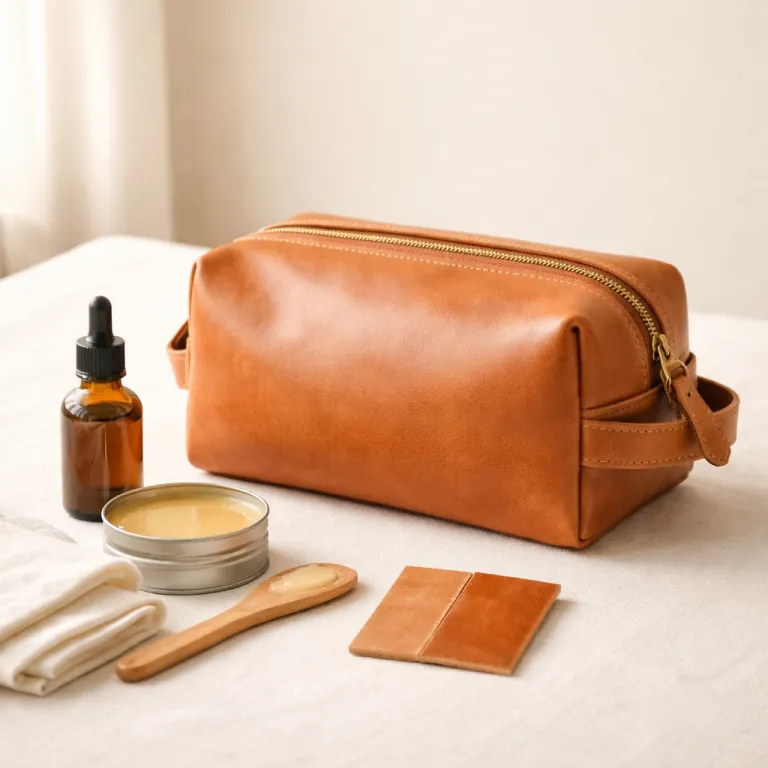
What a modern leather conditioner really does to your bags
Most advice about the best leather conditioner for bags still assumes thick saddle hides, not the finely finished calfskin on your briefcase. A modern leather conditioner for bags works inside the fibre structure, slowing moisture loss while keeping the leather surface supple enough to flex without cracking. When you choose the right conditioner product, you are managing water and oil balance rather than simply making leather items look shiny.
Think of leather care as hydration management, not cosmetic polishing, because every type leather used in luxury bags leather has a different tolerance for oils and waxes. Finished calf, box leather and many professional leather grades used in handbags are already coated with a thin protective layer, so a heavy oil based conditioner cleaner can clog pores and flatten the grain. A lighter cleaner conditioner emulsion, often marketed as a leather conditioner and leather cleaner in one, will usually be safer for these leather accessories and for small leather items such as wallets or cardholders.
At pore level, collagen fibres in leather need a balance of bound water and lubricating fats, and the wrong conditioner leather formula can either strip these or overload them. Traditional oil products such as mink oil or neatsfoot oil migrate deeply, which can be helpful for thick furniture car leather or vintage car seats, but they are often too aggressive for contemporary shoes bags or a structured handbag. For most luxury bags, the best leather conditioner for bags will be a pH balanced, natural based emulsion that offers free of silicone claims, minimal darkening, and compatibility with a dedicated leather cleaner from the same care kit.
Choosing the right conditioner for each leather type in your wardrobe
Your wardrobe probably mixes several leather items, from a box calf handbag to nubuck shoes and maybe a professional leather belt. Each type leather responds differently to conditioner cleaner formulas, which is why one universal product from an online amazon listing rarely serves every piece equally well. The best leather conditioner for bags is usually gentler than the conditioner you might use on rugged shoes or furniture car upholstery.
For smooth, semi aniline bags leather, look for cream based leather conditioners that list natural waxes and light oils rather than heavy greases, because these products maintain the surface sheen without collapsing the structure. When you care for belts, especially those sized carefully using a precise belt size guide for luxury owners, you can tolerate a slightly richer conditioner leather formula, as belts benefit from extra flexibility where they curve around the waist. Reserve stronger oil based care products for thicker leather accessories such as travel trunks, heritage briefcases or shoes that see regular rain and abrasion.
Suede and nubuck demand a different care strategy, because any traditional leather conditioner will darken and flatten their nap. These leathers prefer a dedicated leather care spray that is free from wax build up and works more like a breathable barrier than a heavy conditioner cleaner. For patent leather or high gloss finishes, skip conditioner entirely and rely on a mild leather cleaner and a soft cloth, since the plasticized surface prevents any product from reaching the underlying hide.
Mink oil, neatsfoot and beeswax blends: when they help and when they ruin
Mink oil has become a default recommendation in many forums, yet it was designed for work boots, not for a structured Hermès style handbag. On dense, open pore leather used in outdoor shoes or some furniture car pieces, mink oil penetrates deeply and restores flexibility, but on fine bags leather it can cause irreversible darkening and a slightly greasy surface. The best leather conditioner for bags rarely relies on pure mink oil, preferring more controlled blends where oil content is moderated by waxes and water.
Neatsfoot oil, traditionally used on saddlery, behaves similarly and is best reserved for thick straps, vintage luggage or car seats that have dried out over time. When you apply these oil based products to small leather items like wallets or card cases, they tend to soften edges excessively and blur crisp lines that define luxury construction. Beeswax and lanolin blends, by contrast, sit closer to the surface and can be excellent for shoes bags and certain leather accessories, provided you apply them sparingly and buff thoroughly.
For most contemporary handbags, a beeswax enriched leather conditioner offers a safer route to moisture balance than straight oil, especially when paired with a compatible leather cleaner from the same care kit. If you are unsure whether a conditioner leather formula is appropriate, test on an inconspicuous surface panel or under a strap and reassess after a full day, not just a few minutes. A simple protocol used by many professional leather technicians is to photograph the test area before and after conditioning, then compare colour shift, surface feel and any change in grain clarity in daylight.
The colour question: darkening, patina and how often to condition
Any genuinely effective leather conditioner will deepen colour slightly, because rehydrated fibres refract light differently. The best leather conditioner for bags respects this reality and aims for a subtle, even darkening that reads as richer patina rather than a patchy stain. If a product promises to be completely free from any colour change, it is usually doing very little for long term leather care.
For pale beige or icy grey bags leather, your tolerance for darkening will be low, so choose a conditioner cleaner marketed for delicate leather items and always test on a small area first. Rich browns, oxbloods and navy shades welcome a touch of depth, and here a natural based conditioner leather formula with beeswax can make the surface glow in a way that feels almost like a professional leather spa treatment. Black leather is the most forgiving, but even there, over conditioning with heavy oil products can create a sticky surface that attracts dust and dulls the finish over time.
Frequency is where marketing and reality diverge sharply, because most luxury bags need conditioning far less often than product labels suggest. In a temperate climate, a well rotated handbag carried in an office environment might only need the best leather conditioner for bags applied once or twice a year, with a gentle leather cleaner used more regularly to remove city grime. Guidance from tanneries such as Stahl and Satra technical bulletins indicates that light, periodic conditioning aligned with visible dryness is preferable to monthly treatment, which can gradually weaken fine grain leather.
A minimalist three product leather care kit that actually works
Most owners of high end bags accumulate too many care products, then use none of them with confidence. A focused three piece care kit will handle ninety five percent of real world situations and keep your leather items in quiet, controlled luxury. The best leather conditioner for bags sits at the centre of this kit, but it must be supported by the right cleaner and tools.
Start with a pH balanced leather cleaner in liquid or foam form, chosen to match the type leather you own most, whether that is smooth calf, pebbled grain or more robust professional leather used in travel pieces. Pair it with a compatible leather conditioner that is free from silicones and aggressive solvents, ideally a natural based emulsion that can serve both handbags and smaller leather accessories without over softening them. Finally, add a soft horsehair brush and two high quality microfiber cloths, reserving one for cleaner application and one for buffing conditioner leather to a gentle sheen.
This minimalist approach works whether your collection leans toward structured work bags, weekend duffels or shoes bags that share similar finishes. If you also maintain leather in furniture car interiors or car seats, you may add a dedicated conditioner cleaner formulated for automotive use, but keep it separate from your handbag kit. For practical everyday care, many restorers recommend choosing one general purpose cream, such as a neutral beeswax based lotion, and one more intensive balm reserved for older, drier leather that needs extra flexibility.
How to read labels, ratings and marketing when buying conditioners
Shopping for the best leather conditioner for bags online can feel like decoding a foreign language of promises, stars and shipping claims. Many amazon listings highlight five stars and fast shipped delivery, but the real information hides in the ingredient list and the fine print about suitable surfaces. A discerning owner reads past the headline and asks whether a product was designed for delicate handbags or for rugged work boots and furniture car upholstery.
Look for clear statements about compatible leather items, such as whether the conditioner is safe for aniline, semi aniline or pigmented finishes, and avoid any cleaner conditioner that claims to work equally well on suede, nubuck and patent. Phrases like natural based, pH balanced and free from silicones are helpful, but they must be supported by a transparent ingredient list rather than vague marketing language. When a brand such as Leather Honey or Chemical Guys leather care products specifies that its leather conditioners are not suitable for suede or unfinished leather, that honesty is a positive sign of professional leather understanding.
Be wary of multi surface products that promise to treat leather, vinyl, plastic and fabric in one step, because each surface demands different chemistry. A dedicated conditioner cleaner for car seats may be excellent for automotive interiors yet too strong for a small lambskin handbag, while a gentle handbag conditioner might underperform on heavily used shoes. Over time, you will build a short list of trusted brands and specific items that suit your collection, and you will spend less time experimenting and more time enjoying the patina that careful leather care quietly creates.
When to call a professional and when to leave leather alone
There are moments when the best leather conditioner for bags is no longer enough, and a professional leather restorer becomes the wiser choice. Deep stains, dye transfer on pale bags leather or severe dryness that causes visible cracking all sit beyond the reach of home care products. In these cases, further experiments with cleaner conditioner formulas can push pigment out of balance and make later repairs more complex.
A skilled atelier or professional leather technician will evaluate the type leather, the tanning method and the existing finish before choosing any conditioner leather or leather cleaner. They often use multi step care products that combine cleaner, conditioner and protective agents in carefully controlled ratios, applied with airbrushes or specialist pads rather than household cloths. This level of precision is particularly valuable for exotic leather accessories, vintage handbags and heirloom leather items where replacement is impossible or undesirable.
Equally important is knowing when to leave a bag alone, because over conditioning is as damaging as neglect. If a handbag feels supple, shows no dryness at stress points and responds well to a light wipe with a damp, lint free cloth, you can safely extend the time between applications of the best leather conditioner for bags. Restraint, in leather care as in style, is often what separates the seasoned collector from the enthusiastic amateur.
Key figures on leather conditioning and bag longevity
- Industry reports from major tanneries suggest that over conditioning with heavy oil based products can reduce the practical strength and resilience of fine calfskin over several years, compared with controlled use of lighter emulsions.
- Independent repair ateliers commonly observe that a large share of colour correction work on luxury handbags results from inappropriate use of cleaner conditioner combinations designed for shoes or automotive leather.
- Field data from automotive detailing specialists show that car seats treated with dedicated leather conditioners every 12 months retain flexibility around high stress bolsters noticeably longer than untreated seats.
- Surveys of professional leather restorers indicate that structured handbags conditioned no more than twice per year, using pH balanced products, typically arrive for refurbishment with less surface cracking than bags treated monthly.
FAQ
How often should I use a leather conditioner on my everyday work bag ?
For a bag carried regularly in an office environment, conditioning once or twice a year with the best leather conditioner for bags is usually sufficient. Focus more on gentle cleaning every few weeks with a suitable leather cleaner to remove dirt and skin oils. Increase conditioning frequency only if the leather feels dry, looks chalky or shows fine lines when flexed.
Will a good conditioner always darken my leather handbag ?
Any effective leather conditioner will deepen colour slightly, because rehydrated fibres absorb and reflect light differently. On darker shades this reads as richer patina, while on very pale bags leather the change can be more noticeable, so always test on a small hidden area first. If a product claims absolutely no darkening, it is likely offering minimal conditioning benefit.
Can I use the same conditioner on my shoes, car seats and handbags ?
Using one product for all leather items is tempting, but rarely ideal, because each type leather and each surface faces different stresses. A conditioner cleaner designed for car seats or rugged shoes often contains stronger agents that can overwhelm delicate handbag finishes. It is safer to keep a dedicated best leather conditioner for bags and, if needed, a separate formula for automotive or footwear use.
Do I really need a separate leather cleaner, or is a cleaner conditioner enough ?
A combined cleaner conditioner can work for light maintenance, but it will not remove embedded grime as effectively as a dedicated leather cleaner. For luxury handbags and small leather accessories, use a proper cleaner first, then follow with a modest amount of conditioner leather once the surface is dry. This two step approach keeps pores clear and allows the best leather conditioner for bags to penetrate evenly.
How can I tell if I have over conditioned my bag ?
Signs of over conditioning include a slightly sticky surface, dark patches that remain even after buffing and a flattened grain that looks less crisp than before. If this happens, pause all products and gently clean the bag with a mild leather cleaner, then allow it to rest for several weeks. Future applications of the best leather conditioner for bags should be lighter and spaced further apart to restore balance.