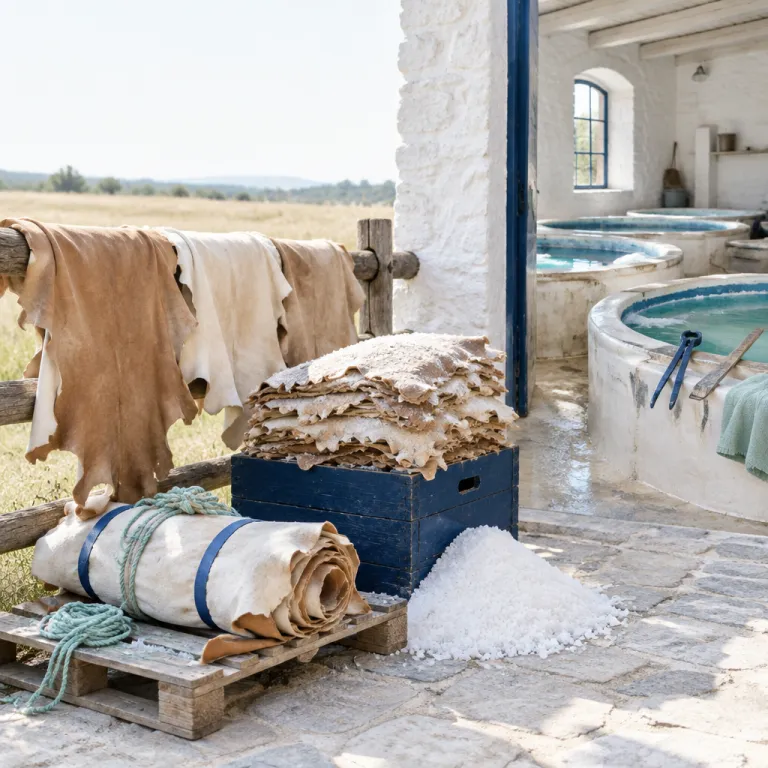
From pasture to port: where Italian leather really begins
The Italian leather story starts far from Florence. Long before your briefcase meets a Tuscan workbench, the hide has lived a full life on a ranch in Brazil, Argentina, sub-Saharan Africa, or sometimes Eastern Europe. For a conscious owner, understanding this hidden geography of raw hides is the first step toward meaningful origin tracking and ethical sourcing.
Most Italian tanneries work with imported raw hides because local herds cannot meet the leather industry’s demand. According to Eurostat trade data, Italy imports millions of bovine hides and skins each year, mainly from South America and other EU countries. These hides move through complex supply chains and multiple chains of trade, where each link in the chain can either preserve or erase crucial data about origin, welfare, and handling. When you hear that Italy is a global hub for leather production, remember that the leather supply often begins on another continent entirely.
Quality starts with the animal, not the logo on the finished products. A French Charolais raw hide has a different fiber structure and grain behavior than a Brazilian Nelore, and those differences still matter after tanning and finishing. If you care about environmental performance, long-term durability, and overall sustainability, you should care about which breeds and climates are feeding into your chosen supply chain.
At the slaughterhouse stage, the future of your leather products is already being decided. How quickly the raw hides are cooled, how cleanly they are flayed, and how they are salted or chilled will influence every later step of leather production. Poor handling here forces tanneries to over-correct with heavy finishing, which hides scars in the finished leather but also masks the natural character that connoisseurs prize.
Reliable origin information depends on whether these early actors record and share usable data. Some slaughterhouses now tag each raw hide with barcodes or RFID, creating the first layer of chain-of-custody documentation and supply-chain mapping. Others still treat hides as anonymous by-products, which leaves even the best tanneries working with partial data and forces brands to make educated guesses about origin and risk.
Inside Tuscan tanneries: transformation, not creation
Once the salted raw hides reach Tuscany, the narrative shifts from agriculture to craft. Districts such as Santa Croce sull'Arno and Arzignano host dense clusters of tanneries, chemical suppliers, and finishing ateliers that collectively define the modern leather industry. These chains of specialized workshops turn a raw material into finished leather, but they do not rewrite its past.
Italian law allows a product to be called Italian leather when tanning and finishing occur in Italy, regardless of where the animal was raised. That means a Brazilian raw hide, processed in Santa Croce, legally becomes an Italian leather product even if the ranch, feedlot, and slaughterhouse sit thousands of kilometers away. For buyers who care about origin transparency and full supply-chain visibility, this legal definition creates a gap between marketing language and complete origin truth.
Good tanneries treat that gap as a design problem, not a loophole. They invest in traceability systems, chain mapping, and digital data capture so they can tell a coherent story from raw hide to finished products. Well-known Italian consortia, such as the Vegetable Tanned Leather Consortium in Tuscany, encourage members to document sourcing practices and submit to third-party audits. When you ask a brand which tannery produced your bag’s leather panels, you are really testing how seriously they take traceability and sustainability across their entire supply chains.
Within the drum, the hide’s earlier life becomes visible in a new way. Loose grain from tropical breeds, insect bites from humid pastures, and brand marks from extensive ranching all show up during leather production, forcing choices between heavy correction and preserving natural character. A tannery that works with high-grade raw hides can keep finishing lighter, which gives you a digital product passport or hangtag that honestly reflects both beauty and origin.
If you want to go deeper, ask brands about their sourcing strategy and which Italian partners they rely on for chain traceability and compliance. A serious maison should be able to name its tanneries, describe their leather supply practices, and explain how they manage risk under frameworks such as the European Union Deforestation Regulation (EUDR), which sets rules for placing forest-risk commodities on the EU market. When a brand cannot answer these basic questions, it signals that the supply chain is being managed for volume, not for transparency or circular, lower-impact leather goals.
What “Italian leather” really means for origin and ethics
For many owners, the phrase Italian leather still evokes family workshops and local herds grazing under cypress trees. The reality of the modern leather supply is more global, more industrial, and more dependent on robust traceability than the postcard image suggests. Today, aligning that romantic perception with the actual movement of hides, chemicals, and finished products is the core challenge of ethical Italian leather sourcing.
Legally, the country of tanning defines the origin of leather products in most trade contexts. This rule simplifies customs paperwork and international trade statistics, but it also allows a finished leather wallet made in Tuscany from South American raw hides to carry an Italian origin label without mentioning its earlier journey. For a conscious buyer, the question is not whether this is allowed, but whether it provides enough data to judge risk, compliance, and sustainability.
Ethical sourcing in this context means asking for more than the minimum. You want chain mapping that goes back to the slaughterhouse, sometimes even to the ranch, and you want digital records that can be audited rather than vague assurances. When a brand offers a QR code or digital product passport, read it with a critical eye and compare it with what experts explain about what the QR code on your luxury bag actually tells you and what it leaves out.
Most current traceability systems are strongest from tannery to boutique and weakest from slaughterhouse backward. That is where deforestation risk, child labor concerns in ancillary sectors, and animal welfare questions tend to cluster, especially in complex supply chains that cross several continents. Origin claims will only be credible when brands can show how they manage these upstream risks with verifiable data rather than marketing copy.
As regulations such as EUDR tighten expectations around forest-risk commodities, leather traceability will move from a niche concern to a basic requirement. The regulation’s official text spells out due-diligence duties for companies placing cattle-derived products on the EU market. Brands that already track raw hide origin, maintain chain traceability, and share sustainability reports will adapt smoothly, while others scramble to retrofit their chains. As an owner, your questions today help push the industry toward that higher standard of transparency and more circular leather practice.
How traceability tech is changing the luxury leather experience
Traceability used to live in filing cabinets and tannery notebooks, far from the boutique floor. Now, origin information is increasingly mediated by digital tools that promise to connect your finished products back to specific hides and tanneries. The technology is not magic, but when used well it can turn abstract assurances into concrete, inspectable data.
Some Italian tanneries are experimenting with blockchain ledgers, RFID tags on raw hides, and QR-linked digital product passports that travel with each item. In theory, these systems allow every step in the supply chain to add its own verified entry, from the first salting of the raw hide to the final quality check on the finished leather panel. In practice, the value depends on whether each actor in the chain records honest, granular information rather than generic statements about sustainability.
For owners, the most useful systems make complexity legible. A well-designed interface can show you which country supplied the raw hides, which tannery handled leather production, and which workshop assembled the leather products, all without drowning you in technical jargon. When that mapping information is missing or vague, you are effectively being asked to trust a brand’s narrative instead of a documented supply chain.
Digital tools also reshape how we think about circularity and resale. A bag with a robust digital history is easier to authenticate, easier to repair with correct materials, and easier to resell with confidence about its origin and compliance. Over time, chain mapping and leather traceability can support a more mature secondary market, where provenance is valued as highly as patina.
There is a risk, of course, that digital gloss hides analog problems. A sleek app cannot compensate for weak oversight of upstream chains, poor environmental performance, or gaps in child labor safeguards in related sectors. When you scan a code, ask yourself whether the information reflects the full supply chains involved or only the most photogenic last meters between Tuscan bench and boutique shelf.
Mini checklist: reading a digital product passport
When you open a QR code or NFC tag for a leather item, look for three concrete details:
- Country of cattle origin: Is the region of the herd clearly stated, not just “Made in Italy”?
- Named tannery and certifications: Does it list the tannery and any schemes such as Leather Working Group or ISO environmental standards?
- Deforestation and welfare notes: Is there a short explanation of how the brand screens for forest-risk and animal welfare issues upstream?
If any of these elements are missing, the passport is more marketing brochure than full traceability tool.
Questions to ask before you buy your next Italian leather piece
Owning luxury leather is no longer just about color, grain, and hardware. For many readers, the real test is whether the story behind the leather stands up to scrutiny once the sales pitch fades. The good news is that a few precise questions can reveal a great deal about how a brand manages its leather sourcing and broader responsibilities.
Start with origin in plain language. Ask which country supplied the raw hides, which tannery handled leather production, and whether the brand can share any third-party certifications related to environmental performance or labor compliance. If the answer stops at “Italian leather” without naming specific tanneries or explaining the supply chain, you have learned something important about their priorities.
Next, probe how they handle risk and regulation. A serious house should be able to explain how it prepares for frameworks like EUDR, how it screens supply chains for deforestation exposure, and how its traceability systems support that work. When they mention sustainability, ask whether they publish detailed reports that include leather supply information rather than only generic climate commitments.
Then look at the product in your hand with this context in mind. A beautifully made tote in coated canvas, for example, might represent a deliberate choice to reduce leather usage while still offering durability and elegance, as explored in this perspective on why a coated canvas tote belongs in a modern luxury collection. Thinking across materials, rather than treating leather as the only luxury option, is part of a more nuanced approach to circular design and long-term wardrobe planning.
Finally, remember that every purchase is a signal to the industry. When owners consistently ask about chain traceability, mapping practices, and the real geography behind Italian leather products, brands notice and adjust their data and sourcing strategies. Quiet pressure from informed buyers often does more to shift the leather industry than any single marketing campaign or seasonal trend.
FAQ
Can Italian leather be ethical if the hides come from outside Europe ?
Yes, Italian leather can be ethical even when the raw hides originate in South America or Africa, but only if the supply chain is managed with strong traceability and clear standards. You should look for brands that can name their tanneries, state the countries of origin for their raw hide sources, and explain how they assess deforestation and labor risk in those regions. When that level of detail is missing, ethical claims are difficult to verify.
What should I ask a brand about its leather traceability ?
Ask three simple questions : which country supplied the raw hides, which tannery processed them, and what certifications or audits cover that supply chain. If the brand can answer quickly and specifically, it usually indicates that they maintain solid data and chain mapping. Vague or defensive responses suggest that origin and traceability are not yet priorities.
Does “Made in Italy” guarantee better animal welfare ?
The label “Made in Italy” refers mainly to where tanning and manufacturing occur, not to where the animal was raised. Animal welfare conditions depend on the ranching systems in the countries that supply the raw hides, which may be far from Italy. To assess welfare, you need information about those upstream supply chains, not just the final country of transformation.
How will new regulations like EUDR affect luxury leather owners ?
Regulations such as EUDR focus on reducing deforestation risk in global supply chains, including those that supply hides for leather production. For owners, this should translate into clearer origin information, stronger traceability systems, and more transparent communication from brands about where their leather comes from. Over time, you can expect more products to include digital tools that document this journey from ranch to tannery to workshop.
Is full hide to bag traceability realistic for all leather products ?
Technically, full traceability from individual hide to finished bag is possible, and some high-end programs already do this for limited runs. Scaling that level of detail across all leather products is challenging because it requires coordinated data sharing across many independent actors in the supply chain. Progress is uneven, but growing pressure from buyers and regulators is steadily pushing the industry toward more comprehensive origin tracking for Italian leather goods.