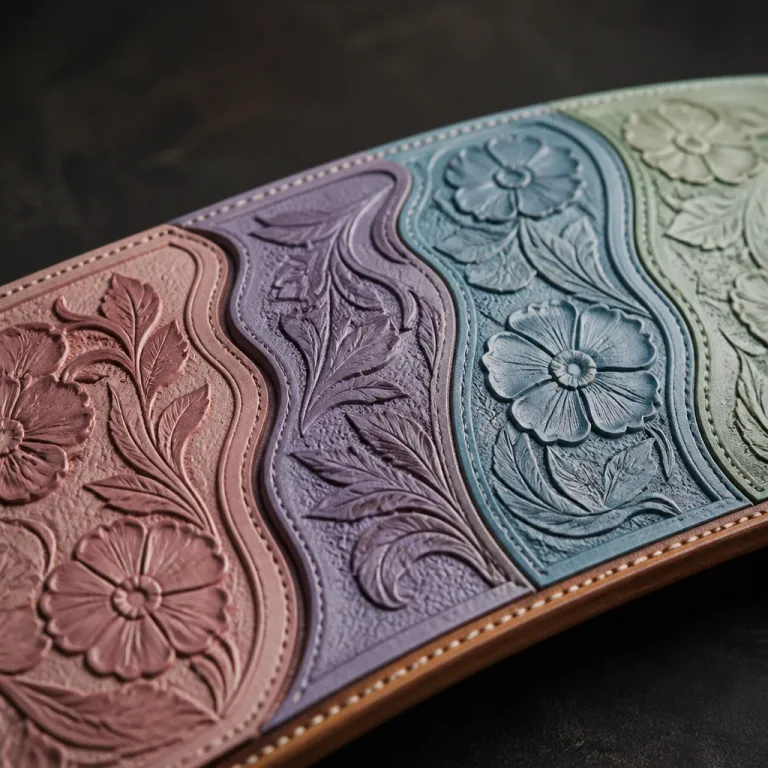
Why swivel knife leather work matters for luxury embossing
For a luxury leather owner, the first cut defines the entire story. When a craftsperson uses a finely tuned swivel knife on premium leather, every blade movement controls how light will later glide across your bag or wallet surface. That is why serious ateliers treat the knife as a precision instrument rather than a regular accessory.
In high level leather carving, the relationship between knife, swivel mechanism, and handle geometry determines whether embossed motifs look crisp or slightly blurred, which directly affects perceived price and long term desirability. A well balanced handle swivel lets the artisan pivot the knife blade smoothly, so curves around monograms or crests remain fluid even at very small size. Owners who commission bespoke work quickly learn that the quality of the blades and the barrel size of the swivel knives matter as much as the hide itself.
When you examine your own luxury leather craft pieces, look closely at the smallest details around letters, floral scrolls, or hair blade textures. Clean, high low transitions in the cuts show that the artisan used a sharp, correctly sized knife leather tool rather than a dull unit from a generic set. In workshops across the United States and Europe, masters still rely on pro adjustable swivel knife models with interchangeable blades to maintain this level of refinement. Tool makers and leatherworking manuals consistently note that sharper, harder steels such as D2 or other high carbon alloys hold an edge longer than basic stainless blends, which helps preserve this precision over extended use.
Selecting the right swivel knife, blade, and barrel size
Choosing the correct swivel knife for leather carving is similar to selecting a fine fountain pen for a signature. The barrel size, handle shape, and knife blade profile must match the artisan’s hand and the thickness of the leather to avoid fatigue and uneven cuts. Luxury houses often maintain several swivel knives in different sizes so each pattern receives a perfectly scaled tool.
For delicate hair blade textures on calfskin or goat, a small barrel size with an adjustable swivel mechanism allows extremely tight turns without tearing the grain. Many artisans favour compact barrels in the 8 to 10 mm range paired with narrow, 1 to 2 mm wide blades for this type of work. When embossing larger panels for trunks or structured crossbody pieces, a slightly heavier handle swivel and wider blade give more authority to long lines and high low relief transitions. This is why serious workshops rarely rely on a single regular unit but instead invest in a curated set of blades, from ultra fine knife leather tips to broader stamping tool compatible profiles.
Collectors sometimes ask whether a premium brand such as Barry King justifies its higher price compared with mass market options sold on platforms like Amazon. The answer lies in the steel quality of each knife blade, the precision of the adjustable components, and the consistency of the swivel action over thousands of cuts. Many high end knives use tool steels such as D2 or high carbon alloys that, according to manufacturer hardness ratings and independent workshop tests, hold a keen edge longer than anonymous stainless blends. When a craftsperson can trust that every tool in their set behaves predictably, your commissioned piece gains both visual harmony and long term value, especially when paired with carefully finished hides as explained in this guide to how tanneries use finishing to reveal or conceal leather quality.
How artisans use swivel knife leather work to sculpt embossed motifs
Once the right knife and blades are chosen, the real artistry begins on the dampened leather surface. The artisan first traces the pattern, then uses the swivel knife to cut controlled grooves that guide every later stamping tool and modeling spoon. These initial cuts define the high low structure of the design, from bold borders to subtle hair blade textures in feathers, manes, or foliage.
In luxury embossing art, the depth and angle of each knife leather incision determine how shadows fall when the piece catches light in a boutique or under evening lamps. Many professionals favour blades ground to around 30 to 45 degrees, with straight, filigree, or hollow ground profiles chosen according to the motif. A pro adjustable swivel knife lets the craftsperson vary pressure mid stroke, creating organic transitions that feel almost sculptural rather than merely engraved. When you run a fingertip across a well executed panel, you can sense where the blade entered, turned, and lifted with absolute control.
Owners who commission bespoke work for trunks, belts, or a refined leather crossbody bag that complements every outfit often underestimate how many tools are involved beyond the primary knife. After cutting, artisans use stamping tools to push down background areas, amplifying the relief created by the original swivel knives. For a deeper understanding of this layered process, the article on the art and allure of embossed leather in luxury goods shows how these techniques translate into finished pieces that feel both modern and timeless.
Step sequence: basic swivel knife technique
- Case the leather by lightly moistening the grain side until it feels cool but not soaked.
- Transfer or trace the pattern so key lines are clearly visible on the surface.
- Hold the swivel knife vertically, resting your forefinger in the yoke to control rotation.
- Begin each cut with light pressure, then deepen slightly through the middle of the stroke.
- Rotate the barrel to follow curves, keeping the blade tip centered in the groove.
- Lift out gradually at the end of the line so the cut tapers to a clean, fine point.
Evaluating tools, prices, and customer reviews with a collector’s eye
Many luxury owners eventually purchase their own swivel knife set, either for personal experimentation or to better understand the craft behind their commissions. When comparing options, it is tempting to sort by price high to low on large marketplaces and assume the most expensive knife is automatically superior. A more nuanced approach considers steel quality, handle ergonomics, and the reliability of customer reviews from experienced leather craft practitioners.
On platforms such as Amazon in the United States, you will see everything from entry level swivel knives with fixed blades to pro adjustable models with multiple knife blade profiles. Look beyond the headline price and read how each customer describes the balance, the smoothness of the adjustable swivel, and the durability of the handle swivel under regular use. Pay attention to whether reviews mention consistent barrel size tolerances, because poor machining can cause subtle wobble that ruins fine leather carving work.
Some specialist brands offer free shipping or bundled shipping orders when you purchase a complete set of tools, which can make a higher initial price more acceptable. Others sell each unit separately, allowing you to build a custom collection of blades and handles tailored to the specific details you prefer in your commissioned pieces. As you evaluate options, remember that a small difference in tool quality can translate into a visible difference in the crispness of motifs on a bag that may accompany you for decades.
Quick comparison: choosing swivel knife geometry
| Feature | Typical range | Best for |
|---|---|---|
| Barrel size | 8–10 mm (small), 11–13 mm (regular) | Small for fine hairlines and tight curves; regular for borders and medium motifs |
| Blade width | 1–2 mm (narrow), 3–4 mm (wide) | Narrow for filigree and script; wide for bold outlines and panel work |
| Bevel / grind angle | 30–45 degrees | Lower angles for deep, dramatic cuts; higher angles for controlled, shallow carving |
From atelier bench to your wardrobe: commissioning swivel knife artistry
Understanding swivel knife leather work helps you brief artisans more precisely when commissioning bespoke pieces. Instead of asking only for a certain motif, you can request specific high low relief effects, finer hair blade textures, or a more restrained use of stamping tools around monograms. This shared vocabulary elevates the conversation from vague decoration to deliberate sculpting of the leather surface.
When discussing a new bag or small leather good, ask which knife leather tools the atelier plans to use and how many passes of leather carving will be required. A workshop that speaks confidently about barrel size, blade geometry, and the difference between regular and pro adjustable swivel knives is more likely to deliver the refined details you expect. You may also inquire whether they maintain separate sets of blades for different leathers, since a dense bridle hide demands a different knife than a supple lambskin.
As your collection grows, you will notice how pieces with carefully planned swivel knife work pair effortlessly with others, such as a versatile crossbody highlighted in this guide to choosing a leather crossbody bag that works for every day. The same sensitivity to proportion, line, and tactile contrast that guides a skilled knife hand also informs the overall design of luxury accessories. Owning items shaped by such craftsmanship means you are not just buying leather but investing in the invisible decisions that make each object feel quietly exceptional.
Care, maintenance, and long term value of swivel knife leather work
Once a piece with intricate swivel knife leather work enters your wardrobe, preservation becomes as important as the original craftsmanship. The fine cuts created by the knife and blades form micro valleys where dust and oils can accumulate, softening the visual contrast over time. Gentle cleaning with a soft brush and pH balanced leather care products helps maintain the crisp high low definition of the carving.
Storage conditions also influence how those knife leather details age, especially on small goods that see regular handling. Avoid compressing embossed panels against hard surfaces, because prolonged pressure can flatten the relief created by the stamping tools and the initial swivel knife cuts. Ideally, each unit should rest in a breathable dust bag with enough space so the handle areas, straps, and carved motifs do not rub against one another.
From a value perspective, collectors consistently pay a premium for pieces where the original blade work remains sharp and legible even after many years. When customer reviews of vintage items mention that the carving still feels deep and the hair blade textures remain visible, it signals both excellent initial tool work and careful ownership. Treat your embossed leather as a small work of art, and the investment in both the material and the invisible expertise behind the knife will continue to reward you.
Navigating online listings, free shipping offers, and hidden compromises
For owners curious about tools, browsing online listings can feel overwhelming, especially when every seller highlights free shipping and promotional pricing. Many sites allow you to sort by price high to low or by average customer reviews, but these filters rarely capture the subtleties that matter for serious leather craft. A careful reading of product descriptions and user feedback reveals whether a swivel knife set is truly suitable for fine embossing work or only for casual hobby use.
Look for clear information about blade steel, handle materials, and whether the swivel mechanism is adjustable or fixed, because vague descriptions often signal a generic tool. When a listing specifies barrel size options, interchangeable knife blades, and a pro adjustable swivel design, it usually targets artisans who care about precise control. Pay attention to how customers describe shipping orders and packaging, since poorly protected blades can arrive dulled or misaligned, undermining the entire unit before it ever touches leather.
Some websites still use outdated layouts where you must scroll past banners or even a “skip content” link before reaching the technical details, so patience is required. Focus on whether the set includes both small and regular size blades, and whether the handle swivel feels stable according to multiple customer reviews rather than a single enthusiastic comment. In the end, the real cost is not just the listed price but the impact that each tool will have on the quality and longevity of the swivel knife leather work adorning your most cherished pieces.
Buying checklist for swivel knife tools
- Confirm blade steel type and hardness rating where available.
- Check barrel size options against your hand size and typical project scale.
- Look for an adjustable swivel mechanism with replaceable blades.
- Read multiple reviews that mention balance, smooth rotation, and edge retention.
- Verify packaging details so blades are protected during shipping.
Key figures and market insights on swivel knife leather work
- Industry interviews and trade show observations from the United States and Europe suggest that many high end leather workshops now use multiple barrel size options for their swivel knives, reflecting a shift toward more specialized tooling for different leathers and motifs rather than relying on a single universal size.
- Reports from tool manufacturers and specialist retailers indicate that pro adjustable swivel knife models with interchangeable blades represent a significant share of premium sales, which aligns with artisans’ growing preference for flexibility and precision over the lowest possible price.
- Analyses of online platforms such as Amazon consistently show that products with detailed technical descriptions and substantial customer reviews achieve higher conversion rates than generic listings, underscoring how informed buyers value transparency about blade steel, handle design, and shipping reliability.
- Resale data shared by auction houses and consignment platforms point to noticeable premiums for pieces featuring visible hand carved details, especially when the original swivel knife cuts remain sharp and well preserved compared with similar items without such work.
FAQ: swivel knife leather work for luxury leather owners
How can I tell if my leather piece features true swivel knife work ?
Examine the lines of the design under angled light and look for clean, V shaped cuts that taper gracefully at the ends. True swivel knife leather work shows subtle variations in depth and direction, often guiding later stamping tool impressions rather than appearing as uniform machine engraving. If curves around letters or motifs feel fluid and hand drawn, you are likely seeing genuine knife craftsmanship.
Does the quality of the swivel knife really affect long term durability ?
Yes, because a sharp, well made knife blade cuts cleanly through the leather fibers instead of tearing them, which reduces the risk of fraying along the carved lines. High quality swivel knives with stable barrel size tolerances also prevent unintended gouges that could weaken the surface. Over time, clean cuts age more gracefully and retain their visual clarity better than rough or crushed impressions.
Should I worry about cleaning carved areas differently from smooth leather ?
Carved and embossed zones benefit from slightly more attentive care, since dust and oils can settle into the grooves created by the knife. Use a soft brush or cloth to lift particles out of the high low relief before applying any conditioner, then work products gently so they do not fill the cuts. Avoid aggressive scrubbing, which can round off sharp edges and diminish the definition of the design.
Is it worth buying my own swivel knife set as a collector ?
Some owners enjoy experimenting with leather craft on small accessories, which can deepen appreciation for the work behind their luxury pieces. If you choose to buy tools, prioritize a modest but well made pro adjustable swivel knife with a few quality blades over a large, inexpensive set. Understanding how the knife behaves on leather will help you evaluate commissioned work more confidently and communicate better with artisans.
Do free shipping offers on tools indicate lower quality ?
Free shipping by itself does not signal poor quality, since many reputable suppliers in the United States and elsewhere use it as a standard incentive. The real indicators are detailed specifications, consistent customer reviews, and clear information about packaging and shipping orders. Always judge a tool by its materials, construction, and user feedback rather than by the logistics offer alone.