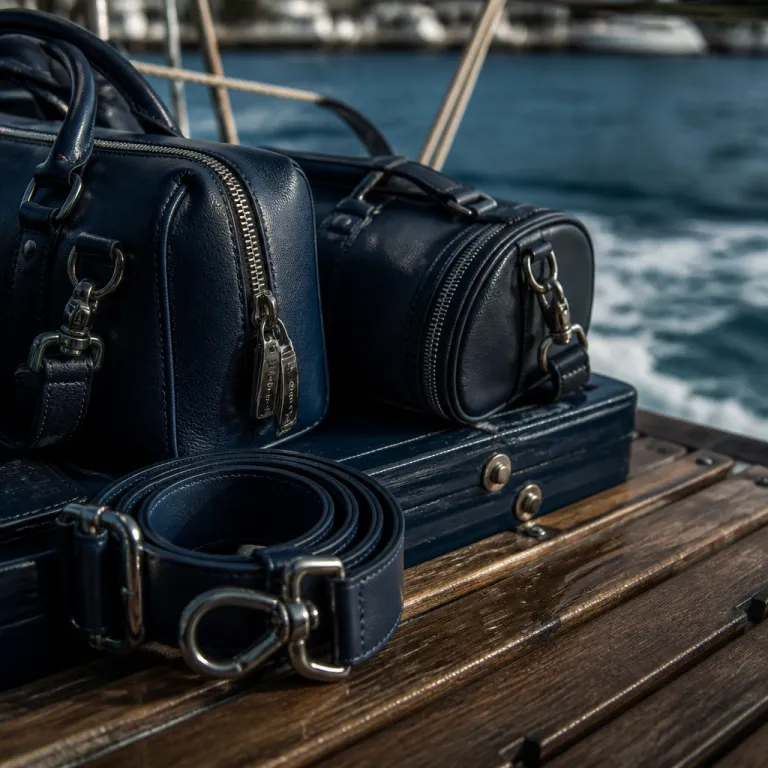
Reading leather goods hardware quality signs at first glance
Your eye goes to the leather, but your hand judges the hardware. In a single view of a leather bag on a shelf, the zippers, buckles, rivets and snaps quietly reveal whether the piece will age into heirloom status or limp through a few seasons. Train yourself to read these subtle hardware quality indicators, and you will never again be seduced by a glossy hide hiding weak metal.
Start with the metal’s presence in the hand, because true solid hardware feels dense, cool and reassuring when you lift the bag by its handle. A solid brass D ring or buckle has a deeper, slower swing and a muted chime when tapped against another piece, while a cheaper zinc alloy unit rings higher and feels oddly light for its size. As a rough benchmark, a typical 25 mm solid brass buckle often weighs around 20–30 grams, whereas a similar sized hollow or pot metal buckle can come in at half that weight.
Look closely at surface details where leather meets metal, since this junction is where most failures begin. High quality leather hardware sits cleanly in its slot or loop, with no sharp edges biting into the leather and no sloppy gaps where the strap can twist and wear prematurely. If the leather around a buckle or clasp already shows fuzzy edges or dark compression marks on a new bag, that is a clear warning sign about both the hardware and the workshop’s priorities.
The hierarchy of metals: from solid brass to plated alloys
Not all brass is created equal, and not every golden tone deserves your trust. When a maker specifies solid brass for buckles, D rings, roller buckle frames or chicago screws, they are choosing a metal that can be polished, refinished and even repaired decades later, while a brass plated alloy only wears thinner with every scratch. The most reliable leather hardware quality clues often come from how honestly a brand talks about brass, nickel and stainless steel in its specifications.
Solid brass hardware carries weight and warmth, and over time it develops a brass antique patina that deepens around rivets, button stud closures and double cap fasteners. Antique brass finishes can be either genuine aged solid brass or a brass plated surface over a cheaper core, so ask whether the piece is truly solid brass or only brass plated, because the price unit difference is usually justified by longevity. When you see terms like brass stainless or stainless steel mixed with brass, understand that stainless steel offers tensile strength for load bearing parts, while brass brings tactile pleasure and visual richness.
Nickel plated and antique nickel finishes give a cooler, silvery tone that pairs well with black leather and structured city bags. Antique copper and copper antique treatments introduce a warmer, reddish cast that can look exquisite on certain leathercraft projects, but they must be applied over a solid base metal to avoid premature chipping. Before you fall for a gold or gold silver sheen on a buckle or clasp, ask yourself whether you are paying for noble metal thickness or just a fashionable coating offered to move more units in a seasonal sale.
For readers interested in how refined metal choices shape style, a detailed perspective on elevating your style with brass belt buckles shows how brass in both singular buckle designs and coordinated packs of hardware can transform an outfit. The same logic applies to every leather bag you own, where the right mix of brass, nickel and stainless steel quietly signals connoisseurship. When you evaluate unit price against material transparency, you start to see which brands respect your intelligence and which simply chase margin.
Zippers, clasps and closures: the moving parts that never lie
Static hardware can be overbuilt and still fail slowly, but moving parts betray shortcuts almost immediately. Run a zipper along its full length on any leather bag you are considering, feeling for consistent resistance, smooth engagement of the teeth and a pull tab that sits comfortably between your fingers without wobble. High grade zippers such as polished lines from makers like YKK Excella have individually polished teeth, so they glide against each other with a soft metallic whisper rather than a gritty rasp.
Turn your attention to clasps, snaps and magnetic closures, because these are the daily touchpoints that define your relationship with a bag. A well made turn lock should rotate with a precise, damped motion and click home without forcing, while quality snaps close with a confident, centered pop that you can feel even through gloves. If a magnetic closure feels either too weak to secure a full bag or so strong that it distorts the leather when you open it, that imbalance hints at a project driven by aesthetics rather than long term usability.
On satchels and crossbody designs, the roller buckle is a small but telling detail, since the roller should spin freely and protect the leather strap from abrasion. Poorly finished buckles often have rough inner edges that chew through straps, while refined pieces show smooth radiusing and careful polishing even on hidden surfaces. When you compare several bags side by side, view the hardware from multiple angles and ask whether every moving unit feels engineered for decades of use or merely adequate for the first sales season.
Decorative elements such as a tassel charm or button stud closure can either elevate or undermine the whole composition. A thoughtful guide on how a tassel bag charm elevates a luxury leather bag shows how even small hardware choices affect balance, movement and perceived quality. The same scrutiny you apply to a main clasp should extend to every snap, rivet and stud that punctuates the leather surface.
Attachment points, rivets and screws: where bags quietly fail
If leather is the face of a bag, attachment points are its joints and tendons. Handles, shoulder straps and anchor tabs concentrate stress into small areas, so the rivets, snaps and chicago screws holding them together reveal more about structural quality than any marketing copy. When you inspect leather goods hardware quality signs, always start by gently flexing these junctions and watching how the metal and leather move together.
High calibre workshops use double cap rivets with perfectly domed heads on both sides, ensuring that no raw tube edge can cut into the leather or your clothing. The best rivets sit squarely in their holes, with no visible tilt, and they are often paired with a discreet line of stitching so that load is shared rather than dumped entirely onto the metal. If you see single sided rivets with rough backs, mismatched sizes or visible gaps between the hardware and the leather, you are looking at a cost saving decision that may not justify the final price.
Threaded fasteners such as chicago screws deserve equal attention, because they allow for repair and strap replacement when used thoughtfully. Try to rotate a screw head gently with your fingernail; if it spins more than a fraction of a turn, the unit may not have been properly tightened or secured with thread locker, which can lead to catastrophic failure under load. In contrast, a well set screw feels immovable in daily use yet can be serviced by a craftsperson during restoration, extending the life of both the hardware and the leather.
Even small button stud closures on minimalist leathercraft projects should feel proportionate to the thickness of the leather and the expected stress. Oversized studs on thin straps or undersized snaps on heavy tote handles both signal a lack of holistic design thinking. When you evaluate unit price or any quoted price unit, factor in the long term cost of potential repairs at these critical points, because a single failed rivet can render an otherwise beautiful bag unwearable.
Finishes, patina and the quiet dialogue between leather and metal
Over time, your bag becomes a record of your habits, climate and care rituals. The way leather and hardware age together is one of the most revealing leather goods hardware quality signs, because poor finishes peel or corrode long before good leather shows real fatigue. When you choose a piece, you are really choosing a future patina, not just a present color.
Gold toned finishes range from solid brass with a natural golden hue to thin gold plating over base metals, and their behavior under wear is radically different. Solid brass and high quality antique brass or brass antique treatments will darken gracefully where your fingers touch most, while remaining structurally sound even after decades of use. In contrast, cheap gold plating often reveals a dull grey or pinkish core at corners and edges, especially on high contact areas like buckles, zipper pulls and frame closures.
Cooler finishes such as nickel, nickel plated alloys and stainless steel pair beautifully with certain leathers, but they must be chosen with skin sensitivity and corrosion resistance in mind. Nickel heavy alloys can cause reactions for some wearers, so nickel free stainless steel or carefully formulated antique nickel and antique copper finishes are often better choices for pieces worn against bare skin. When you see a mix of gold silver tones on a single bag, ask whether this is a deliberate design project or a sign that the maker is using whatever hardware pack was available at the right price.
For everyday rotation, many collectors favor crossbody designs where hardware is constantly in motion against clothing and skin. A detailed guide to choosing a leather crossbody bag that works every day shows how strap attachments, buckles and clasps must be evaluated as carefully as the leather itself. When you view your collection through this lens, you start to see which pieces were engineered as long term companions and which were optimized for initial sale appeal only.
Price, packs and how to audit value like a collector
Once you can read the language of hardware, price becomes less mysterious and more rational. A bag with full grain leather, solid brass buckles, stainless steel load bearing parts and carefully set rivets simply costs more to produce per unit than a similar silhouette built with generic alloys and thin plating. The question is not whether the price is high, but whether the unit price aligns with the tangible quality in your hand.
Many serious collectors eventually commission custom leathercraft projects, where they choose every component from the hide to the smallest snap. When you buy hardware in a pack for such a project, you quickly see how solid brass, antique copper or high grade stainless steel command a higher price unit than anonymous mixed metal sets. That experience makes it easier to evaluate finished bags, because you intuitively understand what each visible piece of leather hardware likely cost the maker.
Retail environments sometimes obscure this reality with aggressive sale positioning, limited edition colors and elaborate storytelling. Step back and view two bags side by side, ignoring branding for a moment, and count the number of stress points, moving parts and visible finishes on each. If one piece offers superior hardware in every category yet sits at a similar or only slightly higher price, your decision becomes almost mathematical rather than emotional.
Ultimately, the most reliable leather goods hardware quality signs are consistent across brands, styles and seasons. Solid metals, clean finishing, proportionate sizes and serviceable fasteners always justify a thoughtful investment, while vague material descriptions and flimsy components rarely age into charm. When you train your eye and hand to prioritize these details, you buy fewer pieces, enjoy them more and build a collection that feels quietly luxurious every time you reach for a bag.
FAQ
How can I quickly tell if a buckle is solid brass or plated alloy ?
Lift the buckle in your hand and pay attention to weight, temperature and sound when it touches another metal surface. Solid brass feels heavier for its size, warms slowly in the hand and produces a softer, lower chime when tapped, while a brass plated zinc alloy feels lighter and rings with a higher, thinner tone. Inspect any worn edges on display pieces; if you see a different colored core metal showing through, the buckle is almost certainly plated rather than solid.
Are magnetic closures reliable for long term use on luxury bags ?
High quality magnetic closures can be reliable when correctly specified for the bag’s size and intended load. The magnet should be strong enough to stay closed when the bag is full yet not so strong that it distorts the leather or requires excessive force to open. For very heavy totes or travel bags, many collectors still prefer mechanical turn locks or frame closures, which offer more predictable security under stress.
What hardware areas should I inspect first when buying a leather bag ?
Start with the main stress points such as handle attachments, shoulder strap anchors and any areas where leather loops around a ring or bar. Check that rivets sit square, stitching is even around hardware and there are no sharp edges where metal meets leather. Then test all moving parts, including zippers, clasps and buckles, to ensure they operate smoothly without grinding, sticking or visible misalignment.
Do mixed metal finishes on one bag indicate lower quality ?
Mixed metal finishes can be a deliberate design choice, especially when gold toned and silver toned elements are balanced thoughtfully across the bag. However, if you notice inconsistent colors, mismatched plating or hardware that looks like it came from different packs, this may signal that the maker prioritized convenience over cohesion. In such cases, scrutinize the underlying materials and finishing quality even more carefully before accepting the overall price.
How should hardware age on a well made luxury leather bag ?
On a well made piece, hardware should develop a gentle patina that complements the leather rather than flaking, chipping or corroding. Solid brass and quality stainless steel typically show surface darkening or fine scratches without structural weakness, while good plating thins gracefully rather than peeling in sheets. If you see bubbling, green corrosion or exposed base metal after normal use, the hardware quality was not aligned with the leather’s potential lifespan.