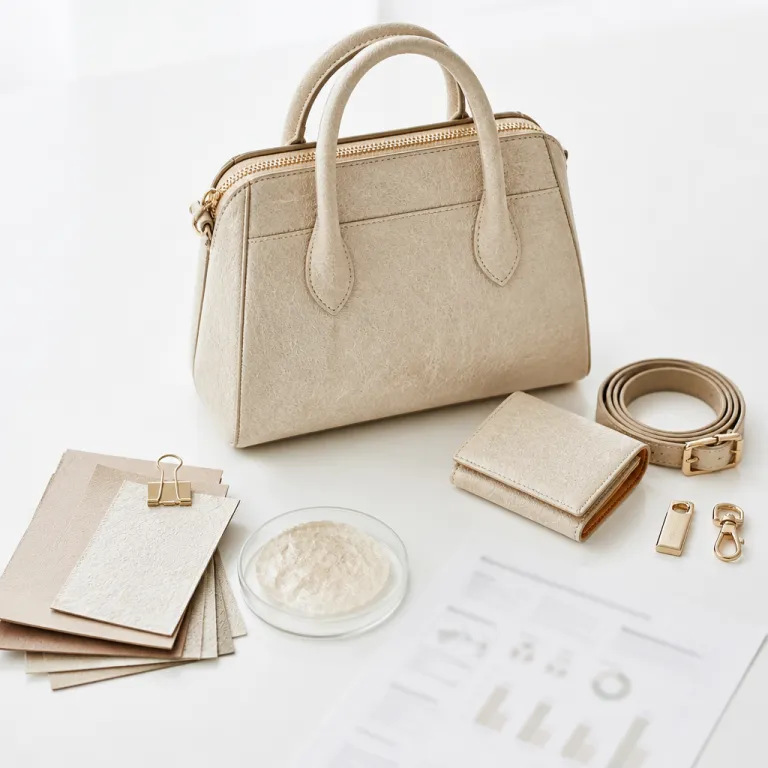
Material science and the real mushroom leather durability reality
Luxury owners hear constant claims that mushroom leather now rivals calfskin, yet the real mushroom leather durability reality begins in the lab rather than the boutique. Mycelium, the root like network of fungi, is grown in trays or 3D molds to form dense sheets of bio based material that can be pressed, tanned and finished to resemble traditional leather in grain, colour and hand feel. The fashion industry loves to present these mycelium leather materials as a seamless, sustainable alternative, but the gap between controlled test data and daily wear on a 1,2 kilogram tote is where things become interesting.
In technical terms, mycelium based leather is a composite, not a single continuous animal material like real leather cut from a hide. Engineers tune the density, fibre orientation and binders of this plant derived and fungi derived structure to reach specific leather durability targets such as abrasion resistance, flex endurance and tear strength that can be compared to animal leather in standardized tests. Early lab report data from companies such as MycoWorks, for example in their 2021–2023 Fine Mycelium performance summaries available on the MycoWorks website, shows mycelium leather products reaching or exceeding certain benchmarks for high quality grain leather on small test coupons, yet these numbers often apply to limited samples, not to full sized leather products with seams, folds and hardware stress points.
To stabilise the mushroom leather sheets, recent technical disclosures and patent filings indicate that producers frequently rely on a thin layer of plastic or leather plastic like polyurethane, often in the range of 20–50 percent of total material weight, which quietly opens a window onto the pros and cons of this technology. That plastic backing helps the engineered leather composite resist cracking in flex tests, but it also makes the material less eco friendly and more difficult to recycle than the marketing of vegan leathers suggests. When you read a sustainability report or glossy article about a new mushroom leather capsule, always ask whether the material is fully bio based or whether a plastic layer is doing the heavy lifting for leather durability under real world conditions.
From a sensory perspective, the best mycelium leather feels closer to a fine, lightly corrected calf than to robust vegetable tanned animal leather from a heritage tannery. The grain can be printed or engineered into the material, which allows very consistent quality across products but removes the subtle variation that connoisseurs prize in real leather. For a cardholder or small accessory, this engineered uniformity can be an advantage, yet for a 40 centimetre travel bag that you expect to age gracefully, the lack of depth in the mushroom leather surface becomes apparent after a few months of use.
It is also worth separating mushroom leather from other plant based and vegan alternatives that are often grouped together in marketing. Pinatex, for example, uses pineapple leaf fibres felted with a corn based plastic called PLA, while Mirum relies on natural rubber, plant based oils and minerals to create a fully bio based material without synthetic plastic. Desserto, the cactus based leather from Mexico, combines plant fibres with binders to form sheets that can be used in fashion products and packaging, yet each of these materials has its own pros cons profile that differs from the mushroom leather durability reality you are evaluating.
For owners already accustomed to high quality animal leather, the most honest comparison is this. Real leather is a natural composite of collagen fibres that has evolved to handle moisture, flex and impact over years, while mycelium leather is a young, engineered material whose long term behaviour is still being mapped by the industry. When a brand claims that its latest vegan leather or mushroom leather line will last as long as your traditional leather briefcase, you should expect to see not just a marketing post but a technical report with clear data on flex cycles, hydrolysis resistance and colour fastness, ideally with references to specific standards such as ISO 5402-1 for flexing and ISO 11640 for colour fastness to rubbing.
Durability gap, patina and what lab tests quietly omit
Laboratory tests for leather durability are precise, but they are also narrow, and this is where the mushroom leather durability reality diverges from the brochure. A mycelium leather panel might pass 50 000 flex cycles on a machine without cracking, as reported in several manufacturer test sheets that follow ISO 5402-1 or ASTM D2097 protocols, yet that same panel, once stitched into a structured tote with metal feet and a 10 centimetre handle drop, faces very different stresses than the test rig anticipates. Real leather, especially full grain animal leather from mature hides, has a three dimensional fibre network that redistributes these stresses in ways that current mushroom leather and other plant based materials still struggle to match.
When you read a lab report, pay attention to abrasion resistance, tear strength and hydrolysis, because these are the quiet killers of both vegan leather and animal leather in humid climates. Many mycelium based vegan materials perform well in dry, temperate conditions, but hydrolysis tests, which simulate long term exposure to moisture and heat, often reveal a reliance on plastic binders that can break down faster than the collagen in real leather. This is why some early vegan leathers, especially those with high polyurethane content, peeled or cracked after only two or three summers of regular use, even when the initial quality seemed acceptable.
The patina question is where marketing language becomes most detached from the real mushroom leather durability reality. Traditional leather, particularly vegetable tanned animal leather, darkens, softens and develops a complex surface sheen as the fibres compress and absorb oils from your hand, while mushroom leather and most plant based vegan leathers tend to maintain a more static appearance until the top coating fails. You may see minor creasing on a mycelium leather wallet, but you will not see the same layered patina that makes a decades old briefcase feel like a personal archive of your life.
For many conscious buyers, this lack of patina is not a trivial aesthetic detail but a functional signal. Patina on real leather tells you how the material has responded to stress, moisture and time, whereas a pristine looking vegan leather surface can hide internal fatigue in the plastic or bio based binder until a sudden crack appears along a fold. When a brand claims that its mushroom leather will age like your grandfather’s attaché, that comment should raise questions about whether the marketing team has handled a 30 year old bag or simply repeated a line from an industry article.
There is also the issue of scale, because most of the strongest durability claims for mushroom leather come from small accessories, not from 40 litre travel bags or 55 centimetre duffels. A cardholder or phone pouch made from mycelium leather carries minimal load, so the pros cons balance looks favourable, yet once you move into larger leather products with long straps, zips and hardware, the stress on seams and edges increases dramatically. This is where real leather, especially high quality animal leather from established tanneries, still outperforms most sustainable alternative materials in the fashion industry.
To make this durability gap more concrete, compare how key metrics are usually reported for test swatches versus finished goods:
- Abrasion resistance: lab coupons may show high Martindale or Taber abrasion counts on flat samples, often above 20 000 cycles, while corners and piping on a full size tote can wear through coatings much faster.
- Tear strength: standardized tear tests on rectangular strips rarely capture the stress concentrations that occur around handle bases, zip ends and rivets in real products.
- Hydrolysis performance: accelerated ageing in controlled humidity chambers can look reassuring, yet repeated wet–dry cycles from rain, sweat and storage often expose weaknesses in plastic rich binders.
- Flex cycles: a panel flexed 50 000 times in a straight line does not replicate the complex twisting, folding and crushing that a travel bag experiences in overhead bins and car boots.
Environmental trade offs, plastic content and the eco friendly narrative
From a sustainability perspective, mushroom leather sits at the intersection of genuine innovation and clever storytelling, and understanding this balance is essential to grasping the mushroom leather durability reality. Mycelium can be grown on agricultural waste in controlled facilities, which means the base material can be bio based, low impact and independent of animal agriculture in a way that traditional leather can never fully achieve. For a conscious luxury buyer, this plant based and fungi based origin is compelling, yet the environmental report often glosses over the plastic and chemical finishing required to turn a fragile mycelium mat into a robust fashion material.
Most commercial vegan leathers, whether they are mycelium leather, cactus based leather or pineapple fibre composites, still rely on polyurethane or similar plastics for structure, water resistance and colour stability. This plastic content complicates the eco friendly story, because while the surface may be marketed as a sustainable alternative, the underlying leather plastic composite behaves more like a synthetic than like a natural material at end of life. When you see a brand highlight its bio based content in a post or article, ask whether that percentage refers to the entire material or only to the visible surface layer that touches your hand.
Some innovators are pushing toward fully bio based systems, and Mirum is often cited as an example of a plant based material that avoids synthetic plastic entirely. In practice, though, even these materials must be combined with linings, adhesives and edge paints in leather products, which can reintroduce petrochemical components into the final item. The fashion industry is still working through these pros cons, and until there is a clear, third party verified report on the full life cycle of each material, the eco friendly label should be treated as a claim to be tested rather than a guarantee.
There is also the question of animal welfare, which is often used as the primary argument for vegan leather and plant based vegan materials. For buyers who wish to avoid animal leather entirely, mushroom leather and other plant based materials offer a real pathway to align values and wardrobe, even if the durability is not yet equal to high quality calfskin. For those who already own long lasting real leather pieces, the more nuanced question is whether replacing a 20 year capable briefcase with a five year capable vegan leather bag actually reduces environmental impact once production, replacement cycles and packaging waste are considered.
Life cycle assessments published in peer reviewed and industry reports, including work indexed on PubMed and in databases such as GaBi and Ecoinvent, suggest that plant based and mycelium leather can reduce greenhouse gas emissions by up to about 60 percent per square metre of material compared with conventional bovine leather, but these figures typically assume similar product lifespans. If a mushroom leather bag needs to be replaced significantly sooner than a comparable animal leather piece, the real world emissions advantage can narrow or even disappear once repeated manufacturing, transport and disposal are factored in.
Regulation is beginning to catch up with marketing, and the upcoming European consumer protection directives will penalise brands that claim eco friendly status without robust, verified evidence. The European Commission’s proposal on empowering consumers for the green transition, together with the planned Green Claims Directive, would allow regulators to fine companies up to 4 percent of annual turnover for unsubstantiated environmental claims about materials such as mushroom leather, mycelium leather or cactus based leather. As this happens, you will be better equipped to compare the real environmental cost of a vegetable tanned traditional leather tote versus a mycelium leather crossbody with a polyurethane backing.
If you want to explore how high quality faux leather and other vegan leathers fit into a thoughtful wardrobe, the guide on exploring the world of high quality faux leather offers a useful framework. It shows that the most sustainable choice is often to buy fewer, better leather products, whether they are animal based or plant based, and to maintain them carefully rather than chasing every new material that the industry promotes. In that sense, the mushroom leather durability reality is not just about lab tests but about how often you replace your bags, how you care for them and how honestly brands comment on the trade offs embedded in each material.
How a conscious luxury owner should buy into mushroom leather
For a luxury owner used to the reassuring weight of a full grain briefcase, stepping into mushroom leather requires a different mindset and a clear view of the mushroom leather durability reality. You are not buying a like for like substitute for your most demanding roles, but rather adding a new category of material to your rotation with its own strengths, weaknesses and care requirements. The smartest approach is to treat mycelium leather and other plant based vegan leathers as complementary options for specific use cases rather than as universal replacements for real leather.
Start by matching the material to the task, because this is where many disappointments with vegan leather and mushroom leather begin. Mycelium leather performs best in small to medium leather products such as cardholders, clutches, slim crossbodies and light sneakers, where the load is modest and the flex points are predictable, while heavy travel bags, briefcases and large totes still favour high quality animal leather for structural integrity. When a brand presents a full sized weekender in a new plant based leather composite, ask for a technical report on handle pull tests, edge wear and zip reinforcement before you pay real leather prices for a non animal material.
Next, interrogate the data, because a serious maker should be able to share more than a marketing article or a vague sustainability comment. Request information on abrasion tests, flex cycles, hydrolysis performance and colour fastness for the specific mushroom leather or mycelium leather used in your chosen piece, not just for a generic vegan leather category. If the brand cannot provide this, or if the report is limited to a single lab test without context, that gap itself tells you something about the maturity of their material strategy and their respect for an informed client.
Care routines also differ, and this has a direct impact on the mushroom leather durability reality you will experience over time. Real leather responds well to occasional conditioning with natural creams, careful drying and gentle storage, while many mushroom leather and plant based materials rely on a protective topcoat that can be damaged by oils or waxes designed for animal leather. Follow the maker’s guidance precisely, avoid overloading straps and handles, and treat sharp edges or hardware with particular caution, because these are the points where composite materials tend to fail first.
Rotation is another powerful tool, especially if you own several leather products across both animal leather and vegan leather categories. Use mushroom leather pieces for lighter, urban days with minimal load, and reserve your most robust traditional leather bags for travel, commuting or laptop carrying, so each material plays to its strengths. This pragmatic approach respects the pros cons of each material and extends the overall durée de vie of your collection, which is the most underappreciated sustainable alternative to constant replacement.
Finally, think about the afterlife of your pieces, because this is where the difference between real leather and composite materials becomes stark. A well made animal leather bag can be resoled, restitched, recoloured and even upcycled into smaller goods, as shown in the detailed guide on the art of upcycling luxury leather goods. By contrast, most mushroom leather and other vegan leathers, especially those with mixed plastic and bio based layers, are difficult to repair deeply or recycle, so you should favour designs with replaceable straps, minimal glued components and timeless fashion lines that justify keeping the piece in rotation as long as possible.
Key figures behind the mushroom leather durability reality
- Independent assessments of mycelium based materials, including reviews by platforms such as Good On You and technical summaries released by MycoWorks and Bolt Threads, report that certain mycelium leather samples can match or exceed specific performance metrics of real leather in controlled tests, yet these results often apply to small swatches rather than full sized leather products subjected to daily use.
- Life cycle analyses comparing animal leather and vegan leather alternatives, such as studies referenced in PubMed and industry reports from the Sustainable Apparel Coalition and FILK Freiberg Institute, indicate that plant based and mycelium leather can reduce greenhouse gas emissions by up to 60 percent per square metre of material, but this advantage shrinks if the product needs to be replaced more frequently due to lower leather durability.
- Studies published in scientific journals, including work referenced on PubMed and in materials science reviews, have questioned whether vegan leathers that rely heavily on polyurethane or other plastics can be considered a fully sustainable alternative, because their end of life impact, limited recyclability and potential microplastic shedding can offset gains made during production.
- European Union consumer protection rules scheduled to take effect in the middle of the decade, notably the proposed Green Claims Directive and the directive on empowering consumers for the green transition, will allow regulators to fine brands up to 4 percent of annual turnover if they make unsubstantiated eco friendly claims about materials such as mushroom leather, mycelium leather or cactus based leather, which will push the fashion industry toward more rigorous reporting.
- Market analyses of the broader vegan leather segment, including forecasts from firms like Grand View Research and Allied Market Research, estimate that demand for plant based and bio based materials in the fashion industry is growing at double digit annual rates, yet real leather still dominates the high end luxury category, particularly for structured bags and travel goods where long term durability is non negotiable.