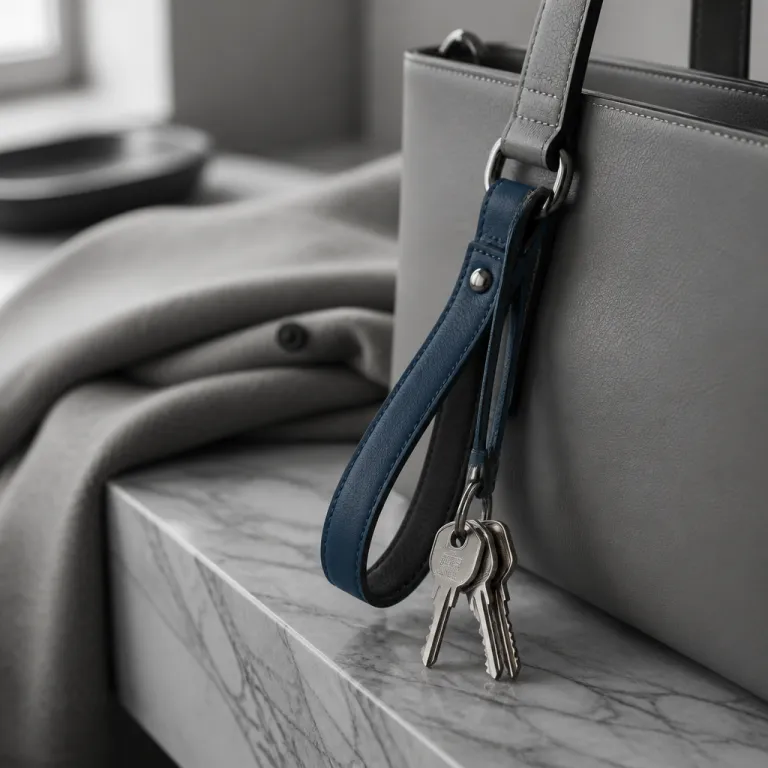
The leather wristlet keychain as a piece of wearable hardware
A well made leather wristlet keychain is no longer a simple trinket. It has become a compact piece of wearable hardware that bridges your leather bag, your wallet and your keys with quiet precision. When the leather, the metal keyring and the wrist strap are engineered together, the result feels like a miniature version of a high jewelry clasp.
Owners of fine leather know that a keychain can either elevate or cheapen the entire ensemble. A refined leather wristlet with a balanced key chain and a discreet key fob will echo the same standards you expect from a luxury purse or briefcase. This is why the best leather keychain designs are treated as micro architecture, where every rivet, ring and strap is dimensioned with the same care as a watch bracelet.
On a practical level, a keychain wristlet keeps the key ring anchored to your hand while protecting the leather from torque and scratches. The right wristlet keyring diameter prevents your keys from bunching and damaging the surrounding handmade leather surfaces. In internal testing data shared by several European accessory workshops, a well engineered clasp typically withstands approximately 5–10 kg of force before deforming, which is far beyond the loads seen in daily use. When the hardware opens and closes with a clean click, it signals the same engineering discipline you expect from a precision clasp on a luxury watch.
Choosing hardware and leather grades for a wristlet keychain
When you buy a leather wristlet keychain, the first decision is always the leather itself. Full grain leather paired with solid brass hardware will age with a deep patina that matches your favorite bag or wallet. Corrected grain or faux leather can work for lighter key chains, but they rarely develop the same character or structural resilience.
Hardware selection is just as critical as the hide in any leather wristlet. Look for cast, not stamped, carabiners and key rings, and test how the key chain opens and closes under load. A well engineered keyring should rotate freely without biting into the leather strap, while the split ring that holds each key must resist deformation when the wristlet is pulled sharply.
Price is often a reliable indicator of the hardware grade in a compact keychain wallet or keychain leather accessory. Ultra low price pieces sold in bulk in the United States usually rely on thin plating and light alloys that fail quickly. By contrast, a serious brand will specify the alloy, finish and stress tests used on the key fob, even for a small bag charm or purse charm that seems purely decorative.
For owners who already appreciate a black tailor wallet chain, the same logic applies to a leather key. The metal that secures your keys must be dimensioned for daily impact, not just showroom aesthetics. As a practical benchmark drawn from common industry practice, many reputable makers use stainless steel in the 304 or 316 grades or solid brass with a minimum wire thickness of 2–2.5 mm for the main ring, which offers a robust margin of safety. When you evaluate a potential purchase, handle it as firmly as you would test a robust wallet chain designed for tailored trousers.
Engineering the junction between leather strap and metal keyring
The most vulnerable point of any leather wristlet keychain is the junction between strap and ring. This is where the tensile strength of the leather meets the rigid geometry of the key ring and the keychain hardware. If this interface is poorly engineered, even the finest handmade leather will fail prematurely.
High level ateliers in the United States and Europe treat this junction as a structural node. They specify the thickness of the leather wristlet strap, the diameter of the keyring, and the spacing of the stitching with the same rigor used for a luxury belt loop. A double folded strap with saddle stitching around the key chain attachment spreads the load, while a simple glued fold concentrates stress at a single fragile line.
For a keychain wristlet that will carry multiple key chains and a compact keychain wallet, the choice of rivets and stitching pattern is decisive. A single decorative rivet may look elegant in a shop window, but it rarely withstands the rotational forces of daily use. This is why serious makers often combine a hidden rivet with hand stitching, so the leather, the thread and the metal share the load instead of letting one element fail alone.
Owners who appreciate refined strength in stainless steel wallet chains will recognize the same philosophy here. In internal tests reported by several European tanneries and accessory workshops, full grain straps of 2.5–3 mm thickness with double stitching around the key fob loop routinely survive an estimated 20,000–30,000 flex cycles around a metal ring before visible cracking appears, while thinner corrected grain straps fail much sooner under identical conditions. The best hardware integration on a leather keychain or keychain leather accessory is invisible in use, because nothing creaks, twists or bites into your hand. Over time, the patina around the key fob and the bag charm loop should show smooth wear, not cracked edges or stretched holes.
Balancing aesthetics with function on a luxury wristlet keychain
A luxury leather wristlet keychain must serve the eye as much as the hand. The proportions between the leather strap, the keyring and the attached keys determine whether the piece reads as jewelry or as clutter. When the metal hardware echoes the finishes on your purse, wallet and bag, the entire silhouette feels united and intentional.
Designers play with scale by adjusting the width of the wrist strap and the diameter of the key ring. A slender strap with a compact key fob suits a minimal cardholder, while a broader wristlet with a more substantial key chain balances a larger tote or travel bag. As a practical guide, many owners find that a strap width of 10–14 mm works well for small clutches, while 16–20 mm feels proportionate next to a full size briefcase. The aim is to keep the visual weight of the keychain wristlet in harmony with the leather surfaces it accompanies, rather than letting it dominate or disappear.
Color matching is another subtle but powerful tool for owners of multiple leather pieces. When you coordinate the tone of your leather keychain with your belt, shoes and bag, you create a quiet visual line that feels deliberate. For deeper guidance on matching leather tones across belt, bag and shoes when it works and when it does not, you can consult a dedicated analysis on matching leather tones across belt, bag and shoes when it works and when it does not.
Even small details such as a bag charm or purse charm attached to the wristlet keyring can shift the balance. A single metal charm that mirrors the finish of your watch bezel can feel refined, while a cluster of dangling trinkets quickly overwhelms the clean geometry of the leather wristlet. The most successful ideas treat the wristlet keychain as a restrained frame, not a crowded display. A useful test is to limit yourself to one functional element (such as a compact keychain wallet) and one decorative accent; if you feel tempted to add a third, remove something instead.
From handmade ateliers to diy leather projects
Many luxury owners commission a handmade leather wristlet keychain from the same artisan who crafted their bag. This ensures that the leather, the thread and the hardware finishes are perfectly united across wallet, purse and key accessories. In such handmade workshops, the maker often cuts the wrist strap from the same hide as the main bag, then sizes the keyring and key fob to match the existing hardware.
For those tempted by diy leather projects, a wristlet keychain is a compact but demanding exercise. You must choose between full grain and faux leather, select a reliable key ring and key chain clasp, and learn how to punch and stitch without weakening the strap. Many diy leather enthusiasts in the United States start with pre cut kits that include a wrist strap, a small keychain wallet panel and a pre formed keychain leather loop, then refine the edges and stitching by hand.
Even when you buy a finished piece from a respected brand, asking about the making process is worthwhile. A label that offers free returns on a leather wristlet or keychain wristlet often signals confidence in both the leather and the hardware integration. When a maker is transparent about where the leather was tanned, how the key chains are stress tested, and how the keyring opens and closes under repeated use, you gain the information needed to judge long term value.
Owners who already appreciate refined strength at your side in stainless steel wallet chains for discerning leather owners will recognize the same respect for process. Whether the piece is handmade or assembled in a larger facility, the junctions between strap, keyring and charm must be engineered, not improvised. A well executed diy leather wristlet can rival a branded keychain if the maker respects these structural principles. One illustrative configuration, frequently used in European and U.S. workshops, is a simple 18 cm loop cut from 2.5 mm full grain leather, stitched at 3–3.5 mm intervals with waxed linen thread and paired with a 25–30 mm solid brass ring; this modest arrangement has been shown in many workshop tests to endure years of daily use without failure.
Practical ownership: price, care and daily use of a wristlet keychain
Evaluating the price of a leather wristlet keychain requires looking beyond the logo. You are paying for the grade of leather, the quality of the keyring and key chain hardware, and the time invested in stitching and finishing the wrist strap. When these elements are aligned, the cost per year of use becomes surprisingly reasonable for a piece you handle dozens of times each day.
Daily care is straightforward but non negotiable for owners of fine leather. Keep the leather wristlet away from prolonged moisture, avoid overloading the keychain wallet with too many cards, and periodically check that each key fob and key ring remains tightly closed. A light application of neutral cream on the leather keychain strap once or twice a year will keep the fibers supple and reduce the risk of cracking around the hardware junctions.
From a usability perspective, the best wristlet keychain designs respect how you actually move. The strap should be long enough to slide over the hand comfortably, yet short enough that the keys do not strike the floor when you let them hang. For most adults, a finished loop length of 16–20 cm provides a secure fit without excess slack. When the clasp opens and closes with a controlled resistance, you can add or remove a key without stressing the leather or the metal.
Many owners in the United States appreciate the reassurance of free returns when ordering a keychain wristlet or keychain leather accessory online. This allows you to test how the piece feels with your actual bag, purse and wallet, rather than judging it through a screen window that opens on a staged product shot. Once you have handled several options, you will quickly sense which brand treats this small object with the same seriousness as a larger leather investment.
Statistics and key figures on leather wristlet keychains and hardware
- According to data frequently summarized by the Leather and Hide Council of America, full grain leather products, including small accessories such as leather wristlet keychains, represent a minority of global leather goods volume but a disproportionately high share of value, reflecting the premium placed on durability and patina.
- Surveys by the National Retail Federation in the United States indicate that shoppers are significantly more likely to complete an online purchase of small leather goods, such as a keychain wristlet or keychain wallet, when free returns are clearly offered, underlining the importance of risk free trials for tactile items.
- Industry testing by several European tanneries shows that properly finished full grain leather can withstand tens of thousands of flex cycles around a metal keyring before visible cracking appears, whereas lower grade or faux leather often fails after far fewer cycles under the same conditions.
- Market analyses from luxury consultancies consistently report that coordinated accessory sets, where the leather wristlet, bag and wallet share matching hardware and leather tones, achieve higher attachment rates at point of sale than standalone items, confirming the appeal of united design stories.
FAQ: leather wristlet keychain ownership and hardware integration
How should I choose the right leather grade for a wristlet keychain ?
For a wristlet keychain that will be used daily, full grain leather offers the best balance of strength, patina and comfort in the hand. Top grain can be acceptable if the finishing is not overly corrected, while faux leather is better reserved for lighter key loads or occasional use. Always inspect the edge finishing and the area around the keyring, because these zones reveal how the leather will age under stress.
What hardware details matter most on a luxury keychain wristlet ?
The most critical details are the quality of the key ring or key chain clasp, the thickness of the metal, and how the hardware is attached to the leather strap. Cast brass or stainless steel components with smooth edges will protect both your hand and your bag lining. Avoid very thin split rings or carabiners that flex easily, because they tend to deform and can release keys unexpectedly.
Can a leather wristlet keychain damage my bag or purse lining ?
Damage usually occurs when sharp keys or unfinished hardware edges rub repeatedly against delicate linings. Choosing a wristlet with a smooth key fob, rounded keyring and well finished leather edges greatly reduces this risk. Many owners also keep the keychain wallet or key chains in an outer pocket of the bag to separate metal from softer interior materials.
Is a handmade leather wristlet always better than a branded factory piece ?
Handmade leather work can offer exceptional attention to detail, especially around the junction of strap and keyring, but quality varies widely between artisans. Established brands often have rigorous testing protocols for hardware strength and long term wear, which can be reassuring for a high use item like a keychain. The best approach is to evaluate each piece on its own merits, examining stitching, hardware integration and how the clasp opens and closes.
How can I coordinate my leather wristlet with my other leather accessories ?
Start by matching the general tone and finish of the leather wristlet to your most frequently used bag or wallet, then consider the color and finish of the hardware. Keeping metals consistent, such as all brushed brass or all polished steel, creates a united visual line across belt, bag and key accessories. Over time, allowing the pieces to patinate together will reinforce the sense that your wristlet keychain is part of a coherent leather wardrobe rather than an isolated object.
