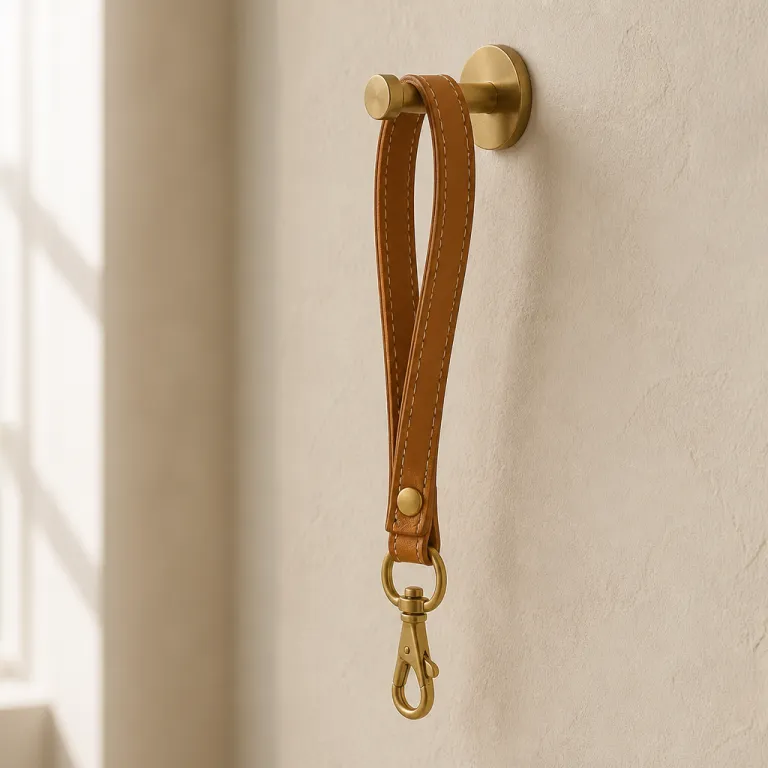
When hardware meets heritage in a leather wristlet keychain
A refined leather wristlet keychain is more than a small accessory. Worn daily, it becomes a quiet conversation between leather, metal hardware, and your hand. The way each key, keyring, and wrist strap ages together reveals your habits with surprising precision.
For a luxury leather wristlet, the choice of hide, lining, and edge finishing must match the weight and geometry of the keychain hardware. A slim, glazed calf wristlet keyring paired with a heavy industrial key chain or oversized key fob feels visually unbalanced and physically awkward. Collectors who already curate high end bag and wallet collections know that harmony between strap, clasp, and key chains is what separates a refined object from a merely expensive one.
On a compact wristlet keychain, the leather thickness around the key ring cutout is critical for long term strength. As a practical benchmark, many artisans use 2.0–2.4 mm (about 5–6 oz) full grain leather at the attachment point, often with a reinforced lining layer if the strap itself is thinner. If the material around the keychain opening is too fine, the slot stretches, the keyring tilts, and the whole piece starts to twist uncomfortably on the wrist. When the maker calibrates thickness correctly, the leather tab and metal ring sit flat, the wrist strap moves fluidly, and the bag charm function feels effortless.
Balancing metal hardware and leather grain
Thoughtful buyers evaluate how the finish of the metal key chain interacts with the grain of the leather. A mirror polished keychain wristlet in box calf reflects light sharply, while a brushed brass key ring on pebbled handmade leather absorbs it softly and feels more understated. Matching the hardware sheen to your purse or bag fittings keeps the whole silhouette visually united.
On a leather wristlet keychain, the metal color should echo your existing keychain wallet and bag charm accents. If your main purse uses pale gold hardware, a cool silver keychain leather finish can feel visually noisy when the pieces sit together on a café table. Aligning these details creates a united aesthetic language that feels deliberate rather than improvised.
Enthusiasts who enjoy DIY leather projects often underestimate how much the radius of a keyring or key fob influences comfort. A small, tight key ring concentrates pressure on the leather opening, while a slightly larger diameter spreads the load and protects the handmade leather edge. For most everyday sets, a 25–32 mm (1–1.25 inch) internal ring diameter offers a good balance between capacity and ergonomics. This is why serious brands test multiple key chains and wristlet keyring sizes before finalizing a design.
Choosing the right hardware architecture for your lifestyle
Every leather wristlet keychain hides a small piece of engineering inside its elegant outline. The way the keychain, strap, and keyring are arranged determines how quickly you can access a key without fumbling or scratching your bag. For people who rotate between several wallets and purses, this architecture matters as much as the leather itself.
Some luxury houses favor a central key ring with a detachable key fob clip, allowing you to separate car keys from house keys in one fluid movement. Others design a keychain wristlet with multiple small key chains on individual swivels, which keeps each leather key isolated and reduces metal on metal noise. When you buy a new leather keychain, test how the hardware behaves when the wrist strap is actually loaded with keys, cards, and a compact keychain wallet.
For those who carry a structured bag, a slim wristlet keyring that tucks neatly into an interior pocket prevents bulging. If you prefer a soft hobo purse, a slightly heavier key chain with a decorative bag charm silhouette can help you locate your keys by touch alone. Admirers of the refined art of the leather key ring for discerning owners will recognize how these small decisions influence daily satisfaction.
Security, discretion, and the role of closures
On a luxury leather wristlet, the closure system is the quiet guardian of your essentials. A well tuned snap, stud, or mini buckle keeps the keychain leather loop secure without marking the grain or stretching the strap. When closures are misaligned, the price you pay is not only aesthetic but also practical, as keys can slip free at the worst possible moment.
Some people prefer a free sliding keyring on a continuous wrist strap, valuing speed over absolute security. Others want a more structured keychain wristlet with a fixed key ring and a secondary safety chain hidden inside the leather. Both approaches can be luxurious, provided the hardware is scaled correctly to the thickness of the DIY leather and the expected weight of the keys. As a reference, many makers pair 2–2.4 mm leather with 1.5–2 mm thick solid brass or stainless steel components and use 6–8 mm rivets or Chicago screws at stress points.
For drivers, a dedicated key fob dock integrated into the wristlet keychain can prevent accidental button presses. If you travel frequently, consider a keychain wallet format that combines a zip pocket for cards with an internal key chain and external bag charm loop. This hybrid architecture keeps your essentials united while still allowing the wristlet to hang elegantly from a purse handle.
Material choices: from full grain to faux leather details
Owners of high end leather goods already understand that not all leather is created equal. The same principle applies to every leather wristlet keychain, where the quality of the hide must match the stress of daily use. A delicate lambskin wristlet may feel exquisite in the hand, yet it can struggle under the constant abrasion of metal key chains.
For a primary keychain wristlet, full grain calf or robust goat leather offers a better balance between suppleness and resistance. These leathers tolerate the friction of a keyring, the occasional drop on a stone floor, and the repeated flexing of a wrist strap. When combined with a carefully finished edge and a well chosen key ring, they age with a graceful patina rather than premature wear.
There is also a place for faux leather in this universe, particularly for people who want a playful bag charm or seasonal wristlet keyring to complement a main leather bag. A faux leather keychain can carry a lighter load of keys while preserving your primary handmade leather wristlet for more formal occasions. The key is to be honest about the role of each piece and not expect a fashion oriented faux leather strap to perform like a workhorse leather keychain.
How stitching and thread influence hardware stability
The junction where leather meets metal is only as strong as the stitching that holds it. On a luxury leather wristlet keychain, the thread choice, stitch length, and backstitch placement around the keychain leather loop are decisive. Poorly executed stitching can cause the keychain to fail long before the leather itself wears out.
Enthusiasts who appreciate technical detail will find it useful to study how different stitching materials behave around hardware. Waxed thread, linen, and nylon each respond differently to abrasion, flex, and humidity, and the same principles apply to the small but highly stressed area where a key ring or key chain passes through a leather wristlet.
When evaluating a potential buy, look closely at the saddle stitching or machine stitching around the key fob attachment. For hand stitching, many artisans aim for roughly 6–8 stitches per inch (about 3–4 mm spacing) on a strap, with slightly shorter stitches near the key slot for added strength. The thread should sit slightly recessed into the DIY leather, protected from abrasion by a smooth edge. If you see fraying, uneven tension, or stitches that run too close to the edge of the strap, the long term security of your keys may be compromised.
Hardware finishes, patina, and the quiet power of metal
The metal on your leather wristlet keychain does more than hold keys. It signals taste, aligns with your other accessories, and shapes how the piece ages over time. A well chosen hardware finish can elevate even a modestly priced leather keychain into something quietly authoritative.
Solid brass hardware, for example, develops a warm patina that pairs beautifully with tan or chestnut handmade leather. Collectors who appreciate the understated strength of a solid brass belt buckle will recognize the same philosophy in a brass key ring or keychain wristlet clasp. The same logic translates directly to wristlet keyring choices, where weight, color, and finish all influence perceived quality.
By contrast, high polish palladium or rhodium plated hardware on a leather wristlet offers a cooler, more contemporary character. These finishes resist tarnish and maintain a crisp shine, which suits a minimalist keychain wallet or structured purse. When you buy a new keychain leather piece, consider how its metal tone will sit beside your watch, jewellery, and bag hardware as a united visual ensemble.
Managing wear, scratches, and maintenance rituals
Every key chain inevitably collects micro scratches, yet on luxury pieces this wear can be guided rather than suffered. A brushed or sandblasted finish on the keyring and key fob hides everyday marks better than a mirror polish, especially when keys swing freely from a wrist strap. People who prefer a pristine look may choose a design where the key chains sit partially recessed inside a leather sheath.
Regular maintenance of both leather and metal keeps a leather wristlet keychain in its best condition. Wiping the hardware with a soft cloth, checking the tightness of screws or rivets, and conditioning the leather around the keychain attachment points prevents premature failure. This ritual becomes part of the pleasure of ownership, much like caring for a favourite bag or wallet.
In climates with strong seasonal shifts, humidity and temperature changes can affect both leather and metal. Storing your keychain wristlet away from direct window light and heat sources reduces drying and cracking. A small tray near the entrance, free from sharp objects, offers a safe landing place for your purse, bag charm, and leather wristlet at the end of each day.
Function, ergonomics, and the daily choreography of use
A luxury leather wristlet keychain should feel intuitive from the first moment you slip it on. The curve of the wristlet, the weight of the keychain, and the placement of the keyring all influence this immediate impression. When these elements are misaligned, even a beautiful piece can feel clumsy in daily use.
Ergonomics begin with the wrist strap length and flexibility. A strap that is too short forces the key chains to press against the back of your hand, while an overly long strap lets the key fob swing wildly and knock against your bag. The ideal leather wristlet length allows the keys to rest lightly against the palm when your arm hangs naturally at your side.
People who carry multiple access cards, car keys, and house keys may benefit from a keychain wallet configuration. This format integrates a compact wallet with card slots, a zip pocket, and an internal key chain, all anchored by an external wristlet keyring. It keeps your essentials united in one object, reducing the need to juggle separate purse, bag charm, and keychain leather pieces.
Modularity and personalization options
Many contemporary brands now offer modular leather wristlet keychain systems. These allow you to clip on or remove individual key chains, charms, or even a small DIY leather pouch depending on the day’s needs. For people who enjoy curating their accessories, this modularity turns a simple keychain into a small, evolving collection.
Personalization can extend beyond monogramming to include interchangeable key rings and hardware finishes. You might pair a classic handmade leather wristlet with a seasonal faux leather bag charm, or alternate between a minimalist keychain wristlet and a more ornate leather keychain for evening events. The key is to maintain a coherent visual language so that each element feels related rather than random.
Those who enjoy DIY leather work can create their own add on charms or straps to clip onto an existing wristlet keychain. A small handmade leather tassel, a contrasting faux leather loop, or a custom key fob can refresh a familiar piece without replacing it. This approach respects the original craftsmanship while allowing your lifestyle and tastes to evolve.
Evaluating value, price, and long term satisfaction
Assessing the price of a luxury leather wristlet keychain requires more than glancing at a tag. People who already invest in fine bags and wallets understand that value lies in materials, construction, and long term pleasure of use. A slightly higher initial price can feel modest when spread across years of daily satisfaction.
When comparing options, examine the leather quality, hardware composition, and finishing details around the keychain and keyring. A piece made from full grain handmade leather with solid brass hardware and precise stitching will generally outlast a cheaper faux leather alternative with plated zinc fittings. Over time, the patina on a well made leather keychain becomes part of your personal narrative, while lower quality materials often simply degrade.
Many respected brands now offer generous policies such as free returns on keychain wristlet purchases. This allows you to test how a leather wristlet feels with your actual keys, bag, and purse before committing. Use this opportunity to evaluate not only aesthetics but also how the key chain, wrist strap, and key fob interact with your daily routine.
Where craftsmanship justifies the investment
True value in a leather wristlet keychain emerges where craftsmanship, materials, and thoughtful design intersect. A handmade leather piece from a skilled atelier may carry a higher price, yet it often includes subtle reinforcements around the keychain leather loop, carefully burnished edges, and hand set hardware. These details are invisible at a distance but unmistakable in the hand.
Buyers should also consider the after sales ecosystem surrounding a brand. Access to repairs, replacement key rings, and refurbishment services can extend the life of a favourite keychain wallet or bag charm by many years. In this sense, the initial price includes not only the object itself but also the long term relationship with the maker.
Ultimately, a well chosen leather wristlet, whether in classic leather or thoughtfully executed faux leather, becomes a small anchor in your daily life. It unites your keys, cards, and personal style in one compact gesture. When hardware integration, material choice, and ergonomics align, even the simple act of reaching for a key can feel quietly luxurious.
Key figures and market insights on leather wristlet keychains
- According to Grand View Research’s report “Leather Goods Market Size, Share & Trends Analysis Report” (2022), the global leather goods market was valued at approximately USD 407.2 billion in 2021, with small leather accessories such as key chains and wristlets representing a steadily growing segment driven by everyday carry trends (see Grand View Research, Leather Goods Market, 2022, executive summary and market segmentation tables).
- Data from Statista’s “Revenue of the Leather Goods Market in the United States” (accessed 2023) indicates that consumers allocate a significant share of their leather budget to small goods, with wallets, key fobs, and keychain wallet formats accounting for more than one third of unit sales in the premium segment (Statista, Leather Goods Market – United States, revenue and unit breakdown charts).
- Industry surveys summarized in the McKinsey & Company “State of Fashion 2022” report note that buyers of luxury leather accessories increasingly value repairability, with over 60 percent of respondents stating that access to refurbishment services influences their decision to buy a particular brand’s keychain wristlet or bag charm (McKinsey, The State of Fashion 2022, consumer sentiment section).
- Market analyses cited in the same Grand View Research study highlight that faux leather alternatives now represent a substantial portion of entry level keychain leather products, yet full grain handmade leather still dominates the high end category where long term durability and patina are priorities (Grand View Research, Leather Goods Market, material insights chapter).
- Consumer research across major luxury markets, reported in McKinsey’s “State of Fashion 2023,” shows that modular designs—such as wristlet keyring systems with interchangeable key rings and charms—are among the fastest growing subcategories in small leather goods (McKinsey, The State of Fashion 2023, product innovation and accessories section).
FAQ about luxury leather wristlet keychains
How should I choose the right size for a leather wristlet keychain ?
Select a wrist strap that slides over your hand comfortably yet does not hang so loosely that the keychain strikes your bag or wrist. For most adults, an internal circumference of around 16 to 20 cm works well, but you should test it with your actual keys attached. The keyring and key fob should rest near your palm when your arm hangs naturally, without pulling or twisting.
Is full grain leather always better than faux leather for a wristlet ?
Full grain leather generally offers superior durability, patina, and tactile pleasure, especially when used for a daily keychain wristlet. Faux leather can be appropriate for lighter use, seasonal colours, or playful bag charm designs that do not carry heavy key chains. People who value longevity and repairability usually reserve faux leather for secondary pieces and rely on handmade leather for their primary wristlet keychain.
How can I prevent my leather wristlet keychain from scratching my bag ?
Choose a design where the key chain and key ring sit slightly recessed or cushioned by leather, rather than swinging freely on a long strap. You can also assign sharper keys to an inner keychain wallet or sheath, leaving only smoother keys exposed near your purse. At home, store the wristlet away from delicate leather bags to avoid accidental contact in a shared drawer or tray.
What maintenance routine do you recommend for a luxury leather wristlet ?
Wipe the leather weekly with a soft, dry cloth and condition it lightly every few months, focusing on the area around the keychain leather attachment. Inspect the hardware for loosened screws, stretched key rings, or worn stitching, especially where the key fob meets the strap. Avoid prolonged exposure to direct window sunlight, heat, or moisture, which can dry the leather and accelerate metal tarnish.
When is a keychain wallet format preferable to a simple key fob wristlet ?
A keychain wallet becomes preferable when you want to unite keys, cards, and a small amount of cash in one compact object. This format suits people who move frequently between bags or prefer to carry only a wristlet for short errands. If you already carry a larger wallet inside your purse, a simpler leather wristlet keychain with a refined keyring and bag charm profile may be sufficient.
