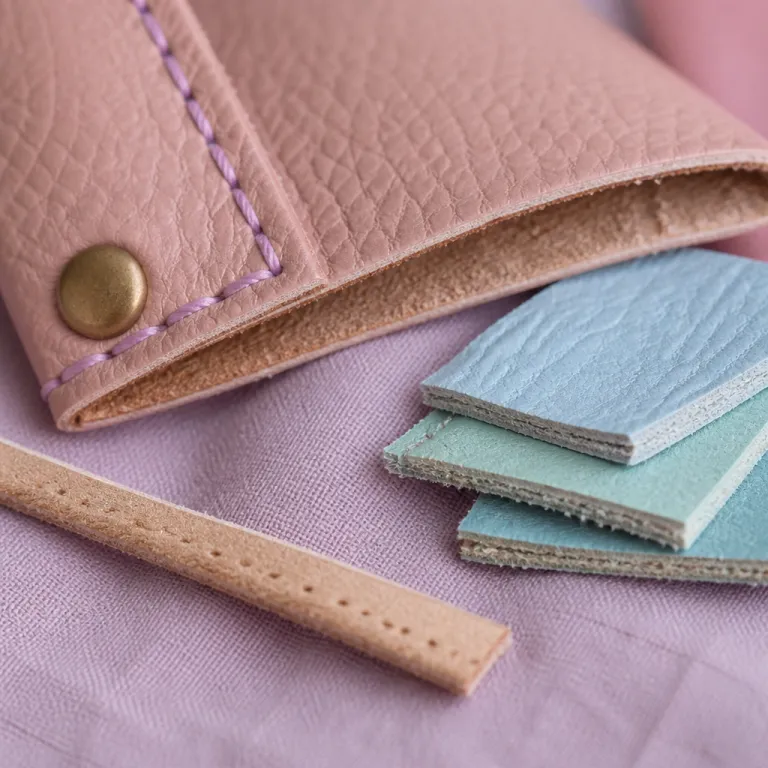
The leather by-product sustainability debate: when waste becomes revenue
The leather by-product sustainability debate usually starts with a reassuring line about waste. You are told that leather is simply a way to keep hides from landfill, a neat environmental solution based on using what the meat industry would otherwise discard. That story contains a shard of truth, yet it hides how the leather industry really works and how your leather goods fit into a much larger system.
In the global leather industry, raw hides and skins represent a small share of the animal’s total value, but they are not trivial. When hide prices are healthy, they can account for roughly 5 to 10 percent of the revenue from an animal, which is enough to influence how livestock production is structured and where cattle are raised. That is why the leather by-product sustainability debate cannot be reduced to a simple claim that hides are pure waste from byproduct meat with no environmental impact attached.
Think about your own collection of leather goods and how they were positioned as sustainable leather or even leather sustainable by design. The marketing often leans on the idea that animal leather is automatically responsible because the animal was already killed for meat, so the leather product is framed as an ethical material choice. Yet once hides become a predictable revenue stream, they stop being passive waste and start acting as co-products that support the economics of the meat industry and the wider fashion industry.
This distinction between by-product and co-product matters for environmental impact and greenhouse gas accounting. If leather production helps make cattle ranching more profitable, then part of the leather impact must be counted alongside the gas emissions and land use change driven by the meat industry. The leather by-product sustainability debate is really about how much responsibility leather production should carry for deforestation, water use, and the environmental footprint of animals raised primarily for meat but also for their hides and skins.
Luxury buyers are often told that traditional leather from European tanneries is a model of sustainable practice. In reality, the environmental impact of leather production depends on where the animals were raised, how the tanning was done, and how the waste streams are managed at each stage of production. A full grain leather product made from regenerative leather can have a very different leather impact from a similar looking piece made with poorly traced hides from regions linked to forest loss.
There is also a hierarchy within animal leather itself that complicates the leather by-product sustainability debate. Some premium materials, such as certain lamb nappa or exotic skins, come from animals raised partly or primarily for their skin, which means the leather industry is not just passively using waste from meat. In those cases, the leather product is clearly a driver of production, and the environmental impact cannot be dismissed as a side effect of byproduct meat or general livestock farming.
When you hear that leather goods are sustainable because they are based on waste materials, ask which animals and which markets are being discussed. In some developed markets, cattle are undeniably raised mainly for meat, and hides function closer to a by-product that reduces waste and adds marginal revenue. In other regions, however, demand from the fashion industry for specific hides and exotic skins can shape breeding decisions, making leather production a central part of the business model rather than an incidental outcome.
The leather by-product sustainability debate also intersects with the rise of vegan leather and other leather alternatives. Many vegan products are based on plastics or coated textiles, which carry their own environmental impact and waste challenges, especially when they age poorly compared with traditional leather. Conscious buyers need to compare materials and products on their full life cycle, not just on whether they come from animals or are marketed as vegan or sustainable.
When a by-product becomes a co-product: following the money
To understand the leather by-product sustainability debate properly, you have to follow the money, not the marketing. Hide prices move with global demand for leather goods, and when demand is strong, the leather industry becomes an important revenue pillar for slaughterhouses and meat companies. That is when leather production stops looking like a passive use of waste material and starts behaving like a co-product that supports the economics of the meat industry.
Economic data from commodity analysts show that global raw hide production is around 13.8 million metric tons annually, with cattle hides making up roughly 68 percent of that total. Those hides are not collected out of environmental kindness; they are collected because the leather industry pays for them, and that payment helps offset costs in meat production. In regions where hide quality is high and demand from the fashion industry is strong, the revenue from hides can influence which breeds are favored and how animals are raised.
The leather by-product sustainability debate often ignores how this revenue stream interacts with deforestation and land use. Research published in the journal Nature Food in 2022 (Pendrill et al., DOI:10.1038/s43016-022-00530-1) attributes about 42 percent of commodity-driven deforestation between 2001 and 2015 to pasture expansion for beef and leather, which means leather impact is intertwined with the expansion of grazing land. Cattle ranching is the primary driver of deforestation in the Amazon, and the European Union is one of the largest importers of leather products and semi-processed hides from Brazil, as reported by Mongabay in its 2020 and 2021 investigations on Brazil–EU leather trade, so European demand for leather goods is not environmentally neutral.
Policy decisions reflect this tension between meat and leather as joint outputs of the same animals. The European Union’s Regulation (EU) 2023/1115 on deforestation-free supply chains initially covered beef but excluded leather from its final annexes, effectively treating leather as a harmless by-product even though it shares the same land use and greenhouse gas footprint as the meat. For a conscious buyer, this regulatory split should be a signal to look beyond official labels and read detailed analyses such as the report on how the EU dropped leather from its deforestation law published on the Luxury Leather Good editorial platform, a specialist site focused on high-end leather and sustainability.
In practice, the leather by-product sustainability debate plays out differently across segments of the leather industry. At the commodity end, where hides are thick, corrected grain, and destined for mass market leather products, the hide is closer to a by-product of byproduct meat, and the environmental impact is dominated by the meat industry. At the luxury end, where selection for fine grain, minimal defects, and specific animals is intense, leather production can exert its own pull on breeding and sourcing decisions.
Exotic skins are the clearest example of leather as a primary product rather than a by-product. Crocodiles, pythons, and certain lizards are often farmed or harvested mainly for their skins, with meat playing a secondary role or even becoming the real waste material. In those cases, the leather by-product sustainability debate does not apply; the leather product is the main economic driver, and the environmental impact, including greenhouse gas emissions and habitat pressure, must be allocated directly to the fashion industry that demands these materials.
Even within bovine and calf leather, there are niches where leather production is a strong driver. High end calf for fine dress shoes and small leather goods, or ultra soft lamb nappa for fashion industry ready to wear, can command such premiums that animals are effectively raised with the leather product in mind. Here, animal leather is not just a side effect of meat production but a co-product that shapes how many animals are bred, how quickly they are slaughtered, and how their hides and skins are handled from farm to tannery.
For you as an owner of luxury leather goods, the key is to recognize when your purchase is supporting a system where leather is a marginal by-product and when it is supporting a system where leather is a central co-product. The leather by-product sustainability debate is not about rejecting leather entirely but about assigning responsibility accurately across the meat industry, the leather industry, and the fashion industry. Once you see leather as part of a shared economic engine, the comfortable narrative of harmless waste based material starts to look incomplete.
Not all animal leather is equal: tracing tanning, regions, and regenerative claims
Once you accept that leather is sometimes a co-product, the next step in the leather by-product sustainability debate is to examine how and where it is made. The environmental impact of leather production is shaped by three main factors: the origin of the animals, the tanning process, and the way waste streams are managed. Each of these stages can either amplify or mitigate the leather impact associated with your leather goods.
Origin matters because land use and greenhouse gas profiles vary dramatically between regions. Cattle raised on recently cleared forest land in the Amazon carry a very different environmental impact from animals raised on long established pasture in Europe or on regenerative grazing systems that aim to restore soil health. When leather industry marketing talks about sustainable leather or regenerative leather, you should ask whether the claim is based on verified land management practices or simply on the idea that leather is a by-product of byproduct meat.
Tanning is the second major lever in the leather by-product sustainability debate, because it determines how raw hides become durable materials. Traditional chrome tanning is efficient and produces supple material, but it can generate hazardous waste if effluents are not properly treated and if solid waste is not safely managed. Modern tanneries that invest in closed loop water systems, advanced filtration, and energy recovery can significantly reduce environmental impact and gas emissions compared with older facilities that still discharge untreated waste.
Some of the most progressive tanneries now position themselves as eco friendly leaders within the leather industry. They experiment with metal free tanning, plant based tannins, and bio based finishing materials that reduce reliance on fossil fuel derived chemicals. For a deeper look at how these facilities operate, including their approach to waste management and energy use, you can read the detailed feature on eco friendly luxury leather tanneries published on the Luxury Leather Good website.
Regenerative leather is another term that appears frequently in the leather by-product sustainability debate. In its strongest form, it refers to leather sourced from farms that use regenerative agriculture practices, such as rotational grazing and minimal soil disturbance, to increase soil carbon and biodiversity. When done rigorously, this approach can offset some greenhouse gas emissions from animals and reduce the overall environmental impact of both meat and leather production.
However, regenerative claims are not always backed by robust data, and this is where a discerning buyer must be precise. Ask whether the leather product you are considering comes with farm level traceability, third party verification, and clear metrics on soil carbon or biodiversity gains. Without those details, regenerative leather risks becoming another comforting phrase in the leather by-product sustainability debate, similar to calling leather a harmless by-product without examining the underlying production system.
Waste handling within tanneries is a quieter but crucial part of the story. Turning hides and skins into finished materials generates trimmings, sludge, and offcuts that can either become problematic waste or be transformed into useful products such as collagen, gelatin, or composite materials. Tanneries that treat these streams as valuable materials rather than waste can reduce environmental impact and support a more circular model of leather production, which strengthens the case for leather sustainable practices.
For luxury leather goods, the best examples combine carefully sourced animal leather with meticulous tanning and finishing. They use full grain hides with minimal correction, which allows the material to age gracefully and reduces the need for heavy coatings based on petrochemical products. When such pieces are well cared for and used for decades, their long service life can offset some of the initial leather impact, making them a more responsible choice within the broader leather by-product sustainability debate.
Vegan leather, leather alternatives, and what conscious buyers should really ask
No serious leather by-product sustainability debate can ignore vegan leather and the growing field of leather alternatives. Many conscious buyers reach for vegan products to avoid supporting the meat industry and the use of animals altogether, which is an understandable ethical stance. Yet from an environmental impact perspective, the comparison between animal leather and vegan leather is more complex than a simple animal versus non animal choice.
Most vegan leather on the market today is based on synthetic materials such as polyurethane or polyvinyl chloride coated fabrics. These materials avoid direct links to animals and byproduct meat, but they are derived from fossil fuels and can shed microplastics throughout their life, contributing to long term waste and pollution. Their production also generates greenhouse gas emissions, and many vegan products have a shorter lifespan than traditional leather goods, which means more frequent replacement and more waste over time.
Newer leather alternatives based on plants or mycelium are often presented as the sustainable future of the fashion industry. Mushroom based materials, cactus based composites, and other bio based products promise a lower environmental impact and a clean break from the leather industry and the meat industry. Yet many of these materials still rely on plastic binders, and their durability under real world use has not always matched the performance of high quality animal leather.
If you want a detailed, critical look at these emerging materials, including how they compare with full grain traditional leather, the Luxury Leather Good article on why new leathers still fall short of full grain is an essential read. It explains how some bio based products perform well in lab tests but struggle with flexing, abrasion, and patina when turned into everyday leather goods. That gap between promise and performance is central to the leather by-product sustainability debate, because a material that fails early can have a higher effective environmental impact than a longer lasting alternative.
For a conscious luxury buyer, the right question is rarely “leather or vegan leather” in isolation. The better question is which specific material, whether animal leather or a leather alternative, delivers the longest, most repairable life with the lowest combined environmental impact and greenhouse gas footprint. That means looking at production methods, tanning chemistry, waste handling, and end of life options, rather than relying on a single label such as sustainable leather or vegan.
Ethically sourced leather, as defined by specialist platforms, is derived from animals and produced using methods that ensure animal well being throughout their lives. When such sourcing is combined with responsible tanning, transparent supply chains, and a design philosophy based on repairable leather products, animal leather can play a role in a lower impact wardrobe. The leather by-product sustainability debate then shifts from a binary moral argument to a nuanced assessment of specific materials, products, and production systems.
At the same time, there is a strong case for supporting innovation in leather alternatives that genuinely reduce environmental impact without sacrificing durability. Materials that are truly bio based, compostable, or easily recyclable could eventually offer compelling options alongside traditional leather goods, especially for categories where extreme longevity is less critical. Until then, the most responsible path often lies in buying fewer, better pieces, whether made from animal leather or advanced alternatives, and using them for as long as possible.
Your role in the leather by-product sustainability debate is not to choose a perfect material, because none exists. It is to ask sharper questions about origin, tanning, waste, and lifespan, and to reward brands that treat leather impact as a shared responsibility rather than a marketing slogan. Not the logo, but the grain, the stitch, and the traceability should guide your decisions as a custodian of luxury leather goods in a world that can no longer afford comforting half truths.
Key figures shaping the leather by-product sustainability debate
- Pasture expansion for meat and leather accounts for about 42 percent of commodity driven deforestation between 2001 and 2015, according to research published in Nature Food (Pendrill et al., 2022, DOI:10.1038/s43016-022-00530-1), which directly links leather impact to land use change and forest loss.
- Global raw hide production is estimated at roughly 13.8 million metric tons per year, with cattle hides representing around 68 percent of this volume, based on data compiled by Mongabay from FAO and trade statistics in its 2020 overview of the global leather supply chain, highlighting the scale at which the leather industry converts animal byproducts into materials.
- Cattle ranching is identified as the primary driver of deforestation in the Amazon basin, while the European Union ranks as the second largest importer of leather from Brazil, which means European demand for leather goods is indirectly connected to greenhouse gas emissions and biodiversity loss in that region, as documented in Mongabay’s 2021 investigation into Brazil’s leather exports.
- Hide values can contribute approximately 5 to 10 percent of the total economic value of an animal in some markets, according to livestock economics analyses and industry price reports from the United States Department of Agriculture and commodity consultancies, which is enough to shift leather from a negligible by-product toward a meaningful co-product in the meat industry.
- Life cycle assessments consistently show that the majority of the environmental impact of bovine leather comes from the farming stage, including methane related gas emissions and land use, while tanning and finishing contribute a smaller but still significant share through energy use and chemical processing; representative LCAs include studies by the United Nations Industrial Development Organization and peer reviewed work in the Journal of Cleaner Production on bovine leather footprints.