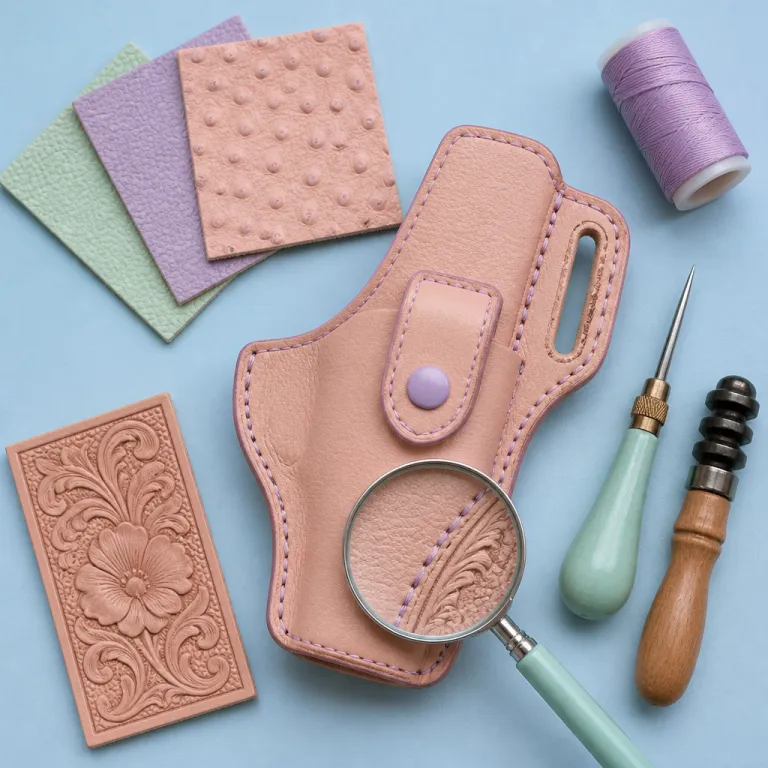
When a Glock 32 holster becomes a luxury leather object
A Glock 32 holster only enters the realm of true luxury when its leather, hardware, and stitching speak the same refined language. In high end ateliers, artisans treat a holster for a compact Glock in the same way they approach a watch strap or a bespoke briefcase, balancing ballistic practicality with the quiet authority expected by a luxury leather good owner. The finest Glock holsters are therefore judged not only by retention and draw angle, but also by how their patina, edge finishing, and hardware aging align with the rest of your collection.
For a collector who already owns Beretta cases, Sig Sauer pouches, and Springfield holsters for travel, the Glock 32 holster must integrate seamlessly into an existing ecosystem of leather and metal. That means the holster, whether designed as an inside the waistband IWB holster or a more formal OWB holster, should echo the same grain, color depth, and hardware tone as your luxury belts, wallets, and watch straps. When a Glock rig is commissioned from the same tannery that supplies your briefcase, the result is a coherent visual narrative rather than a purely utilitarian accessory clipped to an otherwise curated wardrobe.
Owners who pair a Glock MOS with a red dot optic or a Glock Streamlight setup often underestimate how much extra weight and volume this adds to the holster. A luxury focused maker will therefore design leather rigs for Sig, Taurus, and Kahr pistols with reinforced mouth openings, subtly flared channels for the optic, and carefully profiled leather around any light, ensuring the holsters remain elegant while still accommodating modern enhancements. In this context, a Glock 32 holster is no longer a simple tool, but a calibrated interface between firearm, leather, and the rest of your luxury ensemble.
Hardware integration as the hidden signature of refinement
On a luxury Glock 32 holster, the hardware is the first silent handshake between your firearm and your wardrobe. Buckles, screws, and clips on a premium Glock rig must be aligned with the same rigor you expect from the clasps on a high end attaché case, because any misalignment will telegraph itself every time you draw or reholster. This is why serious collectors scrutinize the hardware on Kahr, Sig, and Taurus holsters with the same intensity they reserve for the lugs on a Wilson Combat pistol or the slide serrations on a Kimber.
When a maker designs an IWB holster for a compact Glock, Sig, or Kahr, the choice of clip material and finish becomes crucial. Titanium or PVD coated steel hardware resists corrosion from humidity and perspiration, while polished brass or palladium plated buckles on an OWB holster can echo the metal tones of your belt and watch. For a deeper dive into how metal quality reveals overall craftsmanship, many connoisseurs refer to standardized hardware tests for zippers, clasps, and buckles from luggage and leather goods laboratories, then apply the same criteria to every Glock holster they commission.
Luxury workshops that already craft cases for Beretta, Walther, Ruger, and Taurus often standardize their hardware philosophy across all holsters. That means a Glock 32 holster, a rig for a Beretta APX, and a sheath for a Canik Mete will share the same screw tolerances, thread locking methods, and deburred edges, preventing any snagging on fine shirting or delicate leather belts. Over time, this consistency in hardware integration becomes a recognizable signature, much like the hinge design on a famous trunk maker or the clasp geometry on a heritage leather house.
Balancing firearm enhancements with luxury leather aesthetics
Modern owners rarely carry a bare Glock, and a Glock 32 holster must now accommodate lights, optics, and lasers without sacrificing elegance. When a Glock Streamlight combination or a Glock fitted with a Streamlight TLR unit enters the equation, the holster’s leather architecture must be rethought from the ground up. The same applies to a Crimson Trace laser or a red dot optic mounted on a Glock MOS, which changes the weapon’s silhouette and therefore the holster’s internal geometry.
Artisans who already design for Beretta, Sig Sauer, Walther, and S&W platforms understand that each accessory, from a Streamlight TLR to a compact Crimson Trace module, adds both bulk and heat concentration. They respond by sculpting the leather of the Glock 32 holster with deeper channels, reinforced stitch lines, and carefully thinned layers around the light, ensuring that the holster remains slim enough for discreet carry while still protecting the firearm’s finish. The same design logic is applied to Springfield, Sig, and Kahr holsters, where each enhancement is mapped in millimetres before a single stitch is placed.
For owners who appreciate refined metalwork, a leather collar for a working dog or a luxury belt offers a useful analogy. The way a maker integrates D rings and buckles into a collar without bulk or discomfort mirrors how they should integrate light channels and optic clearances into a Glock 32 holster, as explored in detailed analyses of black leather dog collars as true luxury hardware. When you commission a Glock, Taurus, or Canik Mete holster for enhanced pistols such as a Beretta APX with optics, insist that the maker shows you cross section sketches, so you can verify that every accessory has been considered in the leather’s internal architecture.
Inside versus outside the waistband in a luxury wardrobe
Choosing between an IWB holster and an OWB holster for a Glock 32 holster is not only a tactical decision, but also a sartorial one. An inside the waistband model must respect the drape of tailored trousers and the line of a fine belt, while an outside the waistband design must sit cleanly against the hip without distorting the jacket’s silhouette. Luxury owners who rotate between Glock, Sig, and Beretta platforms often commission matched sets of holsters so that each firearm has both an IWB and an OWB option in the same leather and hardware finish.
For compact pistols such as a Glock 32, a Sig Sauer P365, or a Kahr model, the IWB holster usually becomes the daily companion, demanding softer backing leather and carefully radiused edges to protect fine shirting fabrics. By contrast, an OWB holster for a larger Walther, Ruger, or Taurus may be reserved for range days or travel, where a slightly more pronounced profile is acceptable and even desirable. In both cases, the Glock 32 holster should echo the same craftsmanship standards as your card holder, as explained in studies of the anatomy of a long lasting wallet, where edge finishing and hinge design directly influence longevity.
Owners who already appreciate the detailing on Wilson Combat grips or the slide work on a Kimber often expect similar nuance from their Kahr and Springfield holsters. That means the cant angle, belt loop placement, and ride height of a Glock 32 holster must be tuned to the wearer’s posture and wardrobe, not just the firearm’s dimensions. When a maker offers a private fitting session, treat it as you would a bespoke suit appointment, bringing the belt, jacket, and even the specific Glock Streamlight or Streamlight TLR configuration you intend to carry.
Curating a coherent multi platform holster collection
Many luxury owners do not stop at a single Glock 32 holster, but instead build a curated collection spanning Glock, Beretta, Sig, Walther, Ruger, and Taurus platforms. The goal is not to accumulate random holsters, but to assemble a family of pieces that share leather provenance, hardware language, and stitching style, much like a coordinated set of luggage. When Glock, Sig, and Taurus holsters are ordered from the same atelier, the resulting visual harmony elevates the entire firearm cabinet.
A collector might, for example, commission a dark brown shell cordovan IWB holster for a compact Glock, a matching OWB holster for a Beretta APX, and a slightly more structured rig for a Canik Mete used at the range. The same workshop could then produce Kahr holsters in a complementary tone, ensuring that every piece, from the Glock 32 holster to the smallest single stack pistol sheath, carries the same edge paint color and thread weight. This approach mirrors how serious enthusiasts curate watch straps, briefcases, and small leather goods into a coherent, long term wardrobe.
When evaluating a new maker, resist the temptation to rely solely on glossy photographs or a simple “view product” page. Instead, request to handle Springfield, Sig, and Glock holsters in person, paying attention to how the leather feels at the mouth of the holster and around any light or optic channels. A workshop that maintains consistent quality across a demanding range of platforms, from Glock MOS models with red dot optics to more traditional S&W revolvers, is far more likely to deliver a Glock 32 holster worthy of a place alongside your finest leather goods.
Care, aging, and long term performance of luxury holsters
A luxury Glock 32 holster should age with the same grace as a well used briefcase or travel bag. The friction of repeated draws, the pressure of belt tension, and the heat generated by a Glock Streamlight or Streamlight TLR unit all leave subtle marks on the leather over time. When the tanning, finishing, and hardware integration are executed correctly, these marks become a patina rather than damage, telling the story of years of careful use.
Owners who also maintain Beretta, Sig Sauer, and Walther holsters know that regular care is non negotiable. A light application of neutral cream, careful brushing, and periodic inspection of the stitching around light and optic channels will keep Glock, Taurus, and Kahr holsters structurally sound. The same regimen should be applied to Springfield rigs and any OWB holster or IWB holster in your rotation, especially those carrying compact pistols with Crimson Trace lasers or red dot optics that concentrate heat in specific zones.
From a performance perspective, the most critical areas on a Glock 32 holster are the mouth, the trigger guard coverage, and the belt attachment points. These zones experience the highest stress, particularly on IWB models for compact Glock or Sig pistols and on OWB rigs for heavier Ruger or Taurus firearms. By inspecting these areas with the same discipline you apply to checking the fit of a Wilson Combat slide or a Kimber barrel, you ensure that your holsters remain both safe and aesthetically aligned with the rest of your luxury leather collection.
Key figures and market insights for luxury holsters
- According to participation data from the National Shooting Sports Foundation (NSSF), including their 2023 “Firearms Retailer Survey Report” and regular NICS background check analyses, handgun ownership in the United States has grown by more than 20 percent over the last decade, which has directly increased demand for premium holster options across Glock, Sig Sauer, Beretta, and other major platforms.
- Industry reports from Grand View Research, such as the 2022 “Leather Goods Market Size, Share & Trends Analysis Report,” estimate that the global leather goods market exceeds 400 billion US dollars in annual value, with a growing niche segment dedicated to high end firearm accessories such as luxury Glock 32 holster designs and coordinated Glock collections. Their published leather goods outlook highlights small leather accessories as one of the fastest developing categories.
- Surveys from major accessory brands, including customer questionnaires and warranty registration data published between 2020 and 2023 by companies like Safariland and Galco, indicate that more than 60 percent of owners who equip their pistols with a red dot optic or a weapon light such as a Streamlight TLR or Glock Streamlight eventually upgrade to a dedicated holster, highlighting the importance of hardware integration in modern designs.
- Endurance testing documented by premium holster makers such as Milt Sparks and Kramer Handgun Leather shows that well maintained vegetable tanned leather holsters can withstand over 20,000 draw and reholster cycles without structural failure, provided that stitching, hardware, and light or optic channels are inspected and serviced regularly. Typical test protocols include measured retention force in new condition and after 5,000, 10,000, and 20,000 cycles, along with cross section photographs of the mouth reinforcement and belt loop areas.
FAQ about luxury Glock 32 holsters and leather craftsmanship
How should a luxury Glock 32 holster fit compared with a standard model ?
A luxury Glock 32 holster should offer the same secure retention as a standard model, but with smoother draw and reholster cycles and no sharp edges against clothing or skin. The fit must account for any light, optic, or Crimson Trace laser, with precisely sculpted channels rather than generic extra space. When you test the holster, the firearm should seat with a clean, audible click while the leather maintains a refined, compact profile on the belt.
Can one holster safely accommodate both a bare Glock 32 and a light equipped version ?
In most cases, a holster designed for a Glock 32 with a Streamlight TLR or similar light will not retain a bare pistol securely, because the retention points are built around the light body. Luxury makers therefore recommend dedicated Glock holsters for light bearing and non light bearing configurations. If you frequently switch between setups, commissioning two matched holsters from the same leather and hardware family is the safest and most aesthetically coherent solution.
What leather type is best for a high end inside the waistband holster ?
For an IWB holster, many luxury workshops prefer firm but finely finished vegetable tanned cowhide or horsehide, sometimes backed with a softer lining for comfort. This structure allows a Glock 32 holster or compact Sig and Kahr rigs to maintain an open mouth for safe reholstering while still conforming slightly to the wearer’s body. Exotic leathers are usually reserved for trim or outer panels, as they can be less forgiving against the skin in a concealed carry context.
How do I integrate a Glock 32 holster into an existing luxury leather collection ?
Start by matching the color, grain, and hardware tone of your holster to your primary belt and everyday bag, whether those pieces accompany a Glock, Beretta, or Walther. Many owners bring their belt and wallet to the atelier so the maker can align edge paint, thread color, and metal finish across Sig, Taurus, and Springfield holsters. Over time, commissioning from a single workshop helps create a coherent visual language, turning your Glock 32 holster into a natural extension of your broader leather wardrobe.
How often should a luxury leather holster be serviced or replaced ?
With proper care, a well made Glock 32 holster can last many years, but it should be inspected at least twice a year for stitching wear, hardware loosening, and deformation around light or optic channels. High use IWB holster and OWB holster models for compact pistols, especially those with Glock Streamlight or red dot setups, may need more frequent checks due to added heat and stress. Replacement becomes necessary when the holster can no longer maintain consistent retention or when structural cracks appear in high stress areas such as the mouth or belt loops.
