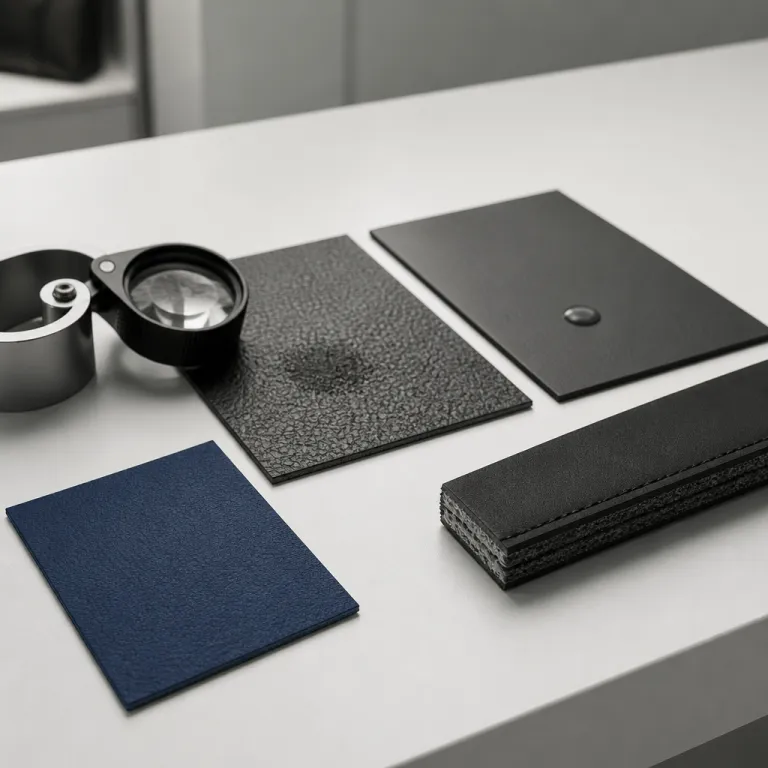
The grain test: reading the surface like a fingerprint
Stand in front of any wall of leather bags and pause on the surface before the logo. Real leather tells its story through irregular grain, tiny scars, and subtle shifts that no machine can repeat. When you learn how to tell real leather from fake by grain alone, you stop relying on swing tags and start trusting your eyes.
On authentic leather products, especially full grain leather, the pores are unevenly spaced and the grain flows like topography across the hide. Fake leather and other synthetic materials often show a perfectly repeating pattern, where each pore and wrinkle looks cloned from the next, which is a clear signal when you want to spot fake materials quickly. Compare several leather bags side by side; if the grain on three different bags looks suspiciously identical, you are probably looking at artificial leather or heavily embossed corrected grain rather than real leather from a natural hide.
Run a fingertip slowly across the surface and feel for micro variations in height and density. Real leather has a complex feel, with firmer and softer zones, while fake leather and many faux leather products feel uniformly smooth, almost glassy, because the material is essentially a plastic film. On bonded leather, which is made from shredded fibres glued and pressed into sheets, the surface often looks too perfect yet slightly lifeless, and the pattern does not align with the way leather from a single animal would naturally stretch around curves and seams.
Quick grain checklist (buy / skip signals)
- Buy: Irregular, non-repeating pattern = strong sign of genuine leather
- Skip: Perfectly regular, stamped texture = likely faux or heavily corrected
- Buy: Grain that distorts naturally around seams and curves = real hide behaviour
- Skip: Grain that ignores stress points and stays rigid = printed synthetic surface
How grain behaves on different products
On leather jackets, look at the shoulders and elbows where tension is highest. Genuine leather will show stretching in the grain that radiates organically from stress points, while fake leather jackets often keep a rigid, printed pattern that ignores how the body moves. The same rule applies to a leather briefcase or structured handbags, where authentic leather creases gently around handles and flaps instead of cracking in straight lines.
Buffalo leather, prized for its pronounced grain, offers an excellent training ground for your eye. When you examine buffalo leather bags or wallets, the grain should feel deep and three dimensional, not just a shallow emboss pressed onto a flat surface. If the so-called buffalo leather products show a thin, uniform coating that masks the grain entirely, you are likely dealing with bonded leather or a synthetic material dressed up with marketing language.
For small leather gifts such as wallets or card holders, inspect the inside panels as carefully as the outside. Real leather interiors, even when split or lined, still show subtle grain and fibre structure, whereas fake leather or imitation leather linings often reveal a fabric or foam backing when you flex the edge. When you understand how full grain behaves on large panels and how corrected or bonded leather behaves on smaller components, you read every leather product like a connoisseur rather than a casual shopper.
Image tip: include close-up photos of natural grain, embossed grain, and bonded leather edges, with descriptive alt text such as “close-up of full grain leather showing irregular pores” or “bonded leather edge revealing layered construction”. For extra clarity, add a labeled comparison image of three panels (full grain, coated split, and PVC faux leather) so readers can see the differences at a glance.
The smell test: earthy richness versus chemical sharpness
Once the grain has given you a first impression, the smell will either confirm or contradict it. Real leather carries an earthy, slightly sweet aroma that comes from the tanning process and the collagen structure of the hide. Fake leather and most synthetic substitutes tend to smell of solvents, plastic, or nothing at all, which is a quiet but reliable warning sign.
Vegetable tanned full grain leather, often used for high end leather briefcase designs and heritage leather bags, has a warm, woody smell that lingers even after years of leather care and conditioning. Chrome tanned leather products, which dominate the market, usually smell lighter and cleaner but still organic, never like a vinyl car seat or a shower curtain. When you hold a bag or wallet close and the smell is aggressively chemical or reminiscent of glue, you can safely assume you are not handling authentic leather, no matter what the label claims.
Artificial leather made from PVC or polyurethane often tries to mask its odour with fragrances. This trick is common on faux leather jackets and on lower priced fashion bags sold as trend pieces rather than long term companions. If the scent feels synthetic or perfumed and does not match the tactile feel of real leather, treat it as a red flag and rely more heavily on the other tests for how to tell real leather from fake in that store.
Smell across categories: from jackets to small gifts
In a boutique, compare the smell of a premium leather jacket with that of a stack of faux leather belts or wallets nearby. Genuine leather jackets usually retain a consistent aroma across panels and lining trims, while fake leather belts may smell strongly of plastic at the edges where the coating is thickest. When you move to smaller leather gifts such as key fobs or coasters, the smell should still echo the larger pieces, not vanish into a neutral or synthetic scent.
Home accessories provide another useful reference point for your nose. A set of full grain leather coasters, for example, will release a subtle but unmistakable leather smell when warmed by a mug, unlike artificial leather coasters that remain odourless even under heat; this contrast is explored in depth in this refined leather coaster guide, which draws on practical testing by specialist makers. If you own a trusted leather briefcase or a pair of well aged leather bags at home, use them as your calibration tool before shopping, so your memory of genuine leather is fresh.
Remember that some brands over condition their leather products with heavily scented creams. In those cases, focus on the underlying note rather than the top fragrance; real leather still smells like a natural material beneath the cosmetic layer, while fake leather and synthetic alternatives smell like the product applied on top and nothing more. With practice, your nose becomes as reliable as your eye when you need to spot fake leather quickly in a crowded store.
The touch and warmth test: how leather feels in the hand
Touch is where connoisseurship becomes unmistakable, because real leather responds to your hand in ways fake leather cannot imitate. When you pick up a bag or wallet, notice how the material warms slightly within seconds and yields subtly under pressure. Synthetic and faux leather alternatives often stay cool and rigid, broadcasting their artificial origin even when the grain looks convincing.
Full grain leather has a complex feel that combines surface softness with structural integrity. Press your thumb into the surface of leather bags or a leather briefcase; genuine leather will show a temporary lightening and a gentle bloom as the fibres compress and then recover, while fake leather tends to crease sharply or show no response at all. Bonded leather, which is made from ground scraps mixed with binders, usually feels papery or board like in thin areas and oddly spongy in thicker panels, a texture that becomes obvious once you compare it with authentic leather side by side.
Run your hand along the strap of a crossbody bag or the handle of a briefcase. Real leather edges feel warm and slightly textured, with a natural drag against the skin, whereas artificial leather and many synthetic straps feel slick, cold, and almost glassy. When you are learning how to tell real leather from fake, this warmth test is invaluable, because leather from an animal is a breathable, porous material, while plastic based faux leather is not.
How different products reveal their feel
On leather jackets, gently scrunch a sleeve and then release it. Genuine leather forms soft, rounded wrinkles that relax gradually, while fake leather often forms sharp, angular creases that look like folded cardboard and may even crack along the grain. The same behaviour appears on wallets and small leather gifts; a real leather wallet will develop a supple curve where it wraps around cards, whereas a fake leather wallet may buckle or delaminate at the fold.
When evaluating leather bags online, you obviously cannot touch the material, but you can read the way it behaves in photos. Look for close ups where the surface shows natural pull up effects, small waves, and asymmetrical creasing, which are hallmarks of full grain or high quality top grain leather; if every product image shows a perfectly flat, reflection heavy surface, you may be looking at coated split or bonded leather disguised as something better, a risk explored in this guide on choosing the perfect leather for bags, which synthesises advice from experienced bag makers. Pay attention to how straps bend around hardware and how gussets open, because real leather bends in smooth arcs while artificial leather often kinks at predictable points.
Buffalo leather again offers a useful benchmark for feel. High quality buffalo leather products feel robust yet surprisingly pliable, with a grain that massages under the fingers rather than sliding away, while buffalo leather imitations in faux leather or bonded constructions feel either stiff or rubbery. Once your hand has memorised the feel of authentic leather across several categories, you will find it much easier to spot fake materials even in dim lighting or rushed shopping situations.
The water drop and edge tests: structure never lies
Water and edges reveal what coatings and clever embossing try to hide. A single drop of water on an inconspicuous area can tell you more about real leather versus fake leather than a paragraph of marketing copy. The key is to use this test sparingly and respectfully, especially on luxury leather products that are not yours yet.
Important warning: never perform the water drop test on expensive, delicate, or third party items without explicit permission, because some finishes can stain or spot permanently. On unfinished or lightly finished full grain leather, a small drop of water will darken the surface as it is absorbed into the fibres within a few seconds. Coated leather, bonded leather, and most faux leather or synthetic materials will cause the water to bead on the surface instead, rolling off without leaving a mark, because the material behaves more like sealed plastic than breathable hide. This does not mean that every beading droplet indicates fake leather, since many high end leather bags use protective finishes, but when combined with the grain, smell, and feel tests, it becomes a powerful data point.
The edge test is even more revealing and does not risk marking the product. Examine the raw edges inside a pocket, under a flap, or along a strap hole; real leather shows a dense, fibrous cross section, like compressed hair, while artificial leather and many synthetic composites show layers, fabric backing, or a foamy interior. If you see a perfectly uniform, plastic like edge with no visible fibres, you are almost certainly not looking at authentic leather, regardless of how convincing the outer surface appears.
Edges on different constructions
On a leather briefcase, inspect the cutouts for the handle attachments and the interior dividers. Genuine leather edges may be burnished and painted, but under magnification or gentle flexing you can still see and feel the fibre structure, whereas fake leather often reveals a woven textile core or a brittle plastic layer when bent. The same applies to wallets and card holders; real leather from a single piece will show consistent fibres from surface to core, while bonded leather products may flake or crumble at the edges over time.
For leather jackets, look at the hem and cuff edges where the lining meets the shell. Authentic leather shells have a certain thickness and resistance when pinched, and the cut edge, even when folded, feels substantial, while faux leather shells feel thin and papery, with a backing fabric that dominates the structure. On leather bags, pay attention to strap holes and adjustment points, because repeated stress quickly exposes whether you are dealing with real leather or a synthetic stand in.
When you cannot perform a water test in store, rely more heavily on edges and construction details. High quality full grain or top grain leather goods rarely hide their edges completely, because the material itself is attractive, while lower quality bonded leather or artificial leather often relies on heavy edge paint to conceal its internal structure. Once you train yourself to read edges, you will spot fake leather in seconds, even on products that look convincing at first glance.
Labels, language, and online clues: decoding what brands tell you
The swing tag on a bag or jacket is not a verdict, it is a starting point. Many shoppers assume that the phrase real leather or genuine leather guarantees quality, but in the leather trade genuine leather is actually the lowest accepted grade, often referring to heavily corrected or split material. Learning how to tell real leather from fake means understanding this vocabulary and reading between the lines.
When a label proudly states genuine leather without mentioning full grain, top grain, or the specific animal, treat it as a minimum threshold, not a badge of honour. Bonded leather should always raise suspicion, because it is made from leather dust and offcuts bonded with polyurethane, then embossed to mimic natural grain, which makes it far less durable than authentic leather cut from a full hide. Terms like vegan leather, imitation leather, or faux leather are not regulated and can describe anything from PVC to plant based composites, so you must rely on the other tests to judge whether the material suits your expectations for long term leather care and performance.
Online, the challenge is sharper because you cannot touch or smell the material. Look for detailed product descriptions that specify full grain, top grain, or buffalo leather, mention the tannery or region, and explain the finish; vague phrases like premium leather products or luxury material without detail often mask coated splits or synthetic blends. High resolution photos that show close ups of the surface, edges, and interior are your allies, while heavily retouched images that hide texture should make you cautious about whether you can spot fake leather before it arrives at your door.
Price, provenance, and quiet signals of authenticity
Price alone does not prove that a bag or jacket is real leather, but extreme bargains are rarely compatible with full grain hides and careful craftsmanship. A structured leather briefcase offered at a fraction of the usual market price for similar leather products should prompt questions about whether the material is bonded leather or a synthetic coated fabric. Conversely, some brands charge luxury prices for artificial leather marketed as sustainable, so you must decide whether the underlying material aligns with your expectations for ageing, repair, and tactile pleasure.
Provenance matters as much as price. Brands that name their tanneries, explain whether they use vegetable or chrome tanning, and describe their leather care recommendations tend to work with authentic leather rather than hiding behind generic terms, a nuance explored in this piece on why artisans rarely sign luxury bags, which draws on interviews with workshop owners and trade association guidance. When a label simply says leather from imported materials with no further detail, assume you will need to rely heavily on your own tests to judge whether it is real leather or a convincing fake.
For online shoppers, return policies become part of your authenticity toolkit. A retailer confident in its leather bags, wallets, and jackets will usually offer clear returns, allowing you to perform the grain, smell, feel, water, and edge tests at home, while sellers of fake leather or low grade bonded constructions often hide behind restrictive policies. Combine these quiet signals with your sensory skills, and you will navigate the growing leather products market with the calm assurance of someone who understands both material and marketing.
From store to wardrobe: caring for authentic leather so it stays real
Once you have selected pieces that pass every test, the work shifts from spotting fake leather to preserving the character of the real thing. Authentic leather rewards attentive leather care with a patina that no artificial leather or synthetic substitute can imitate. Neglect, on the other hand, can make even the finest full grain leather look tired, dry, or plasticky over time.
Start by matching care to material. Full grain and high quality natural grain leather respond well to breathable creams and conditioners that nourish the fibres without clogging the pores, while heavily coated or bonded leather surfaces need lighter, more occasional treatment because the product sits mostly on top rather than penetrating. Always test any leather care product on a hidden area first; real leather will usually darken slightly and then recover, while fake leather may become sticky, cloudy, or unchanged, which is another way to spot fake materials already in your wardrobe.
Storage matters as much as products. Leather bags and a leather briefcase should rest on shelves with gentle support, never crushed under piles of other bags or hung by their straps for months, which can stretch even robust buffalo leather. Jackets prefer wide hangers and breathable garment bags, while wallets and small leather gifts should be kept away from direct heat sources that can dry out both genuine leather and faux leather coatings, accelerating cracks and peeling.
Keeping real leather honest over time
Regular inspection helps you maintain a clear line between real leather and fake leather in a collection that may include both. As authentic leather ages, it develops depth of colour, softens at stress points, and shows fine, rounded creases, while artificial leather often peels, flakes, or separates from its backing, especially on high friction areas like handles and corners. When you notice these failures on a piece you once assumed was genuine leather, treat it as a learning moment that sharpens your eye for future purchases.
Cleaning routines should respect the material’s structure. Use a slightly damp cloth to remove surface dust from real leather, then let it dry naturally before applying a small amount of conditioner, while fake leather and other synthetic materials usually need only a mild soap solution and no conditioning at all. If you are unsure whether a product is real leather or a synthetic, perform a tiny water test on an inside panel; absorption suggests authentic leather, while perfect beading suggests a coated or artificial surface.
Ultimately, the goal is not to own only one type of material but to know exactly what you are buying and how it will age. A well chosen mix of full grain leather, robust buffalo leather, and even some carefully selected faux leather pieces for specific uses can coexist in a thoughtful wardrobe, as long as you can always tell real leather from fake at a glance. That clarity lets you reserve your most attentive leather care rituals for the pieces that will accompany you for decades, while treating more disposable materials with appropriately lighter expectations.
Key figures on leather authenticity and materials
- The global tanning industry uses chrome tanning for roughly 64 percent of leather production, while vegetable tanning accounts for about 27 percent, according to data reported by the International Council of Tanners and the Leather Working Group in their aggregated industry surveys. This split explains why the smell and feel of real leather can vary significantly between a chrome tanned jacket and a vegetable tanned leather briefcase.
- The global leather goods market is projected to approach 476 billion US dollars within a few years, based on forecasts from firms such as Grand View Research and Statista that track apparel and accessories, and this rapid growth has been accompanied by increased reports of mislabelled leather products and fake leather being sold as genuine leather, especially in online marketplaces.
- Bonded leather typically contains only 10 to 20 percent actual leather fibres by weight, with the rest made up of polyurethane or other binders, according to technical data from materials testing laboratories and industry standards such as ASTM specifications that define composition thresholds. This low fibre content is why bonded leather products tend to crack and peel far sooner than full grain or top grain leather items.
- Independent lab tests on so-called vegan leather, including studies cited by the European Chemicals Agency and environmental research organisations, have shown that many products marketed under this term are primarily PVC or polyurethane based, confirming that vegan leather is a marketing umbrella rather than a guarantee of natural or biodegradable material.
- Consumer surveys in the United States from groups such as Consumer Reports and national consumer advocacy organisations indicate that a significant share of buyers believe the term genuine leather denotes top quality, even though in the leather trade it usually refers to the lowest acceptable grade. This gap in understanding underlines the importance of reading labels carefully when learning how to tell real leather from fake.
FAQ about how to tell real leather from fake
How can I quickly tell real leather from fake in a store?
Use a combination of grain, smell, and touch. Real leather shows irregular grain, smells earthy rather than chemical, and warms quickly in your hand, while fake leather usually has a repeating pattern, a plastic or glue like smell, and a cool, rigid feel.
Is genuine leather always better than faux leather?
Not necessarily, because genuine leather is a trade term for a lower grade that can include heavily corrected or split material. High quality faux leather may outperform poor quality genuine leather in abrasion resistance or water tolerance, but it will not develop the same patina or tactile richness as full grain or top grain real leather.
What is the difference between full grain leather and bonded leather?
Full grain leather is cut from the top layer of the hide with the natural grain intact, which gives it strength, breathability, and the ability to age beautifully. Bonded leather is made from shredded scraps mixed with binders and pressed into sheets, so it behaves more like a composite and tends to crack or peel much sooner.
Does vegan leather mean the material is sustainable?
Vegan leather simply means the material contains no animal derived leather, but it does not guarantee sustainability. Many vegan leather products are made from PVC or polyurethane, which are fossil fuel based plastics, while a smaller share use plant based fibres such as pineapple or cactus blended with polymers.
Can I perform the water drop test on any leather product?
You should only perform the water drop test on a very small, discreet area and preferably on unfinished or lightly finished leather. On heavily finished or delicate luxury pieces, it is safer to rely on grain, smell, touch, and edge inspection, or to ask the retailer for material details and care recommendations.