Why Santa Croce sull'Arno quietly shapes your favorite leather goods
Most owners of luxury leather goods know the brand on the clasp, not the town where the hide was tanned. Yet the leather district around Santa Croce sull'Arno in Italy, a compact cluster in western Tuscany, quietly sets the benchmark for high quality leather used by major houses. Between Florence and Pisa, a short forty minutes from each, this Tuscan tanning basin has become the gravitational center of European vegetable leather production.
Santa Croce sull'Arno sits on a bend of the Arno River, and that Arno River geography shaped both its leather making and its identity as a tanning district. The cluster stretches from Santa Croce to the neighboring town of San Miniato and toward Castelfranco di Sotto, with the comune of Santa Croce sull'Arno at its heart and the village of Ponte a Egola acting as a satellite for leather finishing and cutting. When people in the trade say simply “Santa Croce”, they usually mean the entire Santa Croce sull'Arno ecosystem of tanneries, chemical suppliers, and finishing ateliers.
For a collector who cares about leather quality, understanding this district is as important as knowing a watch movement or a wine appellation. The Santa Croce area specializes in vegetable tanned hides and semi-chrome leathers that balance suppleness with structure, giving your bags and small goods their quiet authority. When you feel a strap that creaks softly rather than squeaks, or a wallet that smells of warm wood rather than solvent, you are often holding the work of this leather district in Tuscany.
The cluster effect: a few square kilometres of concentrated craft
What makes the Santa Croce sull'Arno tanning hub unique is not just individual tanneries, but the density of the ecosystem around them. Within a few minutes by car, you move from a family owned tannery to a specialist in finishing leather products, then to a machine maker adjusting a new splitting line for thicker cuoio soles. This proximity means that leather making decisions, from beamhouse to finishing, can be discussed face to face rather than across continents.
The district grew along the Arno as water powered mills and early concerie yards, then expanded as chemical suppliers and drum manufacturers settled beside their clients in this leather district. Today, companies producing vegetable based tanning extracts, finishing pigments, and testing equipment share the same industrial streets as tanneries that supply luxury leather to the global market. According to figures cited by local business associations, the wider Santa Croce sull'Arno leather district now counts several hundred specialized firms and processes millions of square metres of hides each year, a scale that underpins its influence on European leather production.
For you as an owner of high quality leather goods, this cluster effect translates into consistency and subtle refinement in the finished products. A single street in Santa Croce sull'Arno might host a tannery known for firm cuoio del cuoio soles, a finishing plant specializing in burnishable crust, and a laboratory checking that quality products meet strict European regulations. It is the opposite of anonymous mass production; it is a network of interdependent specialists, not unlike the ecosystem behind a Milanese house that builds without compromise, as seen in this detailed look at the workshop behind Valextra.
Vegetable tanning in the Arno valley: bark, time, and quiet strength
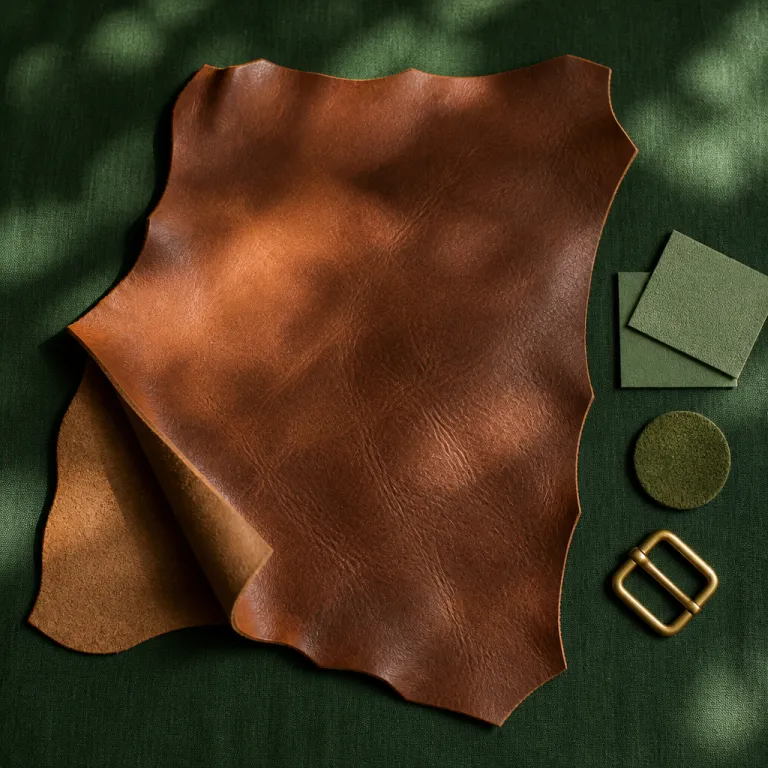
Vegetable leather tanning is the soul of the Santa Croce sull'Arno leather district, even as chrome and hybrid methods coexist for different products. Traditional pits and modern drums here use extracts of oak, chestnut, and quebracho bark, each contributing its own character to the finished leather. Oak tends to give structure and a slightly cooler hue, chestnut adds warmth and flexibility, while quebracho deepens color and accelerates the tanning process without sacrificing quality.
In Santa Croce sull'Arno, tanners talk about cuoio almost as winemakers speak of terroir, because the combination of bark blends, water from the Arno River, and local know how defines the final feel of the leather. Heavy cuoio del cuoio for soles or belts might spend many months in progressively stronger tanning liquors, while lighter hides for leather goods rotate in drums that balance penetration and surface cleanliness. The result is leather products that age with a slow, confident patina rather than collapsing or cracking after a few seasons of use.
Walk through the Santa Croce sull'Arno industrial zone and you will see yards where vegetable tanned sides hang, their surfaces matte and almost chalky before finishing turns them into high quality luxury leather. This is where the quiet heroes of craft work, the technicians and finishers whose skills often stay invisible behind famous logos, much like the artisans highlighted in this piece on the hidden stitch in luxury leather craftsmanship. For a connoisseur, knowing that your bag or wallet began life in these dei tintori style workshops along the Arno is part of the pleasure of ownership.
From basilica Santa Croce to Scuola del Cuoio: legacy, training, and succession
The story of Tuscan leather is not limited to the industrial Santa Croce sull'Arno district; it also runs through Florence, where the Basilica di Santa Croce and the adjacent Scuola del Cuoio have long symbolized the union of faith, art, and craft. The Scuola del Cuoio in Florence was founded to teach leather making to young artisans, and its name echoes through the Santa Croce sull'Arno tanneries that supply hides to workshops across Tuscany. Many owners of leather goods know the Scuola del Cuoio boutique, but fewer realize how closely its work is tied to the tanning basin between Florence and Pisa.
In the town of Santa Croce sull'Arno itself, training often happens inside family firms rather than in formal scuola structures, with skills passed from parent to child on the tannery floor. The via dei Tintori and corso dei Tintori style street names in Florence recall medieval guilds, while in the modern leather district the same guild spirit survives in associations that coordinate environmental investments and quality standards. Local consortia and the Tanners' Association of Santa Croce sull'Arno publish sustainability reports and technical guidelines, underlining how much this community sees itself as a shared project rather than a set of competing factories.
The generational question is real, however, and every visit to the Santa Croce area raises it again. Some heirs choose design schools in Florence or Milan instead of the tannery, while others return to Santa Croce sull'Arno after studying chemistry or engineering to modernize leather products and processes. As a collector, you are not just buying leather goods; you are indirectly supporting whether this scuola del cuoio style legacy remains a living tradition or becomes a museum piece.
Environmental pressure, contracts without labels, and why origin matters
Italian leather production in and around Santa Croce sull'Arno now combines centuries old tradition with cutting edge environmental technology, because the Arno River both enabled and constrained the growth of the leather district. Modern plants treat wastewater to strict standards, recycle a high percentage of process water, and increasingly use vegetable based tanning agents even in mixed processes. Shared purification facilities such as the Consorzio Aquarno and certification schemes like the “Pelle Conciata al Vegetale in Toscana” consortium have pushed the district toward cleaner methods, and their public reports provide verifiable data on water treatment, sludge recovery, and emissions.
Supply contracts between Santa Croce sull'Arno tanneries and luxury houses are usually confidential, which is why you rarely see “made in Santa Croce” stamped on leather products. A single tannery might supply several brands, adjusting temper, thickness, and finishing to each client while maintaining its own internal benchmarks for quality products. For the market of informed collectors, the real mark of excellence is not a logo but the grain, the hand, and how the leather behaves after many minutes of handling and many years of use.
Knowing the origin of your leather goods matters because it tells you something about both ethics and performance. A wallet made from vegetable tanned cuoio del cuoio from Santa Croce sull'Arno will age differently from a chrome tanned equivalent, developing a richer surface that pairs beautifully with a refined piece like a leather envelope wallet for discerning owners. When you read “tanned in Italy” on a label, there is a strong chance that the hide passed through this Tuscan tanning district, along streets named via delle Conce or corso dei Tintori in homage to the old dei tintori guilds, and that quiet knowledge is part of what you are really buying.
How to read your own collection through the lens of Santa Croce
Open your wardrobe and pull out three or four favorite leather goods, then look past the brand name to the material itself. If the leather feels dense yet responsive, with a fine grain that softens at the edges but holds its architecture, you may well be holding a piece whose origin lies in the Santa Croce sull'Arno tanning district in Italy. The more you train your hand and eye, the more you will sense the difference between anonymous production and the quiet authority of leather products shaped by a mature leather district.
Start by examining color and surface on your leather goods, because vegetable tanned hides from Santa Croce sull'Arno often show subtle tonal shifts rather than flat, uniform pigment. Run a fingertip along a strap or handle; high quality cuoio from this Santa Croce sull'Arno area will warm quickly under your touch, and fine lines will appear then relax rather than cracking sharply. This is the physical expression of a tradition that blends bark extracts, controlled drying, and finishing techniques refined over generations along the Arno River in Tuscany.
Next, pay attention to how your pieces age over months and years of real use. A belt cut from firm cuoio del cuoio sourced in the Santa Croce district will develop a deep, almost waxy sheen on the outer curve, while the inner side stays smooth and supportive against fabric. Once you start reading your collection this way, the phrase “made in Italy” becomes less of a marketing line and more of a map, pointing back to a few square kilometres between Florence and Pisa where art, industry, and market forces converge in the town of Santa Croce sull'Arno.
FAQ
Why is Santa Croce sull'Arno so important for luxury leather?
Santa Croce sull'Arno is important because it concentrates a complete leather district in a very small area, from raw hide processing to finishing. This Tuscan tanning cluster supplies many of the world’s leading luxury houses with high quality leather products. Its mix of vegetable tanning tradition, technical expertise, and strict environmental controls makes it a reference point for serious collectors.
How can I tell if my leather goods come from Santa Croce?
You rarely see Santa Croce sull'Arno named on labels, because contracts between tanneries and brands are usually confidential. However, many leather goods marked “tanned in Italy” or “made in Tuscany” likely use hides from this district. Look for dense yet supple leather, rich natural aroma, and a patina that develops depth rather than surface cracking over time.
What is special about vegetable tanned leather from this district?
Vegetable tanned leather from the Santa Croce sull'Arno area uses extracts of oak, chestnut, and quebracho bark instead of relying solely on chromium salts. This process takes longer but produces cuoio with a firm, resilient structure and a warm, evolving color. For belts, structured bags, and small leather goods that you plan to keep for years, this type of leather offers exceptional aging and tactile pleasure.
Are environmental standards strong in Santa Croce sull'Arno?
Environmental standards in Santa Croce sull'Arno are among the strictest in the global leather market, especially regarding water treatment and chromium use. Tanneries in this leather district invest heavily in shared wastewater plants, recycling systems, and cleaner tanning agents, often under the umbrella of local consortia and European regulations. For owners who care about both performance and responsibility, this makes leather products from the Santa Croce area particularly compelling.
Why should a collector care about the origin of their leather?
Origin tells you how your leather was tanned, finished, and regulated, which directly affects durability, patina, and environmental impact. Knowing that a piece comes from the Santa Croce sull'Arno tanning district in Italy gives confidence about both quality products and responsible processes. For a serious collector, this knowledge deepens the relationship with each item, turning ownership into a dialogue with the craft traditions of Tuscany.