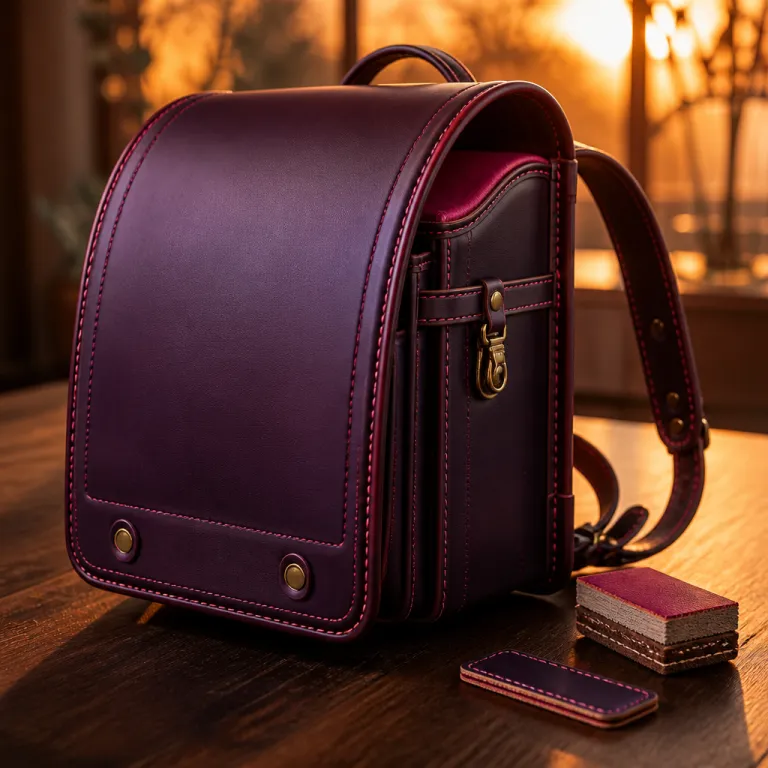
The randoseru design brief: six years on a child’s back
A japanese leather craft randoseru begins with a ruthless design brief. The traditional randoseru backpack must endure six uninterrupted years of japanese school life, carried by kids who treat the leather bag as both tool and armor. In japan this expectation is not marketing language but a baseline engineering constraint that shapes every seam, every rivet, every boxy shape.
For a luxury leather buyer used to rotating bags every year or two, the randoseru feels almost overbuilt. The classic leather backpack is specified to carry heavy textbooks, stationery and lunch, while keeping a stable center of gravity on small shoulders walking to elementary school in all weather. That is why the randoseru japanese makers obsess over load paths, from the top handle to the back panel, so the time bag ages evenly rather than collapsing at stress points.
Look closely at a high grade randoseru and you see japanese craftsmanship expressed as problem solving rather than ornament. The school bag is compact yet deep, with a rigid boxy shape that protects contents when kids drop backpacks on the floor or wedge bags into crowded lockers. For an adult randoseru adapted as a business bag, that same structure turns into a beautiful mobile office that opens window like a small trunk, giving instant access without rummaging.
Construction obsession: where quality craftsmanship becomes culture
The cultural significance of the japanese leather craft randoseru lies in how construction details become family ritual. Parents in japan often treat the purchase of a child’s first leather backpack as a once in six years commitment, weighing each bag with the seriousness of a long term investment. That is why the regular price of a premium randoseru feels closer to a serious leather business briefcase than to typical kids school bags.
Under the surface, the engineering is quietly radical and very different from most Western backpacks. Corners of the leather bag are double skived and reinforced, then stitched with lock stitch sewing so a single broken thread does not unravel an entire seam over the years of school use. Strap attachments are anchored into internal frames rather than just the outer leather, so the leather backpack carries weight through a skeleton that spreads load across the back panel and top handle.
This obsession with quality craftsmanship extends to how the school bag opens and closes. A randoseru japanese clasp often uses a metal mechanism that clicks with a precise resistance, almost like a watch crown that opens window into the main compartment with one deliberate motion. For collectors used to exotic skins and the refined allure of a python bag, as explored in this analysis of the refined allure of the python bag in modern luxury wardrobes, the humble japanese school backpack can feel unexpectedly sophisticated in both engineering and tactile feedback.
From Himeji tanneries to Tokyo workshops: leather with a memory
The japanese leather craft randoseru story starts long before any stitch, in the tanning districts that give the leather its character. Himeji, one of japan’s historic tanning centers, is renowned for vegetable tanned cowhide with a tight grain and consistent fiber structure that suits the boxy shape of randoseru bags. That consistency allows japanese craftsmanship to rely on predictable stretch and compression, so each leather backpack panel bends where intended and resists where necessary.
For a collector used to Italian or French hides, Himeji leather feels quietly disciplined rather than flamboyant. The surface of a randoseru japanese hide is often finished to resist rain and scuffs from kids dragging school bags across playgrounds, yet the fibers beneath still develop a subtle patina over the years. On adult randoseru models, makers sometimes relax the finish slightly, allowing the bag to pick up a more visible sheen and softening that appeals to a business buyer who values visible aging.
Tokyo and Toyooka workshops translate these hides into finished backpacks with a workshop model that would feel familiar to any connoisseur of small batch European makers. Many japanese leather craft studios remain small businesses where a handful of artisans specialize in specific operations, from cutting to edge painting, ensuring each time bag reflects a single coherent standard. Waiting lists for certain bags can stretch for years, yet the regular price rarely includes aggressive marketing margins, focusing instead on paying for labor, duties taxes and the quiet cost of maintaining skills.
From kids to collectors: how randoseru design migrates to adult wardrobes
What began as a school bag for kids has quietly migrated into the wardrobes of adult collectors. The japanese leather craft randoseru translated for grown ups keeps the same structural logic, but proportions shift to suit laptops, documents and the daily load of a small business professional. An adult randoseru often retains the signature top handle and boxy shape, yet strap geometry is recalibrated for broader shoulders and different center of gravity.
For a luxury leather buyer, the appeal lies in how these backpacks reconcile formality with function. The leather backpack silhouette reads almost like a structured briefcase when carried by the top handle, while on the back it behaves as a technical pack that distributes weight exceptionally well over long city walks. In a world where many bags chase logo visibility, the randoseru japanese aesthetic whispers through proportion, stitching regularity and the way the flap opens window like a hinged lid rather than a casual zipper.
This migration from elementary school corridors to boardrooms mirrors a broader cultural shift in how we view durability. Japanese craftsmanship treats the six years of school as a minimum service life, not an aspirational maximum, and adult randoseru designs inherit that expectation without compromise. For collectors already exploring exotic leathers and cultural narratives, as in this exploration of crafting timeless allure in fashion’s cultural tapestry, the randoseru offers a different kind of story, grounded not in rarity but in relentless engineering for everyday abuse.
Buying, importing and caring for randoseru as a long term investment
For international buyers, the practicalities of acquiring a japanese leather craft randoseru matter almost as much as the romance. Many japanese small businesses still sell primarily through domestic channels, which means overseas purchase often involves intermediaries, careful attention to shipping cost and an acceptance that shipping calculated at checkout may not include duties taxes. When a retailer offers free shipping, it is worth checking whether return shipping and customs handling are also covered, especially for higher regular price models.
A serious collector treats the randoseru as a time bag, not a seasonal accessory. That means evaluating leather craft details such as edge finishing, stitch density and hardware plating with the same scrutiny you would apply to a high end briefcase or travel bag. It also means asking how the bag will behave over years of use, from how the top handle softens to how the back panel molds to your body, and whether the structure of the boxy shape will remain crisp or relax gracefully.
Care rituals in japan offer useful guidance for owners everywhere. Families often wipe school bags weekly, let backpacks dry fully away from heat after rain and store bags upright so the leather backpack keeps its geometry, practices that translate perfectly to adult randoseru collections. When you buy multiple randoseru japanese pieces, rotating bags through rest periods and maintaining a simple log of years in service can help you appreciate how japanese craftsmanship rewards patience and attention rather than constant replacement.
What Western leatherwork can learn from randoseru durability
For Western makers and collectors, the japanese leather craft randoseru offers a quietly radical benchmark. Instead of designing a leather bag around trend cycles, japanese workshops design backpacks around a fixed six year duty cycle for kids in elementary school, then apply the same logic to adult randoseru lines. That cultural expectation that a school bag must last the entire span of compulsory schooling without structural failure changes every design decision, from leather selection to stitch type.
Western luxury often celebrates softness and instant comfort, sometimes at the expense of long term structure. The randoseru japanese approach accepts a brief break in period where the leather backpack feels firm, trusting that years of use will tune the fit while preserving the boxy shape that protects contents. For a buyer who already owns multiple bags, this philosophy invites a different question at purchase time ; not how the bag feels today, but how it will feel and look after a decade of regular use.
There is also a lesson in transparency. Many japanese small businesses openly explain their calculated checkout logic, clarifying how shipping is calculated, what portion of the shipping cost they absorb and how they handle return shipping for international buyers. That clarity, combined with visible quality craftsmanship and a cultural narrative rooted in everyday japanese school life, creates a trust model that Western brands would do well to study when they ask collectors to invest in yet another beautiful time bag.
FAQ
Why are randoseru so durable compared with typical school backpacks ?
Randoseru are engineered to survive six continuous years of japanese school use, which means every stress point is over specified. Makers use dense vegetable tanned leather, reinforced corners, lock stitch seams and internal frames that distribute load from straps and top handle into the back panel. This combination of materials and japanese craftsmanship creates a backpack that behaves more like structured luggage than a casual school bag.
Can an adult use a traditional randoseru comfortably for business ?
Many adults in japan and abroad now use randoseru as business bags, especially in creative or design led fields. The boxy shape fits laptops and documents well, while the leather backpack harness distributes weight evenly during commutes. Some makers offer dedicated adult randoseru lines with slightly adjusted proportions and subtler colors for office environments.
What should I look for when buying a randoseru outside Japan ?
When purchasing abroad, verify that the bag is made in japan and not just styled as randoseru japanese design. Examine leather quality, stitch regularity, hardware feel and how the flap opens window like a hinged lid rather than a loose cover. Check how shipping is calculated at checkout, including duties taxes and return shipping policies, because these can significantly affect the effective regular price.
How heavy is a randoseru compared with modern synthetic backpacks ?
A full leather randoseru is usually heavier than a synthetic school backpack, but the structured design and ergonomic straps compensate by distributing weight more efficiently. For kids in elementary school, this means the load feels stable and close to the body, reducing strain during daily walks. Adult users often find that the perceived weight is lower than the scale suggests because the bag does not sag or pull away from the back.
How should I care for a randoseru to maximize its lifespan ?
Basic care mirrors traditional japanese family habits ; wipe the leather weekly with a soft cloth, let the bag dry naturally after rain and store it upright away from direct heat or sunlight. Occasional conditioning with a neutral cream keeps the fibers supple without over softening the structure. With this routine, a japanese leather craft randoseru can easily outlast its original six year design brief and remain a beautiful time bag for adult use.