From runway controversy to prada kolhapuri leather artisan partnership
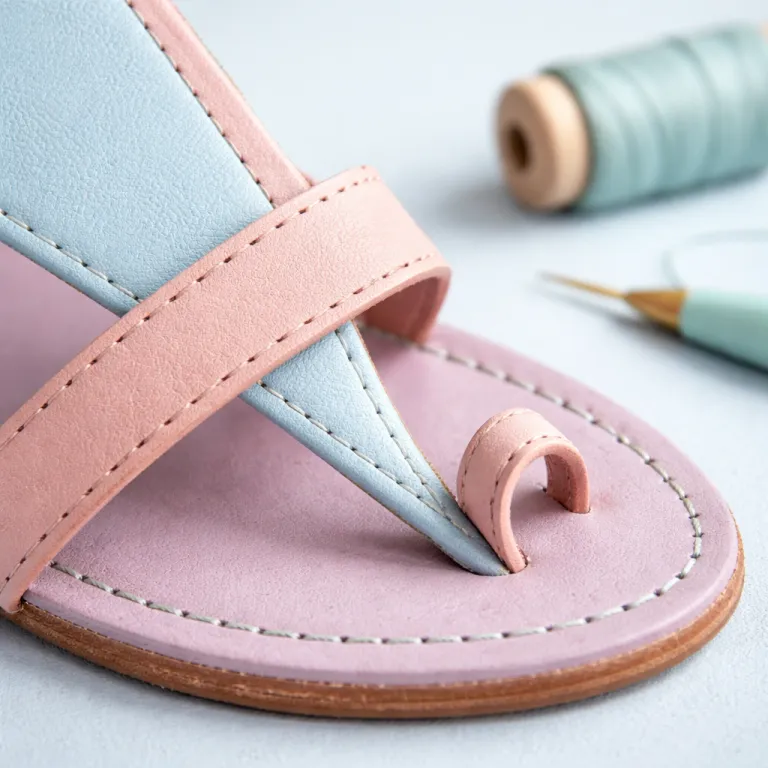
When Prada sent a pair of sculptural leather sandals down the Milan runway, seasoned collectors immediately recognised a silhouette reminiscent of 12th century Indian kolhapuri chappals. The resemblance to traditional kolhapuri sandals from western India triggered accusations of cultural appropriation, because the pricing and storytelling appeared to overlook the artisans, the kolhapuri chappal heritage, and the cultural weight of this craft. What began as a design flourish in high fashion quickly became a test case for how a global luxury group handles traditional knowledge in an evolving market.
In response, the Prada Group outlined a structured collaboration with Indian artisans rather than a one way extraction of style, positioning the emerging prada kolhapuri leather artisan initiative as part of its broader Made In series. According to early coverage from Business of Fashion and WorldFootwear, the project centres on limited edition kolhapuri sandals and chappals, reported at a premium price point and distributed through a select number of Prada boutiques and online, with every pair explicitly crediting the artisan group and region. For owners used to Italian or French leather fashion, this is a rare moment when a European maison publicly acknowledges that its sandals and broader leather industry vocabulary owe a debt to Indian craft lineages.
The economics remain stark for any leather connoisseur who has walked through Kolhapur’s bazaars and seen kolhapuri chappals sold for a fraction of that price. Traditional kolhapuri chappal makers in India often work outside formal programs, with thin margins and little access to fashion technology or global retail networks. Prada’s stated ambition, as summarised in reports from VeroSneakers and Business of Fashion and in public notes from the Prada Group, is that proceeds from the limited edition kolhapuri inspired range will help fund a multi tier training program for artisans, shifting at least part of the margin back into the craft ecosystem rather than leaving it solely on the balance sheet of a European group.
Inside the kolhapuri training program and the new artisan pipeline
The heart of the prada kolhapuri leather artisan experiment is not the sandals themselves but the training architecture built around them. Over three years, Prada and its institutional partners have signalled plans to train a substantial cohort of artisans through six month modules that blend traditional kolhapuri chappals making with contemporary design language and digital literacy. For a luxury leather good owner, this matters because it determines whether future kolhapuri sandals feel like anonymous trend pieces or carry the same depth you expect from a hand stitched French loafer.
The training program is described as launching with an initial batch of seats split between the National Institute of Fashion Technology and the Karnataka Institute for Leather Technology, two Indian schools already embedded in the leather industry. Within these classrooms, Indian artisan trainees move from hand cutting leather for kolhapuri chappal uppers to working with fashion technology tools, learning CAD based design, and understanding global sizing standards for sandals and chappals. Reporting from WorldFootwear and institutional notes from NIFT indicate that the curriculum also covers ethical fashion frameworks, export regulations, and how a group academy model can protect cultural heritage while still engaging with a global fashion market.
On the ground, the collaboration with state backed bodies such as LIDCOM and LIDKAR is crucial because it anchors the project in existing Indian craft infrastructure. These organisations already run training for leather artisans in India, and the new collaboration with LIDCOM and LIDKAR effectively bolts a Prada Group Academy track on top for top performers. As one Kolhapur based artisan quoted in early coverage put it, “For the first time, someone is asking us to bring our kolhapuri knowledge into their school, instead of just copying our patterns.” Those selected are expected to travel to Italy for advanced modules in leather fashion, sandal design, and production management, before returning to work either with local artisan groups or within the broader Prada Group supply chain, where their traditional knowledge of inspired kolhapuri forms is meant to shape future collections rather than be quietly mined.
What this means for collectors, pricing ethics, and future collaborations
For collectors weighing a pair from the limited edition prada kolhapuri drop, the question is not only whether the leather will age well but whether the project meaningfully shifts power toward artisans. At a luxury level price, these kolhapuri sandals sit far above the cost of even the most refined kolhapuri chappals sold in India, yet Prada has indicated through secondary reporting and institutional commentary that proceeds will support the training program, travel to the Prada Group Academy, and stipends for artisan participants. That structure, if executed transparently and confirmed in official documentation from Prada or partners such as NIFT, would mean that a portion of the premium you pay for a kolhapuri collaboration piece is underwriting long term training rather than just subsidising marketing.
The involvement of the Karnataka Institute for Leather Technology and the broader institute leather education ecosystem also signals a move away from informal copying of traditional designs toward documented collaboration. By routing the project through recognised schools, the group can track how many artisans graduate, how many return to local workshops, and how many enter the global leather industry with new leverage. For readers interested in how emerging artisans reshape luxury, this model sits alongside independent movements analysed in pieces such as the art of the invisible stitch, where small ateliers, not conglomerates, drive the narrative.
There are still unresolved tensions, especially around cultural appropriation and authorship of traditional kolhapuri forms, and no training program fully erases the power imbalance between a European group and Indian artisan communities. Numerical details around pricing, production volumes, and trainee counts remain based largely on early media reports and should be treated as provisional until confirmed in formal statements from Prada, NIFT, LIDCOM, or LIDKAR. Yet compared with earlier episodes where brands lifted motifs without credit, this collaboration framework with LIDCOM and LIDKAR, and the explicit focus on ethical fashion, mark a more serious attempt to embed traditional knowledge into a global fashion system. For owners already following how garage workshops challenge big houses, as explored in this analysis of American leather insurgency, the prada kolhapuri leather artisan project is another signal that the next chapter of luxury will be written as much in Kolhapur and Karnataka as in Milan and Paris.
Sources
VeroSneakers ; WorldFootwear ; Business of Fashion ; public statements and institutional notes from Prada Group, NIFT, LIDCOM, and LIDKAR where available