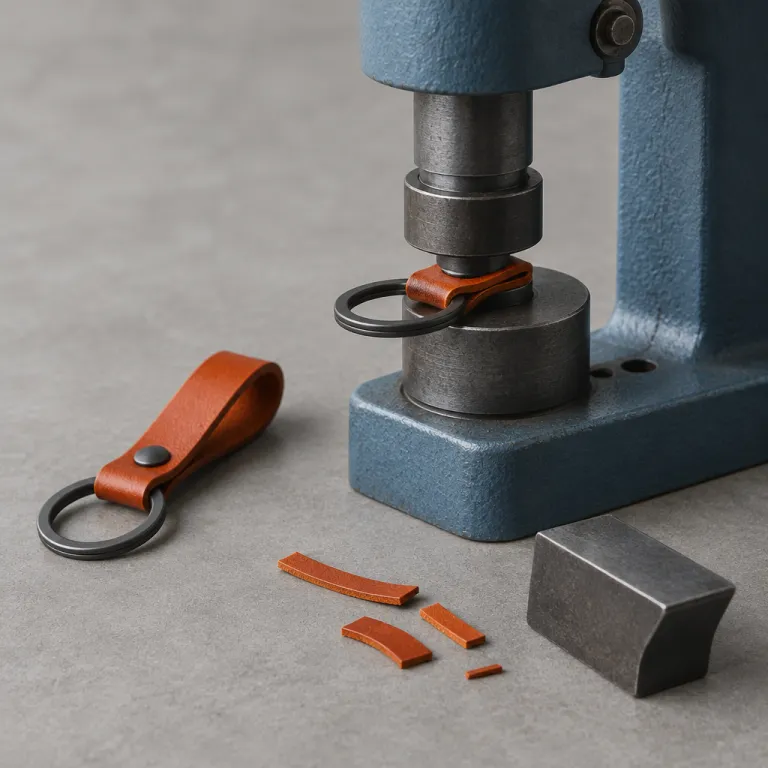
When keychain leather becomes a piece of wearable architecture
A luxury leather keychain only earns its place beside your bag when its hardware feels like architecture in miniature. The best keychain leather pieces balance full grain hides with precisely engineered rings, a secure clip and a key fob body that behaves like a tiny, durable bridge. When you evaluate a leather keychain or a set of leather keychains, you are really judging how leather and metal share tension, weight and daily impact.
Start with the leather itself, because hardware can only shine when the grain supports it. Full grain leather or carefully selected top grain leather resists stretching around the circle ring, the loop keychain opening or the rectangle keychain frame, so the key weight does not deform the silhouette. Vegetable tanned leather, especially in brown or tan, ages into a rich patina that visually softens the metal while still holding a firm grip on each key.
Colour and finish should guide how you integrate the piece into your wider leather collection rather than follow passing trends. A black leather keychain with brushed palladium hardware reads formal and architectural, while a tan loop keychain with a brass clip feels warmer and more relaxed. Owners who rotate several leather keychains add subtle signals of mood and setting, using hardware geometry and leather tone to move from hotel lobby to private office without a full refresh of their larger accessories.
Hardware integration that respects grain, stitching and movement
Hardware on a luxury keychain leather piece must respect the natural behaviour of the hide. When a circle ring or rectangle keychain plate is set too close to an edge, the grain leather is forced to bend unnaturally and micro cracks appear long before any leather sale or keychain sale should be necessary. A well designed key fob distributes pressure through a reinforced bridge of full grain or vegetable tanned leather, stitched with a thread chosen as carefully as the metal finish.
Owners who care about longevity should pay attention to how the clip, ring and tassel attachments are stitched or riveted. If you examine the refined art of a leather key ring holder in luxury craftsmanship, you will notice that the hardware never cuts directly into the leather key body, but is cradled by folded layers that protect the grain. This approach allows both black and brown pieces, whether handmade in the USA or in Europe, to carry a full set of key bundles without distorting the loop keychain opening or stressing the tassel base.
Stitching density and material also influence how hardware moves against the hide over time. A handmade leather keychain that uses dense saddle stitching around the key fob head will resist the sawing motion of a metal circle ring far better than a loosely spaced machine seam. Many specialist workshops specify thread types such as 0.6 mm waxed linen or bonded nylon and test them by hanging calibrated weights—often in the 1–3 kg range, roughly the equivalent of a full household key set—for weeks at a time, because this quiet interface is the difference between a keychain that lasts a decade and one that needs an order return after a single demanding season.
Balancing price, regular use and the true cost of failure
For a luxury owner, the price of a keychain leather accessory is rarely the main concern. The real question is how the regular rhythm of your day, from valet stands to hotel receptions, will stress the hardware and whether the piece justifies its regular price through reliability. When a key fob fails, it is not only an aesthetic disappointment but a security risk for the keys it was meant to protect.
Look closely at the difference between a sale price and a full regular price within a single leather collection. When a leather sale or keychain sale appears, it may reflect a colour such as tan or black being phased out, not a compromise in hardware quality, but you should still read detailed reviews that key owners leave about ring strength and clip performance. Some brands publish separate review sections where clients comment specifically on the behaviour of the circle ring, the rectangle keychain frame or the loop keychain hinge, which is far more useful than generic star ratings.
Hardware quality also affects the economics of maintenance and replacement. A robust leather key fob with a solid brass clip and a carefully engineered key head can be reconditioned and kept in service for years, while a cheaper piece with a weak split ring may force a full refresh of your key organisation after a single failure. When you consider the long term cost, the higher regular price of a handmade full grain leather keychain, especially one produced in the USA or Italy, often becomes the most rational choice rather than an indulgence, much like investing in a trucker wallet with refined hardware that truly belongs in a modern luxury wardrobe, as explored in the dedicated article on the importance of robust luxury hardware.
From hotel corridors to private garages: context driven hardware choices
Where your keys live during the day should shape your keychain leather decisions. A hotel concierge key set demands a different balance of grain leather, metal and silhouette than a discreet key fob for a private sports car. In public facing roles, the leather keychain becomes a visible extension of brand identity, while in private settings it serves more as a tactile pleasure and a safeguard for expensive locks.
For hotel environments, a larger circle or rectangle keychain design in tan or brown vegetable tanned leather offers visibility without garish branding. The hardware must be generous enough for staff to handle quickly, yet the clip and key ring should avoid sharp edges that could snag uniforms or guests’ bags, which is why many hospitality focused leather keychains add rounded, polished hardware and a tassel or loop keychain tail for grip. Professional reviews in trade publications often mention how full grain or high quality grain leather handles constant sanitising and contact with metal doors, and these detailed insights are invaluable if you manage a property or a private members’ club.
In contrast, a personal leather key fob for a collector car or a private jet hangar may favour a slim black handmade design with a compact clip that slips easily into a jacket pocket. Here, the sale price or regular price matters less than the harmony between hardware finish, leather tone and the other pieces in your leather collection, such as wallets or small pouches. Owners who rotate several leather keychains add nuance by assigning one to each context, reducing wear on any single piece and avoiding the need for an abrupt full refresh when a favourite item finally reaches the end of its life.
Handmade precision: how artisans engineer key fob hardware
Behind every exceptional keychain leather piece lies a series of deliberate engineering decisions. Artisans who specialise in handmade leather keychains think in millimetres when placing a circle ring, a clip or a tassel cap, because a fraction of a millimetre can change how the grain leather flexes. When you handle a truly refined key fob, you can feel that the hardware sits exactly where the hide is strongest, not where it was easiest to assemble.
Full grain and vegetable tanned leathers demand different hardware strategies. A dense full grain leather key body can support a heavier rectangle keychain plate or a more substantial loop keychain, while a softer grain leather may require a wider bridge and a lighter ring to avoid stretching. Some of the most respected workshops in the USA and Europe test their leather keychains by hanging calibrated key weights from the rings for extended periods, then checking for deformation around the rivets and stitching, sometimes rejecting designs if the opening of a 25 mm ring distorts by more than 0.5 mm under load.
Stitching materials and patterns are another critical variable in this engineering process. A workshop that understands how waxed linen or nylon behaves against metal will choose thread and spacing that prevent the hardware from sawing through the leather over time, a topic explored in depth in this analysis of how stitching material shapes a bag’s lifetime. When you read detailed reviews that leather enthusiasts share, pay attention to comments about how the clip or key ring feels after months of use, because these specific observations reveal whether the artisan truly engineered the interface between leather and metal or simply attached hardware as an afterthought.
Owning, caring and managing returns for luxury keychain leather
Once a keychain leather piece enters your rotation, the way you use and maintain it will determine how gracefully it ages. Regular inspection of the circle ring, clip and tassel base helps you catch early signs of metal fatigue or leather stretching before a key is lost. A quick weekly routine, no longer than a few minutes, can extend the life of both full grain and high quality grain leather key fobs significantly.
Begin by wiping the leather key body with a soft, slightly damp cloth, then drying it thoroughly before applying a small amount of conditioner suitable for vegetable tanned or full grain hides. Pay special attention to the areas where hardware meets leather, because dirt and moisture accumulate around the rectangle keychain frame, the loop keychain fold and the rivets that hold the key fob together. Owners who maintain a broader leather collection of bags and wallets often align their care schedule so that leather keychains add only a marginal extra effort during an existing care session.
When a defect appears, a clear order return process is part of what you paid for in the regular price. Luxury houses that take hardware seriously will inspect the piece, review any relevant internal data and either repair or replace the key fob, sometimes even outside the formal leather sale period. If a brand’s customer service tells you to simply skip content in their terms and conditions or refuses to discuss hardware failures, that is a strong signal to reconsider future purchases, no matter how attractive the sale price or keychain sale promotion may appear.
Curating a coherent collection where keychains add quiet authority
A thoughtful leather collection of small accessories can express as much personality as a statement bag. When leather keychains add structure and coherence to your daily carry, they act as anchors that tie together colours, finishes and hardware choices across your wardrobe. The goal is not to accumulate objects, but to build a family of pieces that share a design language.
Start by mapping your existing hardware palette. If your primary bags and wallets lean toward brushed palladium with black or dark brown full grain leather, then a tan vegetable tanned leather key fob or a contrasting rectangle keychain in lighter grain leather can introduce warmth without breaking the overall harmony. Owners who prefer warmer metals such as brass or gold tone can let a single black handmade key fob with matching hardware serve as a quiet counterpoint, especially when the clip and circle ring echo the lines of belt buckles or watch clasps.
Price should support this curation rather than dictate it. A well chosen piece at regular price can become the reference point around which occasional leather sale opportunities or a tempting keychain sale are evaluated, ensuring that every new keychain leather addition earns its place. Over time, this approach reduces the urge for a full refresh, because each new leather keychain or set of leather keychains adds depth and nuance instead of noise, allowing your keys to speak the same refined language as the rest of your luxury ensemble.
Key figures and market insights for luxury keychain leather
- Analysts of the global personal luxury goods market consistently highlight the growth of small leather goods such as key fobs and keychains, as clients seek entry level pieces that still offer full grain quality and refined hardware. Bain & Company, for example, has repeatedly noted that leather accessories under €500 are among the fastest growing segments in recent luxury reports.
- Consultancy research on luxury purchasing behaviour shows that a majority of consumers now read online reviews before buying small leather goods, which means that detailed feedback sections focusing on hardware performance and durability increasingly influence keychain leather design decisions at major maisons. McKinsey & Company has reported that more than 70% of luxury buyers consult digital touchpoints before purchase, even when they complete the transaction in store.
- Industry surveys from organisations such as the Leather Working Group report a steady increase in the use of vegetable tanned and responsibly sourced grain leather, reflecting owner demand for sustainable materials in items such as leather keychains that are handled many times each day. Recent LWG data indicates that hundreds of tanneries now meet audited environmental standards, covering a substantial share of global bovine leather production.
- Trade data from bodies including the United States International Trade Commission underline that the USA remains one of the top importers of high end leather accessories, with small items including key fobs and key rings accounting for a notable portion of the value and underscoring the importance of hardware quality even in compact pieces. USITC classifications for leather goods show that accessories under 0.3 kg by weight, a category that includes many keychains, represent a meaningful slice of total import value.
- Market analyses from firms like Euromonitor describe how premiumisation in small leather goods allows brands to maintain healthy margins, as clients accept a higher regular price for handmade keychain leather items when they see evidence of superior hardware engineering and long term durability. Euromonitor commentary on accessories has highlighted that consumers increasingly trade up within categories they touch daily, such as wallets and key fobs.
FAQ about luxury keychain leather and hardware integration
How can I tell if a keychain leather piece uses full grain leather ?
Examine the surface closely under natural light and look for subtle, irregular pores and natural markings rather than a perfectly uniform texture. Full grain leather on a key fob or leather keychain will feel dense yet supple, and the edges, especially around the circle ring or rectangle keychain opening, should show a solid cross section rather than a spongy or layered appearance. Over time, full grain and vegetable tanned hides develop a rich patina instead of peeling or cracking, which is another strong indicator.
What hardware features matter most on a luxury leather keychain ?
The most critical features are the strength and finish of the key ring, the reliability of the clip and the way these components are anchored into the grain leather. Look for solid, not hollow, metal parts with smooth, polished edges that will not cut into the leather key body or your fingers. High quality handmade pieces often use rivets and dense stitching to secure the hardware, ensuring that the key fob can handle daily use without loosening.
Is a higher price always a sign of better hardware on keychains ?
A higher regular price or sale price can reflect better materials and engineering, but it is not a guarantee. You should always read detailed reviews that key owners share, paying attention to comments about ring deformation, clip failures or stretching around the loop keychain opening. Comparing several models within the same leather collection can also reveal whether the premium is justified by hardware improvements or mainly by branding.
How should I care for the hardware on my leather keychain ?
Wipe metal parts such as the circle ring, clip and tassel caps with a soft dry cloth regularly to remove skin oils and dust. Avoid harsh chemicals that could damage both the metal finish and the surrounding grain leather, and keep the keychain away from prolonged moisture, which can cause corrosion and staining. If you notice early signs of wear, consult the brand’s service department rather than attempting aggressive polishing that might void an order return or repair policy.
When is it time to replace rather than repair a key fob ?
Replacement becomes the safer option when the hardware shows structural damage, such as a cracked ring, a clip that no longer closes fully or rivets that have pulled through the leather. If the full grain or vegetable tanned leather around the hardware has thinned significantly or torn, even expert repair may not restore original strength. In such cases, investing in a new keychain leather piece is wiser than risking the loss of important keys.
