Why wet forming leather matters for sculpted luxury pieces
Wet forming leather allows a structured object to keep its sculpted form elegantly. When a luxury house controls how leather fibers respond to water and pressure, the resulting molded leather shapes feel architectural yet soft in the hand. This refined forming technique separates a generic accessory from a collectible object.
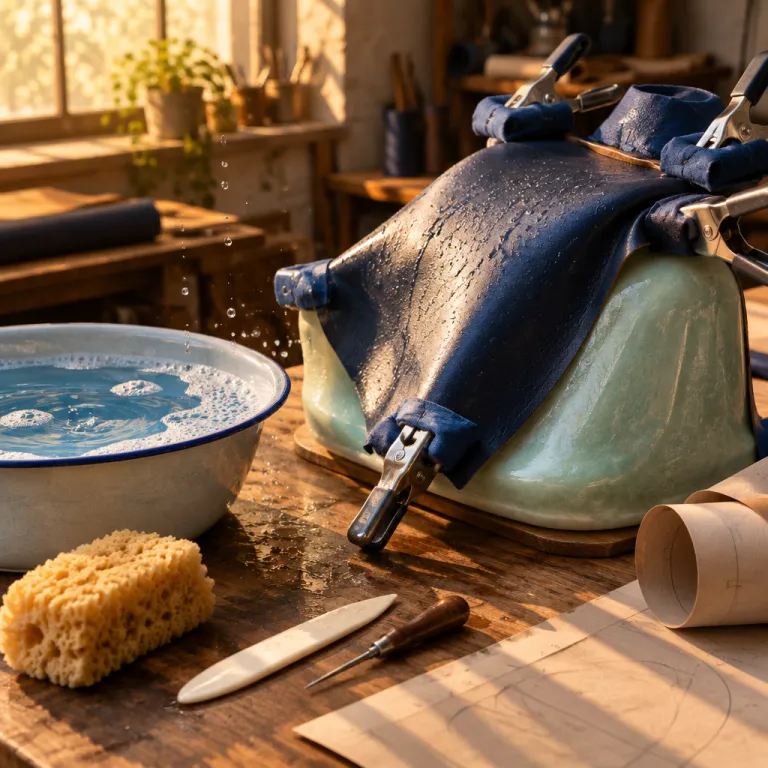
At its core, wet forming is the process of saturating leather with controlled water to make the fibers plastic and responsive. Once the artisan has prepared the forming mold and chosen the right leather thickness, they press the hide over a solid volume so it will memorize every curve and edge. When the internal water content returns to equilibrium, typically after drying back from around 20–30% added moisture by weight to its ambient level, the molded structure becomes stable and resistant to collapse.
Owners often underestimate how much the initial mold design dictates long term performance. A poorly planned profile can create stress at sharp corners that will crack under daily use, while a carefully radiused edge and softened corners distribute tension gracefully. For high end objects, the process must balance sculptural ambition with the quiet durability expected from serious luxury leather, which is why ateliers such as long established Italian case makers routinely prototype several mold profiles before approving a final geometry.
Choosing the right leather, water, and thickness for refined shaping
Every successful wet forming leather project begins with selecting the correct hide and thickness for the intended use. A rigid knife sheath for a bespoke folding knife demands denser vegetable tanned panels than a softly molded phone shaped clutch designed for evening wear. When the artisan misjudges thickness, the final form either feels flimsy or becomes too stiff to mold cleanly.
Water management is just as critical as hide selection in this process. If the craftsperson submerges the panel until the moisture level is excessive, the fibers swell so much that later shrinkage can distort the geometry and pull at stitched edges. Workshop tests reported by several European leather schools note that vegetable tanned panels that absorb more than roughly 35–40% of their dry weight in water are more prone to post forming distortion. When they keep the water content moderate and consistent across all panels, the forming behavior remains predictable and the finished object aligns perfectly at every seam.
Luxury owners who commission innovative designs, such as a sculpted phone shaped clutch with exaggerated corners, should ask how the atelier controls this forming stage. A workshop that times the wet forming process carefully, tests small offcuts before committing, and records how each leather responds to water will achieve repeatable results. As a practical guideline, many artisans aim for leather that feels cool, fully flexible, and evenly damp but never dripping before it touches the mold, often after 5–15 minutes of controlled soaking followed by blotting to remove surface water.
From flat panel to three dimensional mold: the controlled process
Transforming a flat panel into a precise molded shell is a sequence of deliberate steps, not an improvisation. Artisans start by tracing patterns with a straight edge and a sharp knife so every cut follows the intended geometry without frayed fibers. Clean cuts along the edge mean the wet forming stage will not introduce unwanted stretching or weak spots.
Once the pieces are cut, the craftsperson will usually pre crease corners and stress lines before any water touches the surface. This small preparation bit guides how the damp fibers will compress when wrapped around molds, especially in tight corners where excess bulk can cause puckering. By anticipating how the leather will behave, they reduce the need for aggressive trimming after the shape is set.
During the active forming process, the artisan positions the damp panel over a solid mold or a carefully carved wood core. They then press the leather firmly by hand or with a controlled press, working from the center toward the edge to push out trapped water and air. A simple checklist—cut cleanly, damp evenly, form from the center out, then secure and dry slowly—helps maintain consistency. When the piece is clamped or strapped in place and allowed to dry gradually over a day or two at roughly 18–24°C and moderate indoor humidity, the resulting shell keeps its sculpted profile for decades, not seasons.
Wood blocks, molds, and presses as silent co designers
Behind every sharply defined molded luxury object stands an unglamorous but essential set of tools. Carved wood blocks, resin molds, and metal forms act as three dimensional patterns that dictate how the wet leather will behave under pressure. The more precise these hidden components are, the more refined the visible leather surface appears.
For a rigid knife sheath or a structured wristlet, the atelier often builds a dedicated mold around the exact dimensions of the object it must protect. They may start with a wood core shaped to the knife profile, then refine the corners and edge transitions until the formed leather can slide on and off with just the right resistance. When the geometry is correct, the sheath grips securely without scuffing the blade or handle, and a simple hand press or screw press can apply even pressure along the entire length.
Press systems also play a role in achieving repeatable results for small luxury runs. A matched pair of molds, sometimes combining wood and metal, allows the craftsperson to apply even pressure so the thickness remains consistent across the entire shell. This balanced compression during the process prevents thin spots at the edge and ensures that every piece in a limited series feels identical in the hand. In practice, many European workshops keep a numbered sequence of molds and press plates so that replacement pieces can be formed years later with the same tactile profile.
Edge refinement, corners, and the art of invisible strength
Once the wet form has dried on its mold, the real artistry begins at the margins. The craftsperson returns to the straight edge and knife to trim any excess, then refines the edge profile so it feels smooth yet crisp between the fingers. A poorly finished edge on luxury leather undermines even the most sophisticated forming work.
Corners deserve particular attention because they concentrate stress in daily use. When an atelier rounds the corners slightly and skives the thickness carefully, the formed leather can flex without cracking as you grip, open, or pocket the object. This subtle shaping also allows the owner to enjoy a snag free experience when sliding a molded wallet into a tailored jacket.
Owners who appreciate discreet engineering will notice how these details echo across a collection. The same disciplined approach to edge and corner finishing appears in a molded wallet hinge, a sculpted wristlet keychain, or a compact knife sheath designed for travel. In each case, the wet forming leather process provides the underlying structure, while the finishing work translates that structure into long term comfort and strength.
Integrating molded elements into your luxury collection
For a collector, understanding wet forming leather is a way to curate more intelligently. When you examine a new piece, look beyond the surface grain and study how the leather wraps around its mold, how the corners behave, and whether the edge line remains straight under gentle pressure. These clues reveal whether the process respected the material or merely forced it into shape.
Thoughtful integration of molded components can elevate even the smallest accessory in your wardrobe. A sculpted wristlet keychain that uses a precise leather shell around its hardware, for example, will sit flatter against the hand and age more gracefully than a loosely stitched alternative. You can explore this refined approach in depth through a detailed anatomy of a long lasting wallet, where molded sections, hinge design, and carefully managed thickness all contribute to exceptional durability.
As you commission or acquire new pieces, do not hesitate to ask ateliers about their molds, their water handling, and how they press leather during forming. A workshop that speaks confidently about its wet forming methods, its use of wood or composite molds, and its control of moisture levels is more likely to deliver objects that remain structurally sound and visually sharp for many years. In a mature collection, these quiet technical decisions often separate cherished daily companions from items that stay in their box.
Key figures that shape the practice of wet forming leather
- Experienced leatherworkers report that vegetable tanned leather can take on a substantial percentage of its own weight in water during controlled wet forming, often in the range of 20–35%, which explains why careful monitoring of moisture levels is essential for dimensional stability.
- Workshop tests on molded vegetable tanned leather often show a noticeable increase in resistance to deformation compared with non molded panels of the same thickness, with some European training ateliers measuring stiffness gains of 15–30%, highlighting the structural benefit of a well executed forming process.
- Industry surveys from the United States and European luxury sectors indicate that hand forming and finishing can represent a large share of total labor time for complex molded items such as rigid cases or sculpted knife sheath designs, underlining why these objects command higher prices.
- Data shared informally by technicians at Italian and French tanneries suggest that controlled drying after wet forming, typically over 24 to 48 hours at stable room temperature and 45–60% relative humidity, can reduce surface cracking compared with accelerated drying, which reinforces the value of patient process management.
FAQ about wet forming leather for luxury owners
How does wet forming leather affect long term durability ?
When executed correctly, wet forming leather increases structural rigidity without making the material brittle. The molded shell supports daily stresses, while the controlled water exposure and slow drying preserve fiber integrity. Poorly managed moisture levels or rushed drying, by contrast, can cause internal stress and premature cracking.
Which types of leather are best suited to wet forming ?
Vegetable tanned leather is generally preferred for wet forming because its fiber structure responds predictably to water and pressure. Chrome tanned hides can sometimes be formed, but they rarely hold a crisp molded shape as reliably as well prepared vegetable tanned panels. For high end objects, ateliers usually select full grain hides with consistent thickness to ensure even forming.
Can molded leather pieces be adjusted or reshaped later ?
Minor adjustments are sometimes possible by reintroducing controlled moisture and gentle pressure. However, once a wet form has fully dried and aged, significant reshaping risks damaging the fibers or distorting stitching lines. For luxury items, it is safer to request corrections during the initial process rather than attempting major changes later.
How should I care for a wet formed leather object ?
Care for a molded piece as you would any fine leather, but avoid prolonged exposure to water or high humidity. If the surface becomes wet, blot gently and allow it to dry at room temperature, away from direct heat, so the molded structure does not warp. Regular conditioning with a suitable product helps maintain flexibility at the edge and corners without softening the overall form.
Why do some molded leather items cost significantly more ?
Higher prices often reflect the time and skill required to design precise molds, manage water content, and press leather consistently across complex shapes. Each step in the wet forming leather process demands experienced judgment, especially for small production runs or bespoke commissions. When these factors are combined with premium hides and meticulous finishing, the resulting objects justify their elevated cost through longevity and tactile refinement.
